
Emaar vs Sobha: Build Quality, Yield, Resale Liquidity
Compare Emaar and Sobha Realty for Dubai property investors, delivery rates, build quality, communities, pricing, yields, resale liquidity
By Invest Gulf Editorial · Updated June 11, 2026 · 14 min read
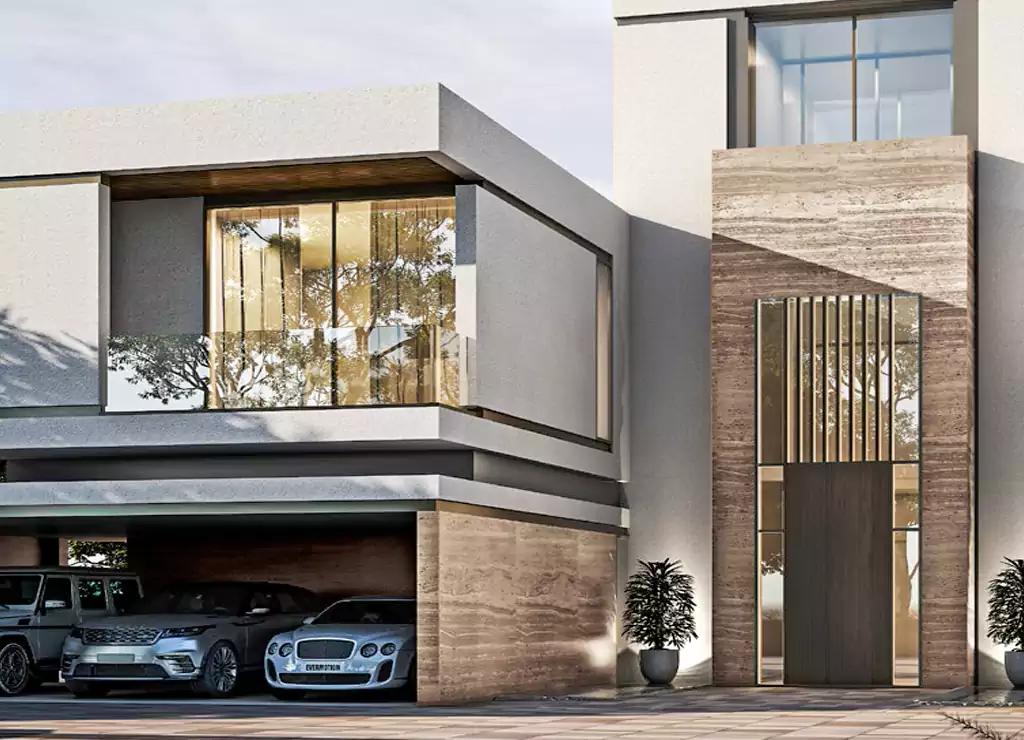
Choosing between Emaar and Sobha Realty is not a debate about which logo looks better on a sales gallery wall. It is a trade between scale liquidity and build-quality control, between **Downtown’s irreplaceable address and Hartland’s in-house fit-out, and between how much PSF premium you pay for contractor integration versus master-plan depth.
Both are Tier 1 RERA-registered developers selling escrow-protected off-plan. Both report delivery performance in the top band of Gulf developer databases, Emaar approximately 95% on-time across 87+ tracked projects, Sobha A-band with vertically integrated construction that reduces subcontractor gap risk. The corporate average does not buy your unit; the SPA, escrow account, tower-specific rental pool, and service-charge budget do.
Emaar is Dubai’s pricing and liquidity benchmark, DFM-listed, responsible for Burj Khalifa, Dubai Mall, Dubai Hills, and Creek Harbour. Sobha is the construction-quality specialist, backward-integrated manufacturing of doors, glazing, and joinery, with communities concentrated in Mohammed Bin Rashid City.
The choice between these developers reflects deeper strategic trade-offs that extend beyond marketing presentations. Emaar’s scale enables master-planned communities with established retail, education, and transport infrastructure, creating investment moats through utility network effects. Sobha’s vertical integration reduces the subcontractor coordination risks that historically plague Gulf construction timelines, but constrains development pace and unit variety.
Understanding these operational models helps investors align developer selection with investment timeline, risk tolerance, and exit strategy. Neither approach is inherently superior, they serve different investor profiles and market segments within Dubai’s diversified property ecosystem.
Snapshot comparison
| Factor | Emaar Properties | Sobha Realty |
|---|---|---|
| Delivery track record | ~95% on-time (87+ projects) | A-band (~95%+) |
| Construction model | Managed contractor ecosystem | In-house integrated build |
| Flagship communities | Downtown, Dubai Hills, Creek Harbour, Arabian Ranches | Sobha Hartland, Sobha One, Sanctuary pipeline |
| Typical buyer profile | End-user + institutional investor | Quality-focused end-user + long-hold investor |
| Launch pricing | Benchmark to premium in prime zones | +15–25% PSF premium vs district peers |
| Resale liquidity | Best-in-class in mature communities | Moderate, growing in Hartland |
| Gross yield (typical) | 4.5–7.5% depending on community | 5.5–6.5% in Hartland |
| Payment plans | Milestone-linked; moderate flexibility | Conservative; higher upfront construction % |
| Escrow compliance | RERA-mandated | RERA-mandated |
Emaar: strengths
- Master-community depth: Downtown Dubai, Dubai Hills Estate, Dubai Creek Harbour, and Arabian Ranches are not single towers, they are districts with schools, retail, transport, and end-user gravity that compounds rental demand over a decade.
- Secondary-market liquidity: Emaar units in established communities trade daily. Brokers price Downtown and Dubai Hills apartments against last week’s transacted sales, not launch brochure rents. Exit optionality matters when cycles turn.
- Delivery credibility at scale: ~95% on-time delivery across a portfolio larger than most competitors’ total output reduces construction-risk discount in underwriting, still verify your phase, but corporate track record affects financing and assignment premiums.
- Golden Visa clarity: Emaar flagship communities frequently price two- and three-bedroom units at or above AED 2 million registered value, a practical path for property-linked Golden Visa applicants who want DLD registration depth.
- Institutional counterparty: DFM listing, investor relations disclosures, and decades of DLD registry history support bank LTV on completed stock and pre-handover assignment markets in rising cycles.
Weakness: Premium Emaar product in Downtown and branded Address towers often grosses under 6%, capital preservation, not yield farming. Launch pricing at cycle peaks can soften before handover even when delivery is on time. Service charges on Address and Palace stock run AED 18–25/sqft, eroding net returns.
Emaar’s Market Position Deep Dive
Corporate fundamentals: Dubai Financial Market listing since 2000 provides transparency rare among Gulf developers. Quarterly results, debt ratios, land bank valuations, and project pipeline forecasts offer institutional-grade due diligence data. Market capitalisation over AED 30 billion creates counterparty stability for long-term off-plan commitments.
Development lifecycle management: Emaar’s advantage lies in post-completion community management through Emaar Community Management and Emaar Facilities Management. This vertical integration extends beyond construction to ongoing property value maintenance, critical for resale premiums in mature communities.
Brand portfolio strategy:
- Emaar Properties: Core development brand for master communities
- Address Hotels + Resorts: Luxury hospitality-branded residences
- Armani: Ultra-luxury positioning in Burj Khalifa
- Dubai Hills Estate: Family-oriented suburban brand
- Emaar Beachfront: Waterfront premium positioning
Each brand targets different buyer personas and price points, enabling portfolio diversification within single developer relationship.
Financial structure analysis:
- Land bank: Estimated AED 180+ billion in development rights across Dubai and international markets
- Debt management: Conservative leverage ratios support project financing flexibility
- Cash flow: Established community service charge revenue provides development capital base
- International exposure: Operations in Egypt, Saudi Arabia, Turkey diversify revenue beyond Dubai cycles
Construction methodology: Emaar employs tier-one contractor partnerships (Arabtec, Drake & Scull, Al Naboodah) rather than in-house construction. This approach enables parallel project execution across multiple communities but introduces coordination complexity and quality variance between contractors.
Detailed Community Analysis: Emaar Portfolio
Downtown Dubai (Est. 2004):
- Investment thesis: Irreplaceable urban address with tourism/business tenant base
- Rental dynamics: 85%+ occupancy year-round, corporate lease concentration
- Price evolution: AED 800-1,200/sq ft (2010) to AED 2,500-4,000/sq ft (2024)
- Investor profile: 40% end-user, 35% UAE resident investor, 25% international
- Future catalysts: Opera District completion, Museum of the Future integration
Dubai Hills Estate (Est. 2013):
- Infrastructure status: 80% complete, golf course operational, retail opening 2024-2025
- School integration: GEMS International School, Jumeirah English Speaking School on-site
- Community demographics: 65% family occupancy, 35% investor-owned
- Transportation: Al Khail Road access, planned Metro extension by 2027
- Investment performance: 25% price appreciation 2020-2024, stabilising yield 5.5-7.0%
Dubai Creek Harbour (Est. 2016):
- Master plan scope: 6 million sq ft mixed-use on 2.5km waterfront
- Completion timeline: Phased delivery through 2028
- Infrastructure development: Creek Marina operational 2025, retail district 2026-2027
- Competitive positioning: Positioned against Palm Jumeirah for waterfront premium
- Risk assessment: Execution risk balanced by Emaar track record and pre-sales velocity
Arabian Ranches (Est. 2004):
- Community maturity: Fully established with 15+ years operational history
- Villa market performance: Consistent 4-6% appreciation annually 2015-2024
- Tenant stability: Average lease length 2.8 years, 80%+ renewal rate
- School catchment: Multiple on-site international schools driving family demand
- Resale liquidity: 200+ villa transactions annually, deep comparables database
Sobha: strengths
- In-house construction control: Sobha manufactures and installs doors, windows, joinery, and metalwork in Sobha-owned facilities, reducing the subcontractor coordination failures that plague fragmented Dubai developments. Completed Hartland phases show consistent material standards and lower snagging intensity.
- End-user skew at handover: Hartland communities attract family tenants and owner-occupiers, lower investor churn at key collection means fewer identical units hitting the resale market simultaneously, supporting bid depth at handover.
- A-band delivery with integration benefit: Vertical integration tightens timeline control, fewer external dependencies mean fewer delay vectors than standard contractor-managed towers, supporting pre-handover assignment confidence.
- MBR City positioning: Sobha Hartland and Sobha One sit minutes from Downtown and Dubai Creek corridors with planned schools, retail, and green space, a growth district with quality differentiation versus volume mid-market stock.
- Tenant quality premium: Buyers who prioritise durable fit-out and lower post-handover maintenance accept compressed gross yield because net performance over 7–10 years can match higher-yield stock with heavier snagging and turnover costs.
Weakness: +15–25% PSF premium compresses headline gross yield. Payment plans are less aggressive than DAMAC or Danube, higher upfront capital requirement. Secondary liquidity is thinner than Emaar in comparable maturity phases. Sobha Sanctuary (handover from 2029+) requires long hold horizons and infrastructure patience.
Sobha’s Vertical Integration Model Deep Dive
Manufacturing capabilities: Sobha operates dedicated facilities producing:
- Glazing systems: Double-glazed windows, curtain wall components manufactured to specification
- Joinery: Kitchen cabinetry, built-in wardrobes, doors produced in-house
- Metalwork: Structural steel, decorative elements, balcony systems
- Precast concrete: Standardised building components for consistent quality
- MEP coordination: Mechanical, electrical, plumbing systems integration
This vertical integration reduces third-party contractor dependencies that frequently cause delays and quality inconsistencies in Dubai’s competitive construction market.
Quality control advantages:
- Material standardisation: Consistent specifications across all projects eliminate variance
- Timeline predictability: Reduced external supplier coordination improves delivery certainty
- Snagging reduction: In-house production typically results in 60-70% fewer handover defects
- Warranty clarity: Single-point responsibility for construction elements simplifies post-handover service
- Cost control: Direct manufacturing reduces markup chains affecting project economics
Construction methodology comparison:
| Aspect | Sobha integrated model | Standard contractor model |
|---|---|---|
| Quality consistency | High, standardised production | Variable, depends on contractor |
| Timeline predictability | Better, fewer external dependencies | Risk, subcontractor coordination |
| Customisation flexibility | Limited, standardised components | Higher, project-specific sourcing |
| Cost structure | Higher upfront, lower maintenance | Lower upfront, higher lifecycle cost |
| Scalability | Constrained by facility capacity | Unlimited, contractor availability |
Sobha Community Portfolio Analysis
Sobha Hartland (Est. 2014):
- Community positioning: Premium family-oriented district in MBR City
- Infrastructure status: 90% complete, schools, retail, community center operational
- Resident demographics: 70% end-user families, 30% investor-owned
- Rental performance: Average lease length 2.2 years, premium to MBR City average
- Price evolution: AED 1,800-2,200/sq ft (2018) to AED 2,400-3,000/sq ft (2024)
- Investment rationale: Quality premium sustainable due to limited comparable stock
Sobha Hartland II:
- Development scope: Extension phases focusing on waterfront and villa products
- Completion timeline: Phased delivery 2025-2027
- Market positioning: Builds on established Hartland brand recognition
- Buyer profile: 60% existing Hartland residents seeking upgrades or investment
- Risk factors: Market absorption capacity for premium MBR City product
Sobha One:
- Project scope: 57-storey twin towers with premium finishes
- Location advantage: MBR City central with Creek Harbour proximity
- Target market: Professionals seeking luxury apartment living
- Service amenities: Resort-style facilities targeting lifestyle buyers
- Investment consideration: Higher service charges offset by premium rental rates
Sobha Sanctuary:
- Development timeline: 2024 launch, 2029-2030 completion
- Project scale: Multiple towers and villa phases
- Investment horizon: Long-term appreciation play requiring patient capital
- Infrastructure dependencies: MBR City master plan completion critical to success
- Risk assessment: Execution risk mitigated by Sobha track record, market absorption uncertain
Comparative Financial Performance Analysis
Developer financial health indicators:
| Metric | Emaar Properties | Sobha Realty |
|---|---|---|
| Revenue (2023) | AED 25.8 billion | AED 4.2 billion |
| Profit margin | 28% | 22% |
| Debt-to-equity ratio | 0.31 | 0.18 |
| Cash position | AED 8.1 billion | AED 1.8 billion |
| Project pipeline value | AED 180+ billion | AED 45 billion |
| Delivery track record | 95% on-time (87+ projects) | 95%+ on-time (25+ projects) |
Investment risk implications:
- Emaar’s scale provides financial stability and project financing flexibility
- Sobha’s focus enables quality control but limits diversification benefits
- Both maintain conservative debt ratios supporting completion confidence
- Cash reserves adequate for current pipeline obligations without additional equity raises
Market Positioning and Competitive Dynamics
Emaar competitive advantages:
- First-mover advantage in master-planned community development
- Brand recognition drives international buyer confidence
- Operational scale enables infrastructure investment other developers cannot match
- Diversified revenue streams reduce dependence on off-plan sales cycles
- Government relationships facilitate large-scale land acquisition and approvals
Sobha competitive advantages:
- Quality differentiation in crowded Dubai market creates premium pricing power
- Vertical integration reduces subcontractor risks affecting timeline and quality
- End-user focus creates sustainable demand base less dependent on investor speculation
- Niche positioning in family-oriented luxury segment with limited direct competition
- Operational efficiency from integrated model improves profit margins per unit
Market share and positioning:
- Emaar: Approximately 15-18% of Dubai’s annual transaction volume
- Sobha: Approximately 3-4% of transaction volume, higher average transaction value
- Price positioning: Both compete in premium segments with different value propositions
- Geographic focus: Emaar diversified across Dubai, Sobha concentrated in MBR City corridor
Build quality vs liquidity trade-off
| Buyer priority | Lean toward | Why |
|---|---|---|
| Fast resale exit within 3–5 years | Emaar (mature community) | Deepest broker comparables and mortgage depth |
| Fit-out durability 10+ years | Sobha Hartland | In-house construction reduces long-term maintenance |
| Maximum gross yield percentage | Neither in prime stock, mid-market zones | Both compress yield in premium corridors |
| Family long-let tenant | Sobha Hartland or Emaar Dubai Hills | End-user gravity in both; Sobha wins on finish |
| Trophy capital preservation | Emaar Downtown | Irreplaceable address liquidity |
| MBR City growth corridor | Sobha One / Creek-adjacent Emaar | Compare PSF net of service charges |
| Golden Visa AED 2M path | Emaar (2–3BR in multiple communities) | Registration depth and unit availability |
| Lower handover investor churn | Sobha | End-user share in Hartland phases |
Community-level investor lens
Emaar communities to model:
| Community | Investor thesis | Gross yield note |
|---|---|---|
| Downtown Dubai | Capital stability, tourism tenant | 4.5–6.0%, liquidity play |
| Dubai Hills Estate | Family long-let, golf community | 5.5–7.0% apartments |
| Dubai Creek Harbour | Growth pipeline, marina front | 6.0–7.5% pre-maturity |
| Arabian Ranches | Villa end-user, school-led demand | 4.5–5.5%, hold stability |
| The Valley | Affordable Emaar entry | Stronger yield; commute trade-off |
Sobha communities to model:
| Community | Investor thesis | Gross yield note |
|---|---|---|
| Sobha Hartland | Quality-led family tenancy | 5.5–6.5% |
| Sobha Hartland II | Extension of Hartland thesis | Similar profile; verify phase maturity |
| Sobha One | MBR City tower, Creek proximity | Capital + moderate income |
| Sobha Elwood | Villa-led quality segment | Lower turnover; premium pricing |
| Sobha Sanctuary | Mega-pipeline 2029+ | Appreciation-led; not near-term income |
Delivery and escrow reality check
Both developers route off-plan buyer funds to named RERA escrow accounts. Brand tier does not replace:
- Checking construction milestone progress against payment schedule monthly
- Reading delay compensation clauses in the SPA with independent counsel
- Confirming service charge estimates, Sobha premium stock and Emaar Address towers both run upper-band charges
- Verifying Oqood registration at DLD after first payment
- Reviewing assignment thresholds if pre-handover exit is part of your thesis
| Checkpoint | Emaar | Sobha |
|---|---|---|
| Escrow account in SPA | Mandatory | Mandatory |
| Trakheesi listing | Standard | Standard |
| Delay clause review | Required | Required, typically fewer delays |
| Pre-handover assignment | Developer NOC + payment threshold | Developer NOC + payment threshold |
| Service charge modelling | AED 14–25/sqft on premium | AED 15–22/sqft, verify per tower |
| Show-unit vs delivered spec | Inspect completed phase | Strong spec consistency reputation |
Resale and assignment dynamics
Pre-handover assignment (sub-sale) is permitted once minimum payment thresholds are met, typically 30–40% paid, plus developer NOC fees. Emaar assignments in Downtown, Dubai Hills, and Creek Harbour often find buyers at premiums during rising cycles because handover dates are trusted. Sobha assignments trade on quality premium and MBR City growth narrative, liquidity is growing but not as deep as Downtown comparables.
At handover, buildings with 60%+ investor ownership see listing surges. Hartland’s end-user skew historically reduces this pressure versus identical investor towers in Business Bay. Model exit timing in Year 1, not only at launch.
Payment plan comparison
Emaar typically offers milestone-linked plans:
| Phase | Typical Emaar payment |
|---|---|
| Booking | 10–20% |
| Construction milestones | 40–60% |
| Handover | 20–40% |
Sobha tends toward conservative structures, higher construction-phase percentages, less post-handover exposure:
| Phase | Typical Sobha payment |
|---|---|
| Booking | 10–20% |
| Construction milestones | 50–70% |
| Handover | 10–30% |
Sobha’s structure reduces years of post-handover developer counterparty exposure. Emaar’s moderate plans balance cash flow without DAMAC-level post-handover gimmickry. If payment-plan leverage is central to your model, neither may beat DAMAC or Danube, but both reduce tail-risk versus aggressive post-handover schedules.
How to choose without portfolio-theory noise
This comparison comes down to one trade-off: Emaar usually gives deeper liquidity and stronger master-community infrastructure; Sobha usually gives better finish quality and a more end-user-led feel in selected districts.
| Priority | Lean Emaar | Lean Sobha |
|---|---|---|
| Exit within 3-5 years | Stronger fit | More selective |
| Build quality and fit-out | Good, varies by product | Core strength |
| Rental liquidity | Strong in mature Emaar communities | Strong where Hartland demand is proven |
| Price discipline | Watch brand premium | Watch quality premium |
| Golden Visa planning | Easier to find AED 2M+ stock in flagship districts | Possible, but phase-specific |
Do not buy either name blindly. Compare completed stock, service charges, actual rent, construction stage and resale depth in the specific district.
Financing and Golden Visa considerations
Off-plan buyers counting toward AED 2 million Golden Visa registered value should note:
- Emaar flagship communities offer multiple paths to AED 2M on two- and three-bedroom units at launch or handover revaluation, Downtown, Creek Harbour, and Dubai Hills all have qualifying stock (confirm ICP rules)
- Sobha Hartland two-bedroom units may approach or exceed AED 2M depending on phase, Sanctuary and villa stock clearly qualify but with 2029+ handover timelines
- Mortgaged portions may not count toward Golden Visa equity thresholds, model cash equity separately
- Mortgage availability is generally stronger on completed Emaar stock in established communities than on pre-handover Sobha assignments, banks price completion risk into LTV
Decision framework
Choose Emaar if:
- Resale liquidity and exit optionality within 5 years matter
- You want master-community infrastructure already sequencing (schools, malls, metro)
- Target districts are Downtown, Dubai Hills, Creek Harbour, or Arabian Ranches
- Golden Visa registration clarity on AED 2M+ is a primary driver
- You accept compressed yield in prime zones as fair for brand depth
Choose Sobha if:
- Build quality and fit-out longevity justify PSF premium
- You are buying for family tenancy or end-user resale in MBR City
- Hold horizon is 7–10 years through community maturation
- You prefer lower investor concentration and snagging risk at handover
- In-house construction reduces your maintenance budget over the hold
Choose neither without:
- Independent SPA review
- Service charge confirmation in writing
- Rental comparables from completed identical stock
- Escrow account verification on every transfer
- Tower-specific construction progress inspection
Red flags (both developers)
- Guaranteed rental yields not in SPA
- Sales agent pressure to pay outside escrow
- Service charges implausibly low vs comparable towers in the same district
- Buying assignment without confirming developer resale restrictions
- Assuming brand alone guarantees appreciation in oversupplied micro-locations
- Ignoring 2026–2028 handover clusters in the same community phase
Next steps
- Emaar Properties review
- Sobha Realty review
- Dubai Developers Guide
- Off-plan property Dubai guide
- How to evaluate a Dubai developer
- Request a developer shortlist
Not sure which market fits your goals?
Get a personalised comparison matched to your budget and target return.
Frequently Asked Questions
Both are Tier 1 with strong delivery, Emaar ~95% on-time across 87+ projects, Sobha A-band (~95%+) with in-house construction reducing subcontractor delay risk. Emaar has larger portfolio history; Sobha has tighter vertical integration. Verify your specific tower phase, not corporate averages.
Sobha markets backward-integrated construction, in-house joinery, glazing, and fit-out control, and commands 15–25% PSF premium in Hartland. Emaar delivers institutional-scale master plans with consistent but outsourced contractor chains. Quality is project-specific; inspect completed phases of both in your target district.
Emaar leads on secondary-market depth, Downtown, Dubai Hills, Creek Harbour, and Arabian Ranches trade daily with extensive Ejari comparables. Sobha Hartland liquidity is growing but thinner than established Emaar communities. Emaar suits faster exit optionality; Sobha suits quality-led long holds.
Often yes on comparable MBR City and premium corridor stock, Sobha's build-quality premium compresses gross yield to roughly 5.5–6.5% in Hartland versus 6–7.5% on some Emaar Creek Harbour phases. Emaar Downtown and branded Address stock can exceed Sobha on absolute PSF. Compare net yield after service charges.
Investors prioritising master-community maturity, deepest resale liquidity, Golden Visa registration clarity, and institutional brand recognition across Downtown, Dubai Hills, Creek Harbour, or Arabian Ranches. Best for balanced capital and income with 5+ year holds.
End-users and investors who value in-house construction quality, lower snagging risk, and family tenant profiles in MBR City, accepting PSF premium and moderate secondary liquidity. Sobha Sanctuary pipeline suits 7–10 year capital holds through 2029+ handovers.
Get a Gulf property shortlist
Tell us your budget and market (Dubai, Abu Dhabi, RAK). We reply within one business day with options matched to your goals.