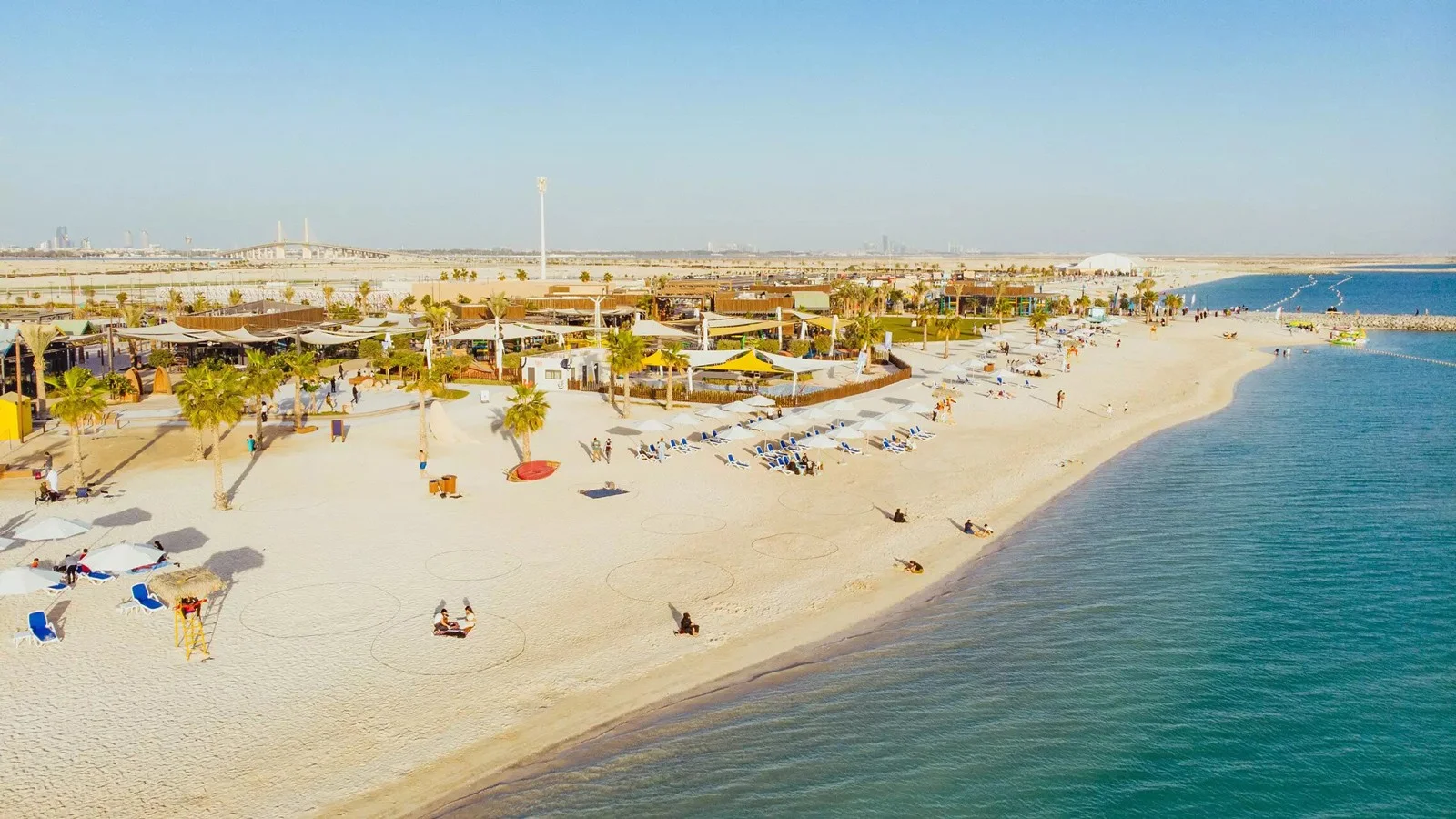
Abu Dhabi’s rental yield story is simple to state and complicated to execute: the emirate offers the highest documented gross yields in the UAE at the low transaction cost of 2% DMT, with a major developer (Aldar, ADX-listed) delivering at ~92% on time. The complication is liquidity, Abu Dhabi’s secondary market is thinner than Dubai’s, and the yield advantage comes partly from prices that have not yet caught up to international recognition rather than pure rental market strength.
Insider tip: model Al Reef and Al Ghadeer on Tawtheeq rents and building service charges first; Abu Dhabi’s 2% DMT saving versus Dubai’s 4% DLD only helps if net yield still clears after AED 8-14/sqft charges and a 7-10% vacancy allowance.
| Community | Gross yield | Net yield | AED/sqft | Vacancy rate | 2% DMT saving vs Dubai |
|---|---|---|---|---|---|
| Al Reef | 9-9.5% | ~6.5-7.5% | 700-1,000 | 5-8% | AED 14K-20K on AED 700K-1M |
| Al Ghadeer | 8-8.5% | ~6-7% | 600-900 | 5-7% | AED 12K-18K on AED 600K-900K |
| Al Reem Island | 7-8.5% | ~5.5-6.5% | 900-1,400 | 6-8% | AED 18K-28K on AED 900K-1.4M |
| Yas Island | 5.5-7% | ~4.5-5.5% | 1,500-2,200 | 5-7% | AED 30K-44K on AED 1.5M-2.2M |
| Saadiyat Island | 4-5.5% | ~3.5-4.5% | 2,000-4,000 | 4-5% | AED 40K-80K on AED 2M-4M |
Why do Abu Dhabi gross yields often beat Dubai prime?
Abu Dhabi mid-market gross yields typically beat Dubai prime because price per sqft is lower than the rent gap: Al Reef at AED 700-1,000/sqft often trades 30-50% below JVC while rents are not cut by the same margin. Invest Gulf also credits AED 8-14/sqft service charges and the 2% DMT fee versus Dubai’s 4% DLD.
Factor 1: Lower price per sqft base. Al Reef at AED 700-1,000/sqft trades at 30-50% below JVC at AED 900-1,400/sqft and 60-80% below Marina at AED 1,900-2,600/sqft. Rents in Al Reef are not proportionally lower, Abu Dhabi mid-market rents are compressed but not 30-50% below equivalent Dubai communities. The price gap is wider than the rent gap, creating the yield advantage.
Factor 2: Lower service charges. Abu Dhabi’s service charge structures across mid-market communities run AED 8-14/sqft versus Dubai’s 14-22/sqft for comparable product. On an 800 sqft apartment, this saves AED 4,800-6,400/year in operating cost, improving net yield by 0.5-0.7 percentage points.
Factor 3: Government employer base. Abu Dhabi’s economy is anchored by ADNOC, Mubadala, sovereign wealth entities, and government-related industries. This workforce is relatively stable, creating consistent rental demand without the sharp sentiment cycles that affect Dubai’s more finance and trading-exposed workforce.
Factor 4: 2% DMT acquisition cost. Every dirham saved in acquisition cost improves the return on investment. The DMT advantage directly benefits net return in Year 1 and improves the total return calculation over any holding period.
Which Abu Dhabi communities deliver the best yields?
Al Reef typically leads documented Abu Dhabi apartment gross yield at 9-9.5%, with Al Ghadeer near 8-8.5% and Al Reem at 7-8.5% depending on building tier. Our underwriting still converts those bands to net after AED 8-14/sqft charges and 5-8% vacancy before ranking communities.
Yield data:
- 1BR apartments: AED 50,000-75,000 rent on AED 550,000-800,000 purchase → 9-9.5% gross
- 2BR apartments: AED 70,000-100,000 rent on AED 700,000-1,050,000 purchase → 8.5-9.5% gross
- Villas: Lower yield (5-7%) but capital appreciation play
Net yield worked example (Al Reef 1BR): Purchase: AED 650,000. Annual rent: AED 60,000. Service charge (AED 11/sqft × 800 sqft): AED 8,800. Management (8%): AED 4,800. Vacancy (7%): AED 4,200. Maintenance: AED 2,000. Net income: AED 40,200. Net yield: 6.2%.
Al Reef one-beds near AED 650,000 with AED 60,000 rent often print about 9.2% gross and 6.2% net after AED 8,800 service charges, 8% management, 7% vacancy, and AED 2,000 maintenance. Al Ghadeer apartments more often land near 8-8.5% gross and 5.5-7% net while capturing Dubai-side commuter demand that central Abu Dhabi stock cannot. Al Reem budget towers can still clear 8-8.5% gross at AED 800-950/sqft, but premium Gate District stock compresses toward 6-7% as prices rise. Yas Island more often sits at 5.5-7% gross with AED 14-22/sqft charges, so yield-only buyers usually prefer Al Reef or Al Ghadeer. Our underwriting treats Al Reef’s 25km distance from downtown as a tenant-mix risk, not a footnote, and prefers Tawtheeq rent proof over portal asks before any yield ranking.
Al Ghadeer: yield with a Dubai angle
Al Ghadeer’s investment case is detailed in its dedicated guide. For yield comparison purposes:
- Gross yield: 8-8.5% on apartment transactions
- Net yield: approximately 5.5-7% depending on unit size and service charge
- Unique advantage: captures Dubai-side commuter demand that other Abu Dhabi communities cannot
Al Reem Island: urban yield with capital upside
Al Reem Island is an established waterfront community adjacent to Abu Dhabi city centre, with a diverse building mix ranging from budget-oriented to premium. Yields are strong for central Abu Dhabi location.
| Building tier | Gross yield | Price range (AED/sqft) | Service charge |
|---|---|---|---|
| Budget towers | 8-8.5% | 800-950 | AED 10-14/sqft |
| Mid-range | 7-8% | 950-1,200 | AED 12-16/sqft |
| Premium (Gate District) | 6-7% | 1,200-1,500+ | AED 16-22/sqft |
Al Reem’s proximity to Abu Dhabi downtown (10 minutes) and strong infrastructure make it popular with government and finance sector professionals. The building mix is large and quality varies significantly, due diligence on specific building service charges and occupancy is essential.
Yas Island: entertainment premium compresses yield
Yas Island’s yield profile reflects the capital appreciation story:
- Gross yield: 5.5-7% (still reasonable for a premium community)
- Service charges: AED 14-22/sqft for standard apartments, higher for branded residences
- Capital appreciation 2015-2024: approximately 70-100% on early-entry pricing
- Future catalysts: ongoing F1 infrastructure, potential F1 permanent fixture expansion
For yield-only investors, Yas underperforms Al Reef and Al Ghadeer. For combined income + growth investors with a 7-10 year horizon, Yas has a proven track record of delivering both.
Saadiyat Island: capital appreciation, not yield
Saadiyat Island is Abu Dhabi’s cultural and luxury flagship. Investors who bought during 2012-2016 phases have seen 2-3x capital returns. Yields on current pricing are compressed:
- Gross yield: 4-5.5% (comparable to Palm Jumeirah in Dubai)
- Price premium: Louvre Abu Dhabi, NYU Abu Dhabi, upcoming Guggenheim are hard infrastructure
- Tenant profile: senior government, diplomatic, and corporate executives
Saadiyat is a capital preservation and appreciation play for HNW investors, not a yield optimisation strategy.
How should you model net rental yield in Abu Dhabi?
Net rental yield in Abu Dhabi typically means rent minus Tawtheeq, management at 7-10%, vacancy of 7-10%, maintenance, and AED 8-14/sqft service charges on mid-market stock. Invest Gulf models Al Reem and Al Reef on all-in invested capital including the 2% DMT fee, not brochure purchase price alone.
Cost 1: Tawtheeq registration fee. Abu Dhabi tenancy contracts must register on Tawtheeq. Landlord registration cost is modest (typically AED 200-500) but some property managers pass this to landlord, include it.
Cost 2: Property management fees. Abu Dhabi property management market is less competitive than Dubai, fewer agencies means less fee negotiation leverage. Typical fees: 7-10% of annual rent. Budget 8% as a base.
Cost 3: Abu Dhabi municipality fee. Tenants pay a 5% municipality fee on rent to Abu Dhabi (similar to Dubai’s 5% on top of rent). This is tenant-borne, not landlord-borne, but it affects the total occupancy cost and therefore rental demand sensitivity.
Cost 4: Vacancy during transition. The secondary rental market in Abu Dhabi (particularly outside Yas and Saadiyat) has longer average listing periods than Dubai. Budget 7-10% vacancy for mid-market communities (vs. 5-7% for comparable Dubai).
Comprehensive net yield model (Al Reem Island 1BR): Purchase: AED 900,000. Annual rent: AED 72,000. Service charge (AED 14/sqft × 750 sqft): AED 10,500. Management (8%): AED 5,760. Vacancy (8%): AED 5,760. Maintenance: AED 2,500. Tawtheeq: AED 300. Net income: AED 47,180. Net yield: 5.24%. Gross was 8.0%; net is 5.24%. The 2.76 percentage point gap is smaller than equivalent Marina compression but needs modelling.
Abu Dhabi vs Dubai: which market fits yield investors?
Yield-first buyers typically choose Abu Dhabi when gross spreads of 1-2 points above Dubai mid-market justify slower resale of 90-180 days. Dubai wins when foreign buyers need 30-60 day exits, short-let options, and a deeper broker pool.
- Abu Dhabi: higher gross, 2% DMT, government-anchored demand
- Dubai: faster liquidity, deeper broker pool, STR options
- Our underwriting: income priority versus exit timeline decides the lean
How much does the 2% DMT fee improve year-one returns?
Abu Dhabi’s 2% DMT fee typically saves AED 20,000 versus Dubai’s 4% DLD on an AED 1,000,000 purchase, lifting year-one cash yield on all-in capital. Our research treats the saving as meaningful on Al Reef and Al Ghadeer income deals, and smaller in percentage terms on Saadiyat tickets above AED 2M.
- Invested capital effectively AED 20,000 lower for equivalent returns
- Year 1 cash yield on total invested (including fees) is higher for Abu Dhabi
- Over 5-year hold, the saving compounds slightly through reinvestment
- Over 10-year hold, the fee differential matters less relative to accumulated income
What does this Abu Dhabi yield guide cover?
This guide typically covers community-level gross and net yield bands for Al Reef, Al Ghadeer, Al Reem, Yas, and Saadiyat, plus the 2% DMT versus 4% DLD effect and Tawtheeq-aware modelling. We also flag 90-180 day marketing periods for mid-market resale so foreign buyers do not confuse brochure yield with exit speed.
Which guides pair with Abu Dhabi yield planning?
Pair this yield guide with ownership and district pages so 9-9.5% Al Reef gross stays tied to real purchase mechanics. Continue with Abu Dhabi property investment guide, Al Reef Abu Dhabi property, and Dubai rental yield guide for cross-emirate benchmarks we use.
- Abu Dhabi ownership and off-plan context
- Al Reef community deep dive
- Dubai yield benchmark for net spread checks
How liquid is Abu Dhabi resale compared with Dubai?
Abu Dhabi resale is typically thinner than Dubai even after 2025 volumes near AED 66 billion (+160.7% YoY), with mid-market marketing often at 90-180 days versus 30-60 days in Dubai equivalents. Our research still ranks Yas and Saadiyat faster than Al Reef.
Transaction volume trends (2024-2026)
- Total market value: AED 66 billion in 2025 (+160.7% YoY)
- Foreign buyer share: 88% of Aldar sales, 65% of overall market
- Average transaction size: AED 1.8M (vs Dubai average of AED 1.4M)
- Secondary market depth: Approximately 30% of Dubai’s transaction frequency
Liquidity ranking by community
| Community | Days on market (average) | Price negotiation range | Buyer pool depth |
|---|---|---|---|
| Al Reef | 90-150 days | 5-12% | Moderate (UAE residents) |
| Al Ghadeer | 75-120 days | 3-8% | Good (Dubai crossover) |
| Al Reem Island | 60-90 days | 2-8% | Good (international) |
| Yas Island | 45-75 days | 0-5% | Excellent (tourism/lifestyle) |
| Saadiyat Island | 30-60 days | 0-3% | Excellent (luxury international) |
Foreign buyer patterns by nationality
Indian buyers (35% of foreign transactions):
- Focus: Al Reef and Al Ghadeer for value
- Average purchase: AED 1.2M
- Hold period: Typically 7-10 years
- Financing: 70% cash, 30% mortgage
UK/European buyers (25%):
- Focus: Saadiyat and Yas Island for lifestyle
- Average purchase: AED 2.8M
- Hold period: 5-7 years mixed investment/lifestyle
- Financing: 60% mortgage, 40% cash
GCC nationals (20%):
- Focus: Premium locations (Saadiyat, Al Maryah)
- Average purchase: AED 4.2M
- Hold period: Long-term family holdings
- Financing: Predominantly cash
Which Abu Dhabi developers matter for landlords?
Landlord outcomes typically track developer delivery and OA discipline: Aldar prints about 92% on-time completion with 3-5% annual service charge growth, while Bloom and Eagle Hills sit nearer 85-88% on-time with wider charge variance. We prefer Aldar OA histories on income stock.
Major developer performance comparison
Aldar Properties (ADX: ALDAR):
- Delivery record: ~92% on-time completion
- Post-handover support: Strong OA management transition
- Service charge management: Conservative increases, typically 3-5% annually
- Resale liquidity: Best-in-market for Abu Dhabi communities
- Investment grade: Institutional quality, suitable for conservative portfolios
Bloom Properties:
- Delivery record: ~88% on-time (smaller portfolio)
- Specialization: Mid-market communities, value positioning
- Service charge management: Variable, some communities see 8-12% annual increases
- Resale liquidity: Moderate, improving with community maturity
- Investment grade: Good for yield-focused strategies
Eagle Hills:
- Delivery record: ~85% on-time
- Focus: Mixed-use developments with retail integration
- Service charge management: Higher initial charges but stable growth
- Resale liquidity: Community-dependent, strong in prime locations
- Investment grade: Good for mixed investment/lifestyle strategies
Developer financial health indicators
- Debt-to-equity ratios: Aldar maintains conservative 0.3-0.4x leverage
- Pipeline management: Phased releases prevent oversupply in single communities
- Government backing: Aldar benefits from Abu Dhabi government relationship
- International partnerships: Joint ventures with global developers reduce execution risk
How do you build a full Abu Dhabi landlord model?
A full landlord model typically starts from all-in cost including 2% DMT, then subtracts AED 8-14/sqft service charges, 8% management, 7% vacancy, and maintenance before quoting net yield. Our underwriting on an Al Reef example near AED 850,000 often lands near 4.8-5.0% net after those lines.
Comprehensive cost structure breakdown
Al Reef investment example (AED 850,000 purchase):
| Cost category | Annual amount | % of purchase price |
|---|---|---|
| Purchase price | AED 850,000 | 100% |
| DMT transfer fee (2%) | AED 17,000 | 2.0% |
| Registration/legal | AED 8,000 | 0.9% |
| Total acquisition cost | AED 875,000 | 102.9% |
| Ongoing annual costs: | ||
| Service charges (AED 12/sqft × 900sqft) | AED 10,800 | 1.3% |
| Property management (8%) | AED 6,000 | 0.7% |
| Tawtheeq registration | AED 300 | 0.04% |
| Maintenance reserve | AED 8,500 | 1.0% |
| Insurance | AED 2,000 | 0.2% |
| Vacancy allowance (7%) | AED 5,250 | 0.6% |
| Total annual costs | AED 32,850 | 3.9% |
| Net calculation: | ||
| Gross rental income | AED 75,000 | 8.8% |
| Less: Annual costs | AED 32,850 | 3.9% |
| Net annual income | AED 42,150 | 5.0% |
| Net yield on total invested | 4.8% |
Yield sensitivity analysis
Impact of key variables on net yield:
| Variable change | Impact on net yield |
|---|---|
| Rent +10% / -10% | +0.9% / -0.9% |
| Service charges +20% / -20% | -0.3% / +0.3% |
| Vacancy +3% / -3% | -0.3% / +0.3% |
| Management fee +2% / -2% | -0.2% / +0.2% |
Most sensitive variables: Rental income and vacancy rates have the highest impact on returns, emphasizing the importance of location selection and tenant demand analysis.
How do oil prices and the AED peg affect landlords?
Oil prices typically matter more in Abu Dhabi than Dubai because government-sector hiring still correlates with the AED 3.6725 USD peg cycle and ADNOC-linked demand. Our underwriting treats sub-USD 60 oil as a vacancy risk for premium Yas and Saadiyat stock while mid-market Al Reef demand is more local.
Oil price correlation analysis
Abu Dhabi’s economy remains more oil-dependent than Dubai’s, creating specific investment considerations:
Oil price impact on property demand:
- $60-80/barrel: Neutral to positive for government sector employment
- $80-100/barrel: Strong positive impact, increased government spending
- Under $60/barrel: Potential government sector hiring freezes, rental demand softening
Historical correlation (2015-2025):
- Abu Dhabi property prices: 0.6 correlation with oil prices
- Dubai property prices: 0.3 correlation with oil prices
- Investment implication: Abu Dhabi offers higher yields but higher economic volatility
Currency stability and international investor considerations
AED peg stability: USD 3.6725 peg maintained since 1997, providing currency stability for international investors Economic diversification timeline: Abu Dhabi Economic Vision 2030 targeting 64% non-oil GDP Sovereign wealth fund backing: ADIA and other SWFs provide economic stability buffer
Which infrastructure projects could move Abu Dhabi rents?
Infrastructure typically moves Al Reem and Saadiyat rents first: metro Phase 1 toward Al Reem and Guggenheim timing around 2027 can support 10-15% appreciation in adjacent stock. Our research still underwrites current Tawtheeq rents, not future catalysts, when quoting 2026 net yield.
Planned infrastructure (2027-2030)
Abu Dhabi Metro development:
- Phase 1: Al Reem Island to Abu Dhabi Island
- Expected impact: 10-15% appreciation in metro-adjacent communities
Cultural district completion:
- Guggenheim Abu Dhabi opening (2027)
- Zayed National Museum completion (2028)
- Expected impact: Saadiyat Island premium positioning strengthened
Economic city development:
- ADGM expansion and fintech hub development
- Expected impact: Increased demand for premium residential in Al Maryah Island area
Which employer sectors drive Abu Dhabi rental demand?
Employer sectors typically set vacancy bands: government and ADNOC-linked tenancy can hold vacancy near 5-7% with 75-80% renewals, while oil-cycle roles raise volatility on Yas and Saadiyat. We match mid-market Al Reef stock to stable local employers before chasing entertainment premiums.
Yield implications:
- Lower vacancy risk (5-7% vs market average 7-9%)
- Moderate rental growth (3-5% annually)
- Strong lease renewal rates (75-80%)
Oil and gas sector (25% of Abu Dhabi employment)
Rental characteristics:
- Cyclical demand based on oil prices and project cycles
- Higher rental budgets during boom periods
- International expatriate workforce
- Preferred communities: Yas Island, Saadiyat Island, premium Al Reem
Yield implications:
- Higher rental rates but greater volatility
- Vacancy risk correlates with commodity cycles
- Premium amenity requirements (pools, gyms, beach access)
Financial services and free zones (15% growing)
Rental characteristics:
- Young professionals and couples
- Modern amenity requirements
- Proximity to business districts valued
- Preferred communities: Al Maryah Island, premium Al Reem towers
Yield implications:
- Willingness to pay premium for location and amenities
- Shorter tenancy periods but higher turnover rent increases
- Technology and connectivity requirements drive apartment selection
How can Abu Dhabi landlords reduce concentration risk?
Concentration risk typically falls when landlords split stock across Al Reem, Yas, and Al Reef rather than one oil-linked corridor, and keep a Dubai sleeve for faster 30-60 day exits. Our underwriting also budgets 5-7% annual service charge growth so net yield near 5-6% survives OA inflation.
Economic concentration risk
Mitigation strategies:
- Diversify across multiple communities to spread tenant risk
- Focus on areas with mixed economic sector appeal
- Monitor government policy changes affecting expat employment
- Consider Dubai portfolio diversification for broader economic exposure
Liquidity risk management
Strategies for improved exit flexibility:
- Choose communities with established secondary markets (Al Reem, Yas)
- Maintain competitive pricing vs recent comparables
- Use established agents with broad buyer networks
- Consider off-market sale networks for faster transactions
Service charge inflation protection
Protective measures:
- Review OA financial statements and reserve funds before purchase
- Choose buildings with active, engaged owner communities
- Budget 5-7% annual service charge increases in long-term models
- Consider newer buildings with remaining warranty coverage
Regulatory change adaptation
Monitoring and response:
- Track Abu Dhabi Urban Planning Council policy changes
- Stay informed on federal UAE property law modifications
- Maintain relationships with local legal and tax advisors
- Join property owner associations for collective representation
How should you benchmark Abu Dhabi rental performance?
Benchmarking typically means tracking net yield against a 6-8% income target, vacancy under 45 days, 98%+ collection, and service charges under 15% of gross rent. We refresh those KPIs from Tawtheeq and OA statements each year for foreign buyers holding Al Reef or Al Reem stock.
Abu Dhabi mid-market income still centres on Al Reef at 9-9.5% gross and about 6.5-7.5% net, Al Ghadeer at 8-8.5% gross, and Al Reem at 7-8.5% gross after AED 8-14/sqft charges and 5-8% vacancy allowances. The 2% DMT fee versus Dubai’s 4% DLD can save AED 20,000 on an AED 1,000,000 purchase, but resale often needs 90-180 days in mid-market stock versus 30-60 days in Dubai equivalents. Transaction value near AED 66 billion in 2025 and Aldar foreign-buyer share near 88% improved liquidity optics without erasing secondary-market depth gaps. Landlords should underwrite Tawtheeq rents, OA charge histories, and 7-10% vacancy on Al Reef distance risk before treating brochure gross as cash flow.
Key performance indicators by investment strategy
Yield-focused investors (target 6-8% net yield):
- Net yield vs Abu Dhabi market average
- Vacancy days per year (target: under 45 days)
- Rent collection efficiency (target: 98%+)
- Service charge as % of gross rent (target: under 15%)
Growth-focused investors (target 3-5% annual appreciation):
- Property value vs community averages
- Community infrastructure development progress
- Relative performance vs Dubai equivalent communities
- Exit liquidity improvement (days on market trending)
Mixed strategy investors:
- Total return (yield + appreciation)
- Risk-adjusted returns vs alternative investments
- Geographic diversification effectiveness
- Currency hedging performance if applicable
Performance optimization techniques
Rent optimization:
- Annual market rent reviews using Tawtheeq data
- Strategic improvement investments (AED 10-30K can yield AED 5-15K annual rent increases)
- Tenant retention programs to minimize vacancy costs
- Professional property photography for faster re-letting
Cost optimization:
- Service charge review and OA engagement
- Property management fee negotiation based on portfolio size
- Maintenance cost control through preventive programs
- Insurance cost optimization through multi-property policies
Yield figures are indicative based on transacted rent data and DMT transaction records through Q1 2026. Net yields depend on building-specific service charges verified through Abu Dhabi RERA equivalents. Verify current yield data with local agents and Tawtheeq rent records at time of investment. This guide is for information purposes only and does not constitute investment advice.
Related reading: Dubai Property Investment Guide · Abu Dhabi Property Investment Guide.
Related reading: Abu Dhabi Off-Plan Property Guide · Dubai Capital Appreciation vs Rental Yield · Can Foreigners Buy Property in the UAE? Full Legal Guide.
Evaluating Abu Dhabi buy-to-let?
Get a shortlist of Abu Dhabi properties with current yield data.
Frequently Asked Questions
Al Reef consistently leads documented gross yield at 9-9.5% for apartments. Al Ghadeer follows at 8-8.5%. Al Reem Island hits 7-8.5% depending on building and unit type. These numbers compare favourably with Dubai's equivalent high-yield communities (JVC 7.5-9.2%). Net yield after Abu Dhabi's typically lower service charges (8-14 AED/sqft vs Dubai's 14-32) and a modest vacancy allowance (5-8%) runs approximately 6.5-7.5% for Al Reef and 6-7% for Al Ghadeer.
Abu Dhabi's 2% DMT transfer fee versus Dubai's 4% DLD creates a structural Year 1 advantage. On AED 1,000,000 investment, Abu Dhabi saves AED 20,000 in acquisition cost. This improves first-year net return by 2 percentage points. Over a 5-year hold, the fee differential matters less, but for income-focused investors tracking gross-to-net spread, Abu Dhabi's lower entry cost makes communities like Al Reef (9-9.5% gross) meaningfully better on total return basis than initially apparent.
The yield gap reflects a price-to-rent ratio difference. Abu Dhabi communities like Al Reef trade at AED 700-1,000/sqft while renting at rates reflecting Abu Dhabi's lower cost of living positioning. Dubai Marina trades at AED 1,900-2,600/sqft, 2-3x the price, while rents are only 1.5-2x higher, compressing yields. Abu Dhabi's lower price base relative to rents is the core yield advantage. The tradeoff: lower transaction volume, longer marketing periods, and less international buyer recognition.
Abu Dhabi service charges are generally lower than Dubai equivalents. Mid-market Abu Dhabi communities (Al Reef, Al Ghadeer, Al Raha Beach) typically run AED 8-14/sqft annually. Premium communities (Saadiyat Island, Al Maryah, Yas Island waterfront) run AED 15-22/sqft. Compare to Dubai where JVC runs AED 14-20/sqft and Marina AED 20-28/sqft. The service charge saving in Abu Dhabi vs an equivalent Dubai premium community can be AED 8,000-12,000/year on an 800 sqft apartment, significant for net yield.
Abu Dhabi has its own short-term rental framework under ADTCA (Abu Dhabi Tourism and Culture Authority). Unlike Dubai's DET Holiday Home Permit, Abu Dhabi's STR licensing is available but the STR market is less mature, fewer operators, lower booking density, and less established demand than Dubai. Communities like Yas Island have better STR fundamentals (F1, theme parks) than mid-market communities. For most Abu Dhabi investors, long-term annual leases produce more reliable income than STR at this stage of market development.
Tawtheeq is Abu Dhabi's mandatory tenancy contract registration system (equivalent to Dubai's Ejari). All residential leases in Abu Dhabi must register on Tawtheeq. Registered contracts are required for utility connections, school enrollment, and bank accounts, giving tenants strong incentive to register. For landlords, Tawtheeq registration creates an official rental record used for any rent dispute resolution through Abu Dhabi courts. Rents documented in Tawtheeq are the authoritative reference for yield modelling, not portal listing prices.
Liquidity has improved significantly with Abu Dhabi transaction volumes growing +160.7% year-on-year to AED 66 billion. Foreign buyers represent 88% of Aldar's sales, indicating strong international buyer interest. However, total secondary market transaction depth remains below Dubai. Prime Abu Dhabi property (Saadiyat, Yas) has active international buyer markets. Mid-market (Al Reef, Al Ghadeer) is primarily UAE-resident buyer driven. Plan for 90-180 day marketing periods for secondary sales versus 30-60 days in Dubai's equivalent mid-market.
Get a Gulf property shortlist
Tell us your budget and target market. Independent research first; enquiries are matched with licensed local partners. We reply within one business day.