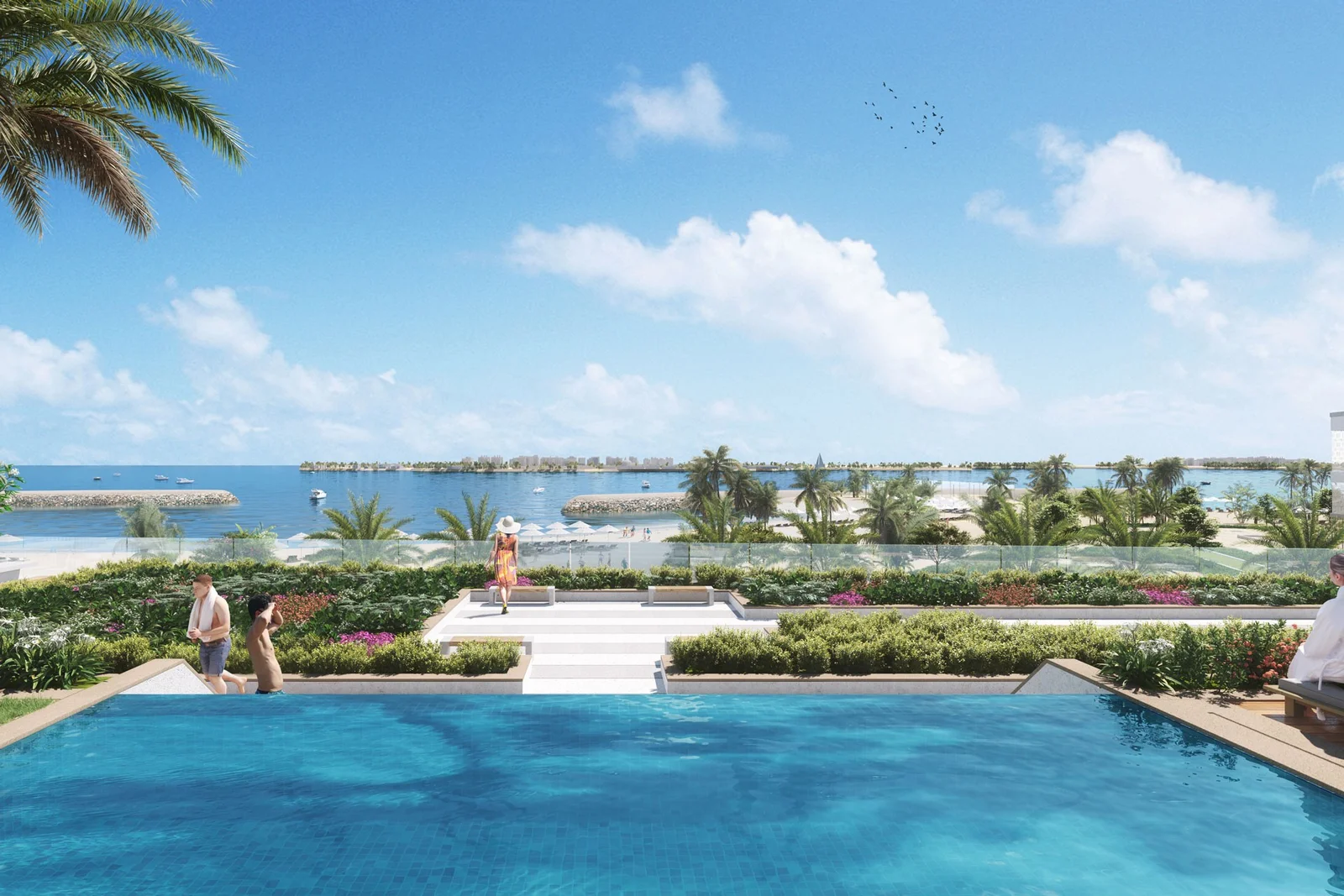
Bahrain is the Gulf’s compact finance hub, linked to Saudi Arabia by the King Fahd Causeway and priced below Dubai premium districts. Foreign investors buy in eight NPRA freehold zones for gross returns that rival Dubai mid-market on a lower capital ticket, accepting that exit markets are thin compared to Dubai or Abu Dhabi.
This guide follows the same yield structure as our Qatar rental yield hub: area tables, gross-to-net math, tenant profiles, liquidity, and Dubai comparison.
Hubs: Bahrain property investment · Dubai rental yield · Bahrain Golden Residence
Insider tip: Pull three closed leases in the same Amwaj or Seef tower before accepting an agent’s asking rent; asking ads routinely overstate achievable yield by a full percentage point.
Bahrain mid-market freehold apartments in Amwaj Islands and Juffair typically deliver 6-8% gross on realistic purchase prices, while premium Seef stock often runs 5.5-6.5% gross because capital values sit higher per square metre. Net yields after 8-10% management, maintenance, and 4 to 8 weeks vacancy commonly land at 4-6%, close to Dubai mid-market on net when Dubai service charges run AED 18-22 per sq ft. Invest Gulf underwriting treats Bahrain as a cash-flow market for foreign buyers who can hold 5 years or longer, not as a 90 days flip market. Resale marketing often needs 90 to 180 days in thinner towers, so liquidity risk belongs in the same spreadsheet as rent. Acquisition stacks near 3-5% also help net retention versus Dubai DLD-heavy purchases when tickets stay in the one-bed band.
Amwaj one-bed underwriting often starts near BHD 70,000 purchase with about BHD 5,200 annual rent, which is roughly 7.4% gross before costs. After 8% management, maintenance near BHD 350, and a 4 weeks vacancy allowance, modeled net income can land near BHD 4,001, or about 5.7% net. Invest Gulf stress cases cut rent by 10% and extend void to 8 weeks, which can push net yield toward 4.5% on the same ticket. Dubai JVC can print 7.5-9% gross, yet foreign buyers comparing the same cash often find Bahrain’s lower entry and 3-5% acquisition stack close the net gap. Plan 12 months leases as the base product; short-term rental upside is thinner than UAE holiday-home licensing, and resale still needs a 90 to 180 days marketing window in thinner towers.
What yields should you expect in Bahrain in 2026?
Mid-market apartments in Amwaj Islands and Juffair typically deliver 6-8% gross on realistic purchase prices. Premium Seef and Reef Island stock runs 5.5-6.5% gross because finance-sector tenants pay reliably but capital values are higher. Invest Gulf net models after management and vacancy commonly land at 4-6%.
Market size matters: Bahrain’s investable freehold stock is measured in thousands of units, not hundreds of thousands. Selection and building quality screening matter more than in Dubai’s deep resale market.
| Zone | Gross yield (typical) | Entry (1BR indicative) | Tenant skew |
|---|---|---|---|
| Amwaj Islands | 6-8% | BHD 55K-95K | Expat families, causeway commuters |
| Juffair | 6.5-8% | BHD 45K-75K | Contractors, navy-adjacent demand |
| Seef | 5.5-6.5% | BHD 70K-120K | Banking and corporate |
| Reef Island | 6-7.5% | BHD 80K-140K | Premium waterfront |
How do Amwaj, Juffair, Seef, and Reef Island compare on yield?
Amwaj offers the strongest balance of 6-8% gross, expat tenant depth, and resale activity among Bahrain freehold zones. Juffair can touch 7.5-8% on older stock if plant diligence passes. Our checklist work ranks Seef lower on gross but higher on payment certainty.
Amwaj Islands
Marina-facing units trade at a premium; inland blocks in Amwaj often deliver better gross yield if the building is maintained.
Net model (illustrative 1-bed):
| Line | BHD/year |
|---|---|
| Purchase price | 70,000 |
| Annual rent | 5,200 |
| Gross yield | 7.4% |
| Management (8%) | 416 |
| Maintenance / municipality | 350 |
| Vacancy (4 weeks) | 433 |
| Net income | 4,001 |
| Net yield | 5.7% |
Juffair
Affordable entry and proximity to the US Navy footprint support contractor and services demand. Yields can touch 7.5-8% on older stock; building quality varies widely. Inspect lifts, chiller plant, and common areas before you underwrite yield.
Seef
Financial District adjacency means lower gross yield but higher payment certainty. Suitable for investors who prioritise tenant credit quality over peak yield. Corporate leases and furnished packages appear more often here than in Juffair.
See Bahrain property investment guide for freehold zone map and Manama living context.
Reef Island
Waterfront premium compresses gross yield unless you buy with a negotiated discount. Tenant profile overlaps Seef and Amwaj: finance professionals and long-stay expat families.
How should investors convert Bahrain gross yield to net?
Gross-to-net methodology for Bahrain means subtracting 8-10% management, tower maintenance, 4 to 8 weeks vacancy, and re-letting fees before you quote a net number to foreign buyers. Bahrain maintenance is often lower than Dubai premium towers, which helps net retention. Our checklist models always show both gross and net on the same ticket.
| Cost bucket | Typical range | Notes |
|---|---|---|
| Property management | 8-10% of rent | Standard for overseas landlords |
| Building maintenance | BHD 30-80/month | Tower-dependent |
| Vacancy | 4-8 weeks/year | Smaller market, longer re-let in weak towers |
| Agency re-letting | 5% of annual rent | New tenant placement |
| Insurance | BHD 40-120/year | Landlord policy |
Methodology cross-reference: Gross vs net yield Dubai (same gross-to-net discipline applies across Gulf markets).
How does Bahrain compare with Dubai on the same budget?
Bahrain mid-market one-beds often sit near BHD 50K-90K with 6-8% gross, while Dubai JVC one-beds often need AED 650K-950K for 7.5-9% gross. Acquisition stacks near 3-5% in Bahrain versus about 6-8% with DLD change net math. Invest Gulf exits use 90 to 180 days marketing versus 30 to 90 days in Dubai.
| Factor | Bahrain mid-market | Dubai JVC (indicative) |
|---|---|---|
| 1BR ticket | BHD 50K-90K | AED 650K-950K |
| Gross yield | 6-8% | 7.5-9% |
| Acquisition stack | ~3-5% | ~6-8% with DLD |
| Resale liquidity | 90-180 days typical | 30-90 days in hot towers |
| STR upside | Limited | Stronger holiday-home channel |
Choose Bahrain for lower ticket plus acceptable yield with a 5+ year hold horizon. Choose Dubai for maximum net AED cash flow and faster exit when you need liquidity.
Compare: Bahrain vs Dubai investment framing.
What tenant and lease norms shape Bahrain rental demand?
Standard leases run 12 months, often renewable, and cheques may be quarterly or semi-annual depending on landlord preference. Saudi weekend commuters favour Amwaj and coastal stock; finance tenants cluster in Seef and Reef. Invest Gulf demand notes for foreign buyers also track Sitra and Hidd logistics corridors.
Demand drivers:
- Banking and insurance employers in Manama and Seef
- Logistics and industrial services in Sitra and Hidd corridors
- Causeway-linked Saudi professionals who prefer Bahrain residential quality
Furnished Seef premiums of 10-15% over unfurnished are achievable if fit-out is corporate-grade. Causeway delays and visa rules can shift weekend demand seasonally; underwrite on 12 months corporate and family leases, not weekend-only occupancy unless you have a licensed hospitality product.
How does Golden Residence interact with rental demand?
Bahrain Golden Residence is commonly cited at BHD 200,000 property investment (verify current NPRA rules), which can support owner demand but does not replace tenant depth analysis. Treat residency as a bonus to yield, not the yield thesis itself. Our underwriting still requires closed-lease evidence over 12 months even when the ticket clears residency thresholds.
See Bahrain Golden Residence property.
| Item | Yield implication |
|---|---|
| Residency threshold cited | Owner demand support only |
| Tenant depth | Still required from closed leases |
| Hold period | Prefer 5 years if residency is the secondary goal |
What acquisition costs improve Bahrain net returns versus UAE?
Acquisition cost advantage versus UAE starts with Bahrain registration near 2% of value versus 4% DLD in Dubai, which improves net return on hold for foreign buyers even when gross yield looks similar. Agency and legal lines stay smaller in absolute terms on Bahrain tickets. Our checklist models never paste UAE DLD assumptions into Bahrain SPAs.
| Cost line | Bahrain (indicative) | Dubai reference |
|---|---|---|
| Registration / transfer | ~2% of value (verify current schedule) | 4% DLD |
| Agency | 2-3% typical | 2% + VAT |
| Legal / admin | BHD 200-600 | AED 5K-15K bundles |
What does a three-year Amwaj cash flow model look like?
Three-year cash flow for an Amwaj one-bed often starts at BHD 70,000 purchase and BHD 5,200 rent, producing about BHD 4,000 net in year one after costs. A 5% rent uplift case in year three can lift net cash near BHD 4,200 if voids stay short. Invest Gulf stress cases with rent −10% and 8 weeks void drop net yield toward 4.5%.
| Year | Gross rent | Net cash (after costs) | Notes |
|---|---|---|---|
| 1 | 5,200 | ~4,000 | One void week modeled |
| 2 | 5,200 | ~4,000 | Flat rent assumption |
| 3 | 5,460 | ~4,200 | 5% rent uplift case |
How should investors plan liquidity, banking, and exit risk?
Liquidity is the main trade-off versus Dubai: plan 90 to 180 days marketing for resale in many towers, so yield must compensate foreign buyers who can hold 5 years without forced exit. Overseas landlords often lose 2 to 4 weeks of rent to banking setup friction in year one. Our red flag checks include stale identical listings, missing collected-rent proof, and maintenance arrears.
Red flags:
- Tower with multiple identical listings at stale prices
- Seller cannot produce last 12 months of actual collected rent
- Maintenance fund arrears or lift outages in body corporate minutes
Bahrain typically applies 0% personal income tax on residential rental income for individual overseas investors, but verify home-country reporting. Open a Bahraini bank account or use a management company with local collection before handover.
What decision checklist should yield investors run before committing?
Decision checklist work before you commit capital in Bahrain should model net yield on three comparable units, add Bahrain acquisition costs rather than UAE DLD, and stress rent −10% with 8 weeks void. Confirm NPRA freehold for the exact building and plan a 5 years hold unless you have a verified exit channel. Our underwriting for foreign buyers also refreshes rent assumptions every 12 months from closed leases.
- Model net yield on three comparable units in one zone
- Add Bahrain acquisition costs (not UAE DLD)
- Stress rent −10% and +8 weeks void
- Confirm NPRA freehold for the exact building
- Plan 5-year hold unless you have a verified exit channel
| Market | Guide |
|---|---|
| Dubai | Dubai rental yield guide |
| Qatar | Qatar rental yield hub |
| Saudi | Saudi rental yield guide |
| Oman | Oman rental yield guide |
| Residency | Gulf residency by investment |
Pair this guide with Bahrain property investment guide and Bahrain vs Dubai comparison before you commit capital.
Planning a Bahrain property investment?
Our team covers Seef, Amwaj, and Reef Island with current yield data.
Frequently Asked Questions
Bahrain mid-market apartments in Amwaj Islands and Juffair typically deliver 6-8% gross yields. Premium Seef and Reef Island stock runs 5-6.5% gross. Net yields after management, service charges, and vacancy commonly land at 4-6%, competitive with Dubai mid-market on net for investors who accept thinner resale liquidity.
Amwaj Islands offers the strongest balance of 6-8% gross, expat tenant demand, and established resale activity. Juffair provides affordable entry with similar yield bands. Seef trades yield for finance-sector tenant quality at 5.5-6.5% gross.
Dubai JVC can reach 7.5-9% gross versus Bahrain's 6-8% on mid-market stock. Bahrain's advantage is lower entry tickets (BHD 50K-90K one-beds) and lower total acquisition costs (3-5% stack). Net comparison is closer than gross suggests when Dubai service charges run high.
Budget 8-10% property management, building maintenance fees (varies by tower), 1-2 months vacancy allowance, and municipality charges. Bahrain service charges are generally lower than Dubai premium towers, improving net yield retention.
Tenant demand is anchored in finance, logistics, and Saudi commuter professionals using the King Fahd Causeway. Occupancy in Amwaj and Seef is generally steady but the market is smaller than Dubai, void risk rises in oversupplied micro-locations.
Bahrain Golden Residence is commonly cited at BHD 200,000 property investment (verify current NPRA rules). This creates owner demand but does not guarantee tenant depth. Treat residency as a bonus, not a yield driver.
Liquidity is the main trade-off. Annual transaction volumes are measured in hundreds, not hundreds of thousands. Plan 90-180 day marketing for resale. Yield compensates investors who can hold 5+ years.
Limited compared to Dubai. Most yield investors underwrite 12-month leases. Some waterfront stock supports corporate lets; STR frameworks are less mature than UAE holiday-home licensing.
Get a Gulf property shortlist
Tell us your budget and target market. Independent research first; enquiries are matched with licensed local partners. We reply within one business day.