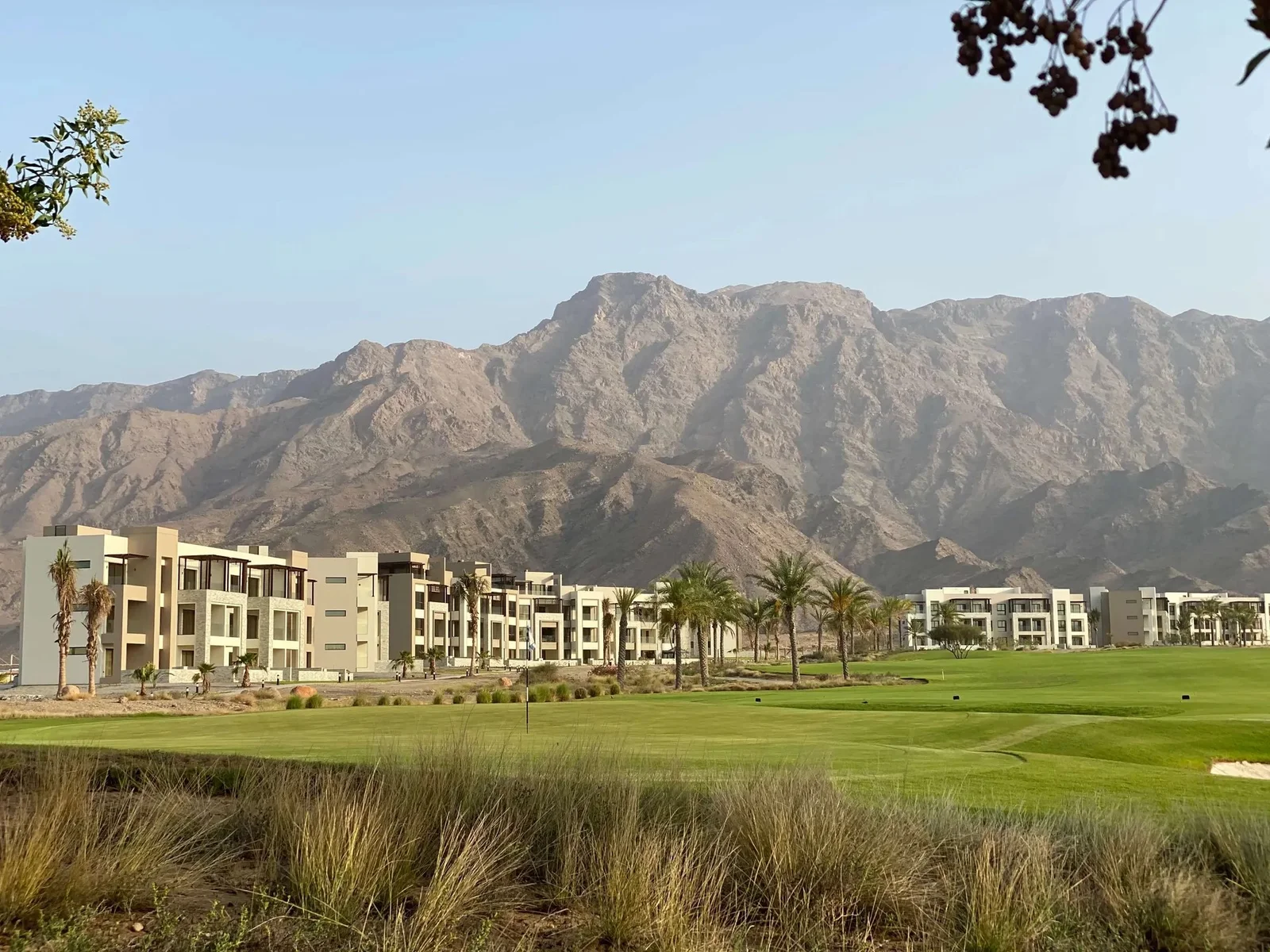
Oman’s Integrated Tourism Complex (ITC) zones allow foreign property ownership and have developed into steady rental markets over the past decade. Unlike Dubai’s high-turnover rental environment or Saudi’s emerging designated zones, Oman offers stable, long-term rental demand driven by diplomatic missions, oil sector corporations, and a growing but measured tourism industry.
Dubai and broader Gulf property files typically stack a 4% land transfer fee, about 2% broker commission, and trustee or registration lines near AED 4,000 on a ready AED 1.5 million apartment before optional legal review of AED 3,000 to 10,000. Invest Gulf buyer scenarios model net yield after service charges, vacancy, and management rather than brochure gross of 7% to 9%, because a 2 to 3 point gap is normal operating cost. Golden Visa planning usually waits until registered value reaches AED 2 million, while foreign buyers keep home-country reporting separate from UAE 0% personal income tax on rent for individuals. Escrow on Dubai REST and Trakheesi broker checks remain the first gate before any reservation deposit leaves the file in 2026 underwriting. Model a longer void than a Dubai comparable would need, because the ITC tenant pool is materially smaller.
Off-plan payment plans in the Gulf typically run 30/70, 40/60, or post-handover tails over 2 to 3 years, with late penalties often near 1% to 2% per month on overdue instalments when the SPA allows. Invest Gulf underwriting prefers milestone-linked schedules over pure calendar dates, and pauses files when RERA escrow cannot be verified on Dubai REST before the first AED transfer. A common AED 2,000,000 example still adds about AED 80,000 of DLD at Oqood plus setup costs of AED 15,000 to 30,000 at handover. Ready stock compresses timing but still needs Mollak service-charge proof and Ejari rent comps before the MOU is signed on any AED purchase file during 2026 underwriting cycles. ITC stock is a smaller and more specialised market than Dubai freehold, so treat a single quoted yield as a claim about one building rather than as a market figure.
Our team underwrites Oman ITC rentals as a stable-income hold rather than a Dubai-style yield chase. Gross yields typically range from 5% to 7%, with Muscat waterfront projects nearer 6% to 7%, Salalah tourism stock nearer 5% to 6%, and Sohar executive housing nearer 5.5% to 6.5%, while corporate leases often run 2 to 3 years with company guarantees. Net yields commonly land near 4.2% to 5.3% after management of 6% to 10%, vacancy of 4% to 8%, and ITC service charges that can run several points of rent on amenity-heavy schemes. Foreign buyers should confirm MOCI rental rights and written service schedules before treating brochure percentages as bankable income.
Insider tip: model one full month of void plus the published ITC service charge before accepting a 7% gross ask, because Invest Gulf files often lose 1.5 to 2.5 points once those lines are real.
How does Oman’s rental market compare to Dubai in 2026?
Oman ITC rentals typically deliver 5% to 7% gross yield with longer corporate leases and lower turnover than Dubai’s 7% to 9% market. Muscat waterfront leads on occupancy; Salalah adds seasonal premiums. We budget 12% to 18% of gross rent for costs before foreign buyers treat brochure yields as net.
What gross yields should you expect by Oman ITC zone?
Oman ITC gross yields typically print 6% to 7% at The Wave and Al Mouj, 5% to 6% in Salalah tourism stock, and 5.5% to 6.5% in Sohar executive housing. Corporate leases often run 2 to 4 years with company guarantees. Our analysis quotes zone bands, not city averages.
| ITC zone | Gross yield band | Rent guide (OMR/sqm/mo) | Typical lease |
|---|---|---|---|
| The Wave Muscat | 6.5% to 7% | 8 to 15 | 2 to 4 years, furnished |
| Al Mouj Muscat | 6% to 7% | 10 to 16 | 2 to 3 years, corporate |
| Muscat Hills | 6% to 6.5% | 12 to 20 | 2 to 3 years, embassy or C-suite |
| Salalah ITC | 5% to 6% | 6 to 12 | Seasonal plus long-stay mix |
| Sohar ITC | 5.5% to 6.5% | 8 to 14 | 2 to 3 years, industrial employers |
The Wave Muscat
- Gross yield range: 6.5-7%
- Property types: Waterfront apartments, townhouses
- Rental rates: OMR 8-15 per sqm monthly
- Tenant profile: Diplomatic, senior expatriate professionals
- Lease terms: 2-4 years typical, furnished preferred
Al Mouj Muscat
- Gross yield range: 6-7%
- Property types: Golf course apartments, marina units
- Rental rates: OMR 10-16 per sqm monthly
- Tenant profile: Corporate housing, expat families
- Occupancy: 85-90% year-round
Muscat Hills
- Gross yield range: 6-6.5%
- Property types: Villas, larger apartments
- Rental rates: OMR 12-20 per sqm monthly
- Tenant profile: Senior executives, embassy staff
- Lease terms: 2-3 years, company guarantees common
Salalah Tourism Zones: 5-6% Gross
Salalah ITC Projects
- Gross yield range: 5-6%
- Property types: Resort residences, holiday apartments
- Rental rates: OMR 6-12 per sqm monthly
- Seasonality: 30-40% premium during Khareef (monsoon) season
- Tenant mix: Tourism operators, seasonal residents, local professionals
Mirbat Coastal Development
- Gross yield range: 5-5.5%
- Property types: Beachfront units, townhouses
- Rental rates: OMR 7-11 per sqm monthly
- Market maturity: Developing (limited rental history)
Sohar Industrial Zone: 5.5-6.5% Gross
Sohar ITC Areas
- Gross yield range: 5.5-6.5%
- Property types: Executive housing, apartment complexes
- Rental rates: OMR 8-14 per sqm monthly
- Tenant profile: Oil/gas sector expatriates, industrial professionals
- Lease terms: 2-3 years, corporate contracts preferred
Who rents in Oman ITC zones and how stable is demand?
Oman ITC demand typically comes from diplomatic staff, oil and gas professionals, healthcare and education hires, plus measured coastal tourism. Corporate tenants dominate Muscat and Sohar, while Salalah mixes long-stay and Khareef seasonal demand. Invest Gulf voids plan near 4% to 8% annually.
Tenant stability: High. Corporate relocations are planned years in advance, creating predictable turnover cycles.
Individual Expatriate Professionals
Tenant profile:
- Senior managers and specialists
- Medical professionals (growing healthcare sector)
- Education sector (international schools, universities)
- Investment residency holders
Rental characteristics:
- Lease duration: 1-2 years
- Payment: OMR, individual guarantees or deposits
- Furnishing: Semi-furnished to furnished
- Rental rates: Market rate
Tourism and Seasonal Residents
Primary markets: Salalah, coastal ITC projects
Tenant behavior:
- Seasonal rentals (Khareef season premium in Salalah)
- Holiday home arrangements (3-6 month terms)
- Tourism operator partnerships (serviced residence models)
Yield impact: Can boost returns 1-2% annually through seasonal premiums, but requires active management and marketing.
How does Oman investment residency affect rental supply?
Oman investment residency typically links to purchases above OMR 500,000 (about USD 1.3 million) and can add landlord supply in premium segments when holders rent part-year. The programme is smaller than UAE Golden Visa routes, so mid-market yields move less. Our underwriting keeps luxury vacancy as a separate line.
Residency Program Participants as Tenants
Profile: Foreign investors who obtained residency through property purchase but don’t occupy full-time
- Rental behavior: Often rent out while residing elsewhere part-year
- Market impact: Creates additional rental supply in premium segments
- Yield effect: Potentially compresses yields in luxury categories
Residency Program Participants as Landlords
Competitive dynamic: Residency holders may accept lower yields for residency benefits, potentially setting market rates below pure investment returns.
Market segment: Concentrated in higher-value properties (OMR 500K+ purchase threshold), less impact on mid-market rentals.
What operating costs should Oman landlords budget?
Oman landlord operating costs typically run 12% to 18% of gross rent for management, maintenance, vacancy, and municipal charges, plus ITC service fees that commonly sit near OMR 2 to 8 per sqm monthly. The Wave often charges OMR 4 to 6 per sqm. Our research treats undocumented service schedules as a red flag.
| Cost line | Typical range | Notes |
|---|---|---|
| Property management | 6% to 10% of gross rent | Long-stay corporate lets |
| Maintenance reserve | 2% to 4% of gross rent | Higher on older stock |
| Vacancy allowance | 4% to 8% annualised | Lower than Dubai towers |
| ITC service charge | OMR 2 to 8 / sqm / month | Confirm in SPA pack |
| Municipal or admin fees | Varies by zone | Ask MOCI-approved manager |
Service charges in ITC zones: Typically OMR 2-8 per sqm monthly depending on facilities. The Wave Muscat charges OMR 4-6 per sqm monthly. Always verify service charge schedules as they significantly impact net returns.
What lease terms are standard in Oman ITC rentals?
Standard Oman ITC corporate lets typically run 2 to 3 years with company guarantees and furnished units, while individual expats sign 1 to 2 year contracts with 1 to 3 months deposit. Municipality registration is required for leases over one year. Our research treats longer corporate tenure as the stability edge versus Dubai.
Corporate housing:
- Duration: 2-3 years with renewal options
- Payment: Monthly in advance, OMR
- Deposit: 1-2 months rent plus utilities deposit
- Guarantees: Company letter of guarantee preferred
- Furnishing: Fully furnished including appliances
Individual tenants:
- Duration: 1-2 years
- Payment: Monthly or quarterly in advance
- Deposit: 2-3 months rent
- Guarantees: Salary certificate, bank statements
- Furnishing: Semi-furnished to furnished
Rental Rate Determinants
Premium factors (+20-40% above base rates):
- Waterfront or golf course views (Wave Muscat, Al Mouj)
- Diplomatic area proximity (Muscat central)
- Corporate compound style (Sohar industrial)
- Beach access (Salalah coastal)
Standard factors (market rates):
- ITC zone location with basic amenities
- 2-3 bedroom apartments, standard finishes
- Parking and common facilities included
How do oil prices and seasonality affect Oman rents?
Oil near USD 70+ per barrel typically supports Oman expatriate employment and corporate housing demand, while sustained weakness can soften rents. Salalah Khareef season can lift coastal yields 1 to 2 points annually but needs active marketing. Invest Gulf diversifies tenant assumptions across diplomatic, healthcare, and education employers.
Oil Price Sensitivity
Oman’s economy remains oil-linked, affecting expatriate employment and rental demand:
Oil price impact on rental markets:
- USD 70+ per barrel: Stable expatriate employment, normal rental demand
- USD 50-70 per barrel: Moderate belt-tightening, some corporate housing downsizing
- Under USD 50 per barrel: Potential expatriate workforce reductions, rental market softening
Risk mitigation: Diversify tenant base across sectors (diplomatic, healthcare, education) beyond oil/gas dependency.
How does Oman compare to Dubai and Saudi for rental income?
Oman typically trades headline yield for stability at 5% to 7% gross, versus Dubai at 7% to 9% with higher turnover and Saudi zones still maturing at 4% to 6%. Oman fits buy-and-hold income with 2 to 3 year leases rather than flip strategies. Invest Gulf comparison frames that niche.
| Market | Gross yield (indicative) | Tenant turnover | Best fit |
|---|---|---|---|
| Oman ITC | 5% to 7% | Low to moderate | Stable income, corporate leases |
| Dubai | 7% to 9% | Higher | Yield-focused, liquid resale |
| Saudi zones | 4% to 6% | Emerging | Early-cycle hold |
Strategic positioning: Oman occupies the “stable income” niche - lower yields than Dubai but steadier tenant base and less market volatility.
When should you choose Oman over other Gulf rental markets?
Oman typically fits investors who want predictable corporate tenants and can accept 5% to 7% gross with limited resale liquidity. Choose Dubai if you need 7%+ gross and deep exits, or Saudi zones if you accept earlier-cycle appreciation risk. We match that buyer scenario before shortlisting ITC stock.
Consider Alternatives If:
- You need 7%+ yields for investment viability (consider Dubai)
- You want significant capital appreciation potential (consider Saudi designated zones)
- You require high market liquidity for exit flexibility (consider Dubai)
- You prefer diversified tenant bases over corporate-dependent markets
What due diligence should Oman rental buyers run?
Oman rental due diligence typically requires MOCI confirmation of ITC ownership and rental rights, project completion status, 3+ comparable leases, and models with about 15% operating costs plus 8% to 10% void. Currency exposure matters when rents are OMR and funding is USD or EUR. Our checklist is the minimum gate for foreign buyers.
ITC zone verification:
- Confirm foreign ownership and rental rights with MOCI
- Verify specific ITC project approval and completion status
- Check service charge structure and owner obligations
Market analysis:
- Obtain comparable rental rates from 3+ similar units in the zone
- Assess local expatriate employer base and stability
- Verify vacancy rates and average lease-up times
Financial modeling:
- Calculate net yields using 15% operating cost assumption
- Model conservative vacancy (8-10%) and rent review scenarios
- Assess currency exposure (OMR rental income vs purchase currency)
Management preparation:
- Identify qualified property management companies in the area
- Understand local tenancy law and dispute resolution procedures
- Plan for potential seasonal variations (especially Salalah properties)
What is the Oman rental outlook through 2028?
Oman rental yields typically hold near 5% to 7% gross through 2028 as new ITC supply balances measured expatriate and tourism demand. Conservative plans can use 4.2% to 5.3% net after costs with limited capital growth assumptions. Invest Gulf outlook keeps foreign buyers in that band rather than extrapolating resort peaks.
Tourism development: New ITC zones and resort projects in Salalah, Musandam, and Sur may increase rental supply but also expand the tourism-linked tenant base.
Infrastructure investments: Port development in Duqm and logistics zones may create new rental demand centers, though these are longer-term developments.
Yield outlook: 5-7% gross yields likely to remain stable through 2026-2028. Supply growth balanced by measured demand growth suggests steady rather than volatile rental markets.
Model expectations: Conservative investors can plan for 5-6% gross, 4.2-5.3% net yields with low vacancy risk but limited capital appreciation potential.
Are Oman rental profits taxed for foreign owners?
Oman typically levies no personal income tax on rental income for foreign landlords, though municipal fees and ITC service charges still apply and leases over one year should be registered. We still model those fees into net yield. Use AED figures across 12 months. Keep SPA quotes with the file.
- Confirm municipality lease registration rules
- Budget ITC service charges even when income tax is 0%
- Keep dispute venue (courts vs arbitration) in the written lease
Legal Framework
Tenancy regulation: Oman Real Estate Law governs landlord-tenant relationships, lease registration, and dispute resolution.
Lease registration: Required with municipality for leases over 1 year duration.
Dispute resolution: Rental disputes handled through Omani courts; arbitration clauses in leases may expedite resolution.
Investment summary: Oman ITC zones offer steady 5-7% gross rental yields for investors prioritizing income stability over growth. The market suits buy-and-hold strategies with 2-3 year corporate leases providing predictable cash flows. Lower yields than Dubai but reduced management complexity and tenant turnover. Best for conservative Gulf property exposure with established regulatory frameworks.
Which Muscat sub-markets offer the best yield balance?
Muscat sub-markets typically balance best at Al Mouj and Qurum ITC stock targeting 5% to 8% gross on mid and premium units. Al Khuwair and Bausher can look cheaper, but ageing stock and parking gaps often compress net returns. Our underwriting insists on building-specific leases.
Al Khuwair and Bausher offer lower entry tickets with yields that can look stronger on paper, but parking, ageing stock, and shorter corporate contracts often compress net returns. Cross-check gross vs net using the framework in Gross vs Net Yield Dubai, the math transfers even when Dubai comparables differ.
Always request three comparable leases from a local agent before trusting launch brochures. Oman’s rental data is thinner than Dubai’s, so building-specific evidence matters more than city-wide averages.
Related reading: Oman Property Investment Guide · Oman ITC Zones Property · UAE vs Oman Property Investment · Oman Residency by Investment
How should you model net yield on an Oman ITC unit?
Oman ITC net yield models typically start from three verified leases, then subtract 6% to 10% management, one month void, maintenance reserve, and full service charges. If the deal only works on zero vacancy and brochure rent, treat it as lifestyle or residency exposure. We use that methodology as the income checklist.
A conservative Oman citability model assumes one month of vacancy, management of 6% to 10%, a maintenance reserve even on new stock, and the full ITC service charge schedule in writing. After those deductions, Muscat ITC gross yields of 5% to 7% commonly compress toward about 4.2% to 5.3% net, while Salalah seasonal premiums of 1 to 2 points only help if marketing is active across the Khareef months. Foreign buyers who need the deal to work at brochure rent with zero vacancy are buying residency or lifestyle exposure, not a pure income asset, and Invest Gulf labels the file accordingly before any shortlist goes out to clients.
Get your personalized Oman property investment analysis, Request Free Consultation
ITC regulations and rental frameworks are established but may evolve. Yield figures based on market data and should be verified independently. Not investment or legal advice.
Further reading: Fujairah Rental Yield Guide works through it.
Where that matters to your case, Dubai vs Oman Rental Yield goes further.
Evaluating Oman for property investment?
Get a shortlist from Al Mouj, Qurum, and ITC zones with yield data.
Frequently Asked Questions
Oman ITC zones typically yield 5-7% gross rental returns. Muscat ITC projects achieve 6-7%, Salalah tourism complexes 5-6%, and Sohar industrial zones 5.5-6.5%. These yields reflect Oman's stable expat community and growing tourism sector, positioned between Dubai's higher yields (7-9%) and Saudi's emerging markets (4-6%).
Muscat leads with 6-7% gross yields, driven by diplomatic and corporate housing demand. The Wave Muscat and other waterfront ITC projects command premium rents. Salalah ITC zones yield 5-6% with seasonal tourism uplift. Sohar industrial areas offer 5.5-6.5% targeting oil/gas sector expatriates.
Oman offers more stable, long-term rental demand with 2-3 year corporate leases common, versus UAE's diverse but competitive market. Rental rates are 30-40% lower than Dubai but with less void risk. Oman suits buy-and-hold investors; UAE suits yield chasers willing to manage higher turnover.
Key risks include limited expat population growth, dependence on oil sector employment, currency pegging to USD affecting local purchasing power, and restricted resale market liquidity. ITC zones also carry development completion risk and tourism demand volatility in coastal projects.
Yes, foreign ownership in approved ITC zones includes full rental rights. However, each ITC zone has specific regulations - some may require tourism operator partnerships or have restrictions on long-term vs short-term rentals. Always verify rental permissions with MOCI and the specific ITC developer.
Budget 12-18% of gross rent: 6-10% property management fees, 2-4% maintenance, 2-3% vacancy allowance, plus municipal fees and potential service charges. Costs are generally lower than UAE but higher than Saudi due to established but smaller market scale.
Corporate housing: 2-3 years common, company guarantees standard. Individual expats: 1-2 years, furnished/semi-furnished. Tourism sector: varies by zone - some allow short-term vacation rentals, others focus on long-term residents. Diplomatic housing typically 2-4 years with premium rates.
Oman offers investment residency for property purchases above OMR 500,000 (~USD 1.3M) in approved areas. This creates both potential tenants (residency holders who don't occupy full-time) and competition (additional supply). The program is smaller scale than UAE Golden Visa, creating niche rather than mass market effects.
Get a Gulf property shortlist
Tell us your budget and target market. Independent research first; enquiries are matched with licensed local partners. We reply within one business day.