
RAK Branded Residences Guide: Premium vs. Yield Trade-Off
Complete guide to Ras Al Khaimah branded residences, premium pricing, service charge reality, STR income potential post-Wynn, Rotana, InterContinental
By Invest Gulf Editorial · Updated June 11, 2026 · 14 min read
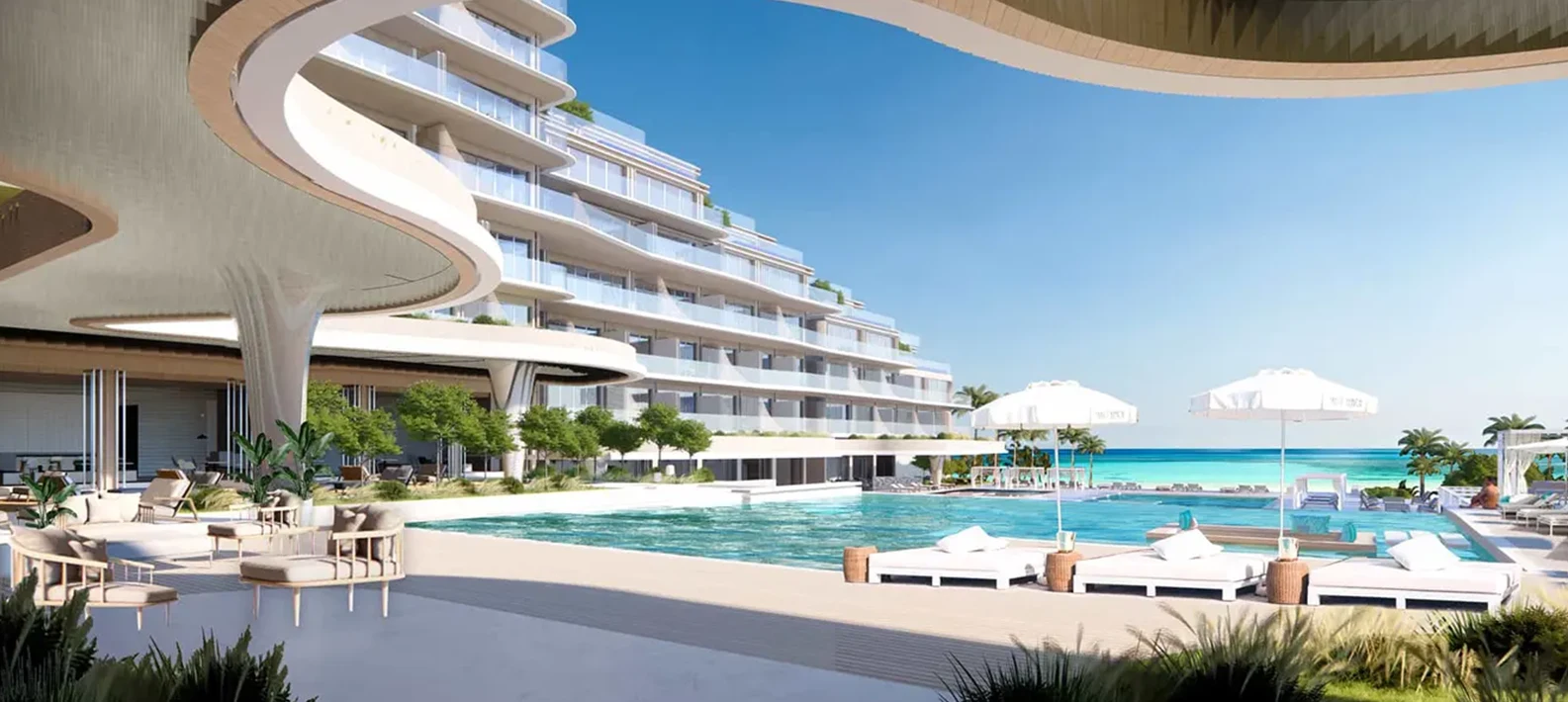
RAK’s branded residences market has transformed from a niche offering to the emirate’s dominant luxury product category in under four years. The trigger was the Wynn Al Marjan Island casino announcement, which repositioned RAK in the global luxury hospitality conversation and attracted every major international hotel brand to assess Al Marjan development. The result: 15+ branded residence launches in RAK through 2024–2026, with more in pipeline. Understanding exactly what the branded premium buys you, and what it costs in net yield, is the essential analysis for serious investors.
Quick answer: RAK branded residences offer hotel management, amenity access, STR income via rental pool, and brand association at a 15–30% price premium with 30–50% higher service charges than non-branded product. Net yield is significantly lower than gross implies. The investment case is capital appreciation from the Wynn/casino ecosystem, not current income. Model full costs before comparing to non-branded Al Marjan or Al Hamra yield properties.
| Brand tier | Price (AED/sqft) | Management fee | Service charge | Gross STR yield |
|---|---|---|---|---|
| Wynn (ultra-premium) | 2,500–4,000 | 40–45% of revenue | AED 25–35/sqft | 1.5–3% at entry |
| JW Marriott / Waldorf | 1,800–2,800 | 35–40% | AED 20–28/sqft | 3–5% |
| Rotana / IHG / Nobu | 1,400–2,200 | 30–40% | AED 18–25/sqft | 4–6% |
| Non-branded Al Marjan | 1,000–1,600 | N/A (self-manage) | AED 12–18/sqft | 2.7% LTR / higher STR |
What “branded residence” actually means
The branded residence label covers a spectrum from genuine hotel-managed investment products to marketing branding with limited operational involvement. Before buying, understand which type you are purchasing:
Type 1: Full hotel management integration. Your unit enters the hotel’s rental pool. When you are not in residence, the hotel manages bookings, cleaning, check-in, and concierge through its global reservation system. Revenue is shared (typically 55–70% to owner, 30–45% to hotel brand/operator). You benefit from the hotel’s marketing reach but surrender operational control.
Type 2: Licensed brand, self-managed. The hotel brand licenses its name and provides standards documentation. You purchase independently but can opt into a rental management program. More flexible, often lower management fees, but less integration with the hotel’s booking ecosystem.
Type 3: Adjacent branded community. Residences in a master development adjacent to a branded hotel, with access rights to hotel facilities. No formal rental pool participation. The brand association is primarily about amenity access and prestige.
Most RAK branded residences fall into Type 1 or 3. Type 2 exists but is less common at the premium end. Always ask explicitly: is my unit part of the hotel rental pool? Is participation mandatory or optional?
The RAK branded residence landscape
Wynn Residences, Al Marjan Island
The flagship. Wynn’s residential component adjacent to the integrated resort is the most premium product launch in RAK history.
Specifics:
- Units: limited residential tower as part of the resort complex
- Price: AED 2,500–4,000+/sqft
- Management: Wynn Hotels management integrated with casino resort
- Amenity access: full resort access (casino, restaurants, beach, spa, pool)
- Target buyer: HNW individuals, institutional investors, lifestyle buyers
Investment reality: At AED 3,000/sqft, a 750 sqft 1BR unit is AED 2,250,000. At 3% gross yield (pre-casino full occupancy), annual income is AED 67,500. After Wynn’s management fee (~40%) and service charges (AED 25/sqft × 750 = AED 18,750), net income is approximately AED 21,750, net yield under 1%. This is explicitly a capital appreciation play. Buyers must believe the resort ecosystem will drive capital values to AED 3,500–5,000/sqft within 5–7 years of opening.
Rotana Residences, Al Marjan Island
Rotana is a UAE-origin regional brand with strong Middle Eastern recognition and an established hotel at Al Marjan.
Specifics:
- Units: apartment residences with hotel management option
- Price: AED 1,400–1,800/sqft
- Management fee: approximately 35% of revenue
- Service charges: AED 18–22/sqft
Investment case: More accessible entry than Wynn, established brand in UAE market, existing hotel occupancy data available (unlike Wynn’s pre-opening projections). At AED 1,500,000 for a 1BR with AED 90,000 gross STR revenue, after 35% management fee and service charges, net yield approaches 4–5%, more defensible than Wynn’s entry pricing.
Marriott International (JW Marriott, Marriott, Autograph)
Multiple Marriott International brands have launched or are developing on Al Marjan Island.
Specifics:
- Price: AED 1,600–2,500/sqft depending on brand tier
- Global reservation reach: Marriott Bonvoy’s 180M+ members provides marketing advantage
- Management: Marriott’s established resort management protocols
- Service charges: AED 20–28/sqft
Investment case: Marriott’s global booking platform provides occupancy advantages over smaller independent operators. JW Marriott specifically positions at corporate and higher-end leisure traveller, aligned with Al Marjan’s improving profile. Entry point mid-range relative to Wynn.
Nobu Residences, Al Marjan Island
Nobu’s launch on Al Marjan was widely covered as confirmation of the island’s premium aspiration.
Specifics:
- Brand: Nobu Hospitality (Robert De Niro partnership, celebrity profile)
- Price: AED 1,800–2,500/sqft
- Appeal: lifestyle and brand cachet over pure yield
- Management: Nobu Hospitality hotel management
Investment case: Nobu brand attracts high ADR leisure guests, important for STR income quality. However, Nobu properties globally are more restaurant and nightlife destination than high-occupancy hotel, occupancy profiles differ from Marriott or Hilton. Research Nobu’s other residential projects’ actual rental performance before relying on projected STR income.
The service charge problem: what the brochure omits
Branded residences carry service charges 30–50% above non-branded equivalents because they maintain hotel-standard infrastructure: lobby, concierge desk, housekeeping laundry, valet parking, gym equipment. These costs are real and material.
Branded vs non-branded cost comparison (800 sqft unit):
| Cost | Non-branded Al Marjan | Rotana branded | Wynn branded |
|---|---|---|---|
| Service charge/sqft | AED 14 | AED 20 | AED 28 |
| Annual service charge | AED 11,200 | AED 16,000 | AED 22,400 |
| Management fee on income | 0% (self) | 35% | 40% |
| On AED 100K gross STR | AED 0 | AED 35,000 | AED 40,000 |
| Combined annual drag | AED 11,200 | AED 51,000 | AED 62,400 |
The non-branded owner retaining 100% of income has AED 51,000–62,400 more per year to offset against a lower purchase price. Over 5 years, this is AED 255,000–312,000. The non-branded unit needs to be AED 500,000 cheaper to be neutral over 5 years on cash flow, a rough breakeven calculation that illustrates why branded premium only makes sense if capital appreciation more than covers the income gap.
Management agreement: the document that matters more than the brochure
The management agreement (separate from the SPA) governs your relationship with the hotel brand. Key clauses to review with a UAE property lawyer:
Revenue split and calculation basis: Is revenue calculated on “Gross Revenue” or “Net Room Revenue”? Gross includes all charges; net may exclude ancillaries. The calculation basis can shift the effective split significantly.
Owner usage and blackout periods: How many nights per year can you stay? Are peak dates (F1 at Yas, NYE, long weekends) blocked for owner use? Some management agreements restrict owner stays to under 60 nights/year.
Management term and termination: Initial term is typically 10–20 years. What are termination rights for the owner? For the manager? Change of control of the brand?
Capital expenditure obligations: The hotel brand may require refurbishment to brand standards every 5–7 years, at owner cost. On 800 sqft at AED 300–500/sqft refurbishment cost: AED 240,000–400,000 per cycle. Include this in long-term return modelling.
Exit restrictions: Some agreements include a right of first refusal for the hotel to purchase your unit at below-market value, or require buyer approval from the hotel brand on resale. These can restrict resale timing and price.
The optimal RAK strategy in 2026
Given the landscape, a rational RAK investment strategy in 2026:
If targeting income now: Al Hamra Village, non-branded. AED 600–900/sqft, 8–9% gross, established beach and golf community. No dependency on casino opening.
If targeting pre-casino appreciation: Al Marjan non-branded apartments. AED 1,200–1,600/sqft, partial appreciation already done, 2.7% gross yield, upside from opening wave.
If targeting resort ecosystem at lower entry than Wynn: Rotana or Marriott branded. AED 1,400–2,000/sqft, established brands, more defensible STR economics, managed downside vs Wynn.
If targeting maximum casino exposure: Wynn-adjacent branded residences. AED 2,500–4,000/sqft. Pure capital appreciation thesis. Hold period 5–10 years. Require patience and no need for current income.
RAK branded residence investment case studies
Case Study 1: Rotana Residence: Income-Focused Investor
Profile: UAE-resident investor with AED 1.5M budget seeking 5%+ net yield
Purchase details:
- Unit: 1BR Rotana Residence, 800 sqft
- Price: AED 1,400,000 (AED 1,750/sqft)
- Management fee: 35% of STR revenue
- Service charge: AED 20/sqft = AED 16,000/year
Year 1 performance:
- STR gross revenue: AED 85,000 (70% occupancy, AED 350/night average)
- Management fee: AED 29,750
- Net STR income: AED 55,250
- After service charge: AED 39,250
- Net yield: 2.8%
Analysis: Below investor’s target. Revenue underperformed projections due to Al Marjan tourism market still developing. Post-Wynn opening, occupancy expected to improve significantly.
Case Study 2: JW Marriott Branded Residence: Appreciation Play
Profile: International buyer targeting Golden Visa + capital appreciation
Purchase details:
- Unit: 2BR JW Marriott Residence, 1,200 sqft
- Price: AED 2,800,000 (AED 2,333/sqft)
- Management fee: 40% of STR revenue
- Service charge: AED 25/sqft = AED 30,000/year
Investment thesis:
- Golden Visa qualification at AED 2.8M registered value
- Marriott global booking system advantage
- Al Marjan appreciation potential from Wynn catalyst
- 5-7 year hold through casino maturation
Risk factors identified:
- High entry price relative to current rental yields
- Dependency on Wynn timeline and performance
- Limited exit liquidity in RAK secondary market
- Service charge burden on net returns
Case Study 3: Al Hamra Branded Residence: Balanced Approach
Profile: Portfolio investor with existing Dubai holdings, seeking RAK diversification
Purchase details:
- Unit: 2BR Waldorf Astoria Residence, 1,100 sqft
- Price: AED 1,900,000 (AED 1,727/sqft)
- Management fee: 38% of STR revenue
- Service charge: AED 22/sqft = AED 24,200/year
Performance metrics:
- STR gross revenue: AED 95,000 (established Al Hamra tourism base)
- Management fee: AED 36,100
- Net STR income: AED 58,900
- After service charge: AED 34,700
- Net yield: 1.8%
Investor conclusion: Low current yield acceptable given Waldorf brand strength and Al Hamra’s established resort infrastructure. Viewing as 7-10 year appreciation hold with improving income over time.
Operational realities of branded residence ownership
Month-to-month cash flow patterns
Branded residences in RAK show distinct seasonal patterns affecting investor cash flow:
High season (Nov-Mar):
- Occupancy rates: 75-85%
- Average daily rates: AED 400-600 for 1BR units
- Monthly revenue: AED 9,000-15,000
- After management fees: AED 5,500-9,750
Shoulder season (Apr-May, Oct):
- Occupancy rates: 55-65%
- Average daily rates: AED 300-450
- Monthly revenue: AED 5,000-8,500
- After management fees: AED 3,250-5,525
Low season (Jun-Sep):
- Occupancy rates: 35-45%
- Average daily rates: AED 250-350
- Monthly revenue: AED 2,600-4,700
- After management fees: AED 1,690-3,055
Annual cash flow implications:
- High seasonality requires financial planning for low-income months
- Service charges are fixed monthly regardless of revenue
- Marketing and positioning crucial during shoulder seasons
- Post-Wynn opening expected to improve summer occupancy significantly
Hotel management relationship dynamics
Revenue optimization:
- Hotel brand controls pricing strategy and promotional calendar
- Owner input limited but can request blackout dates for personal use
- Brand marketing reach provides booking channels individual owners cannot access
- Performance benchmarking against comparable branded properties
Operational standards:
- Mandatory furniture and fixture standards updated every 5-7 years
- Housekeeping and maintenance to hotel brand specifications
- Guest service standards enforced through brand mystery shopping programs
- Owner usage requires advance booking through hotel reservation system
Communication protocols:
- Monthly revenue reports provided by hotel management
- Quarterly owner meetings for community updates
- Annual budget approvals for marketing and maintenance expenditure
- Dispute resolution through management agreement arbitration clauses
Financing branded residences: bank perspectives
Mortgage availability and terms
Tier 1 branded residences (Wynn, Waldorf, JW Marriott):
- Maximum LTV: 65% for non-residents, 70% for UAE residents
- Interest rates: EIBOR + 2.75-3.5% (typically 6.5-7.5% all-in)
- Bank preference: International brands with established UAE presence
- Required down payment: 30-35% plus transaction costs
Tier 2 branded residences (Rotana, local brands):
- Maximum LTV: 60% for non-residents, 65% for UAE residents
- Interest rates: EIBOR + 3.0-4.0%
- Bank scrutiny: Higher due diligence on management agreements and revenue projections
- Required down payment: 35-40% plus transaction costs
Bank underwriting considerations:
- Management agreement terms affecting revenue predictability
- Brand track record in comparable markets (Dubai Marina branded residences as benchmark)
- Project completion status and developer reputation
- RAK market liquidity for collateral valuation purposes
Mortgage process specifics for RAK
Documentation requirements:
- Standard UAE mortgage documents plus management agreement
- Revenue projections from hotel operator
- Proof of down payment source
- Salary certificate showing 2.5x debt-to-income coverage (if employment income included)
Valuation challenges:
- Limited comparable sales data in RAK branded residence segment
- Valuers often apply 5-10% discount to asking prices for conservative assessment
- Revenue-based valuation methods still developing in RAK market
- Bank valuers may not fully capture brand premium
Processing timeline:
- Pre-approval: 5-10 working days
- Full approval after SPA: 15-25 working days
- Disbursement at handover: Additional 5-10 working days
- RAK mortgage processes generally slower than Dubai equivalents
Exit strategy planning for branded residences
Resale market realities
Buyer pool for resale branded residences:
- End-users seeking managed vacation homes (25-30%)
- Investors targeting STR income with brand backing (40-50%)
- International buyers drawn to brand recognition (15-20%)
- Local UAE nationals and residents (10-15%)
Pricing dynamics on resale:
- Brand premium typically reduces 10-15% from new launch pricing
- Management agreement transfer may be mandatory, limiting buyer pool
- Renovation requirements to current brand standards affect net proceeds
- Al Marjan secondary market still thin compared to Dubai branded residences
Marketing timeline expectations:
- Average time on market: 90-150 days (vs 60-90 days for non-branded)
- Pricing flexibility limited by management agreement terms
- Professional photography and staging often required to compete with new launches
- International marketing necessary given target buyer profile
Alternative exit strategies
Rent-to-own arrangements:
- Long-term lease with purchase option appeals to end-users
- Allows owner to retain management agreement benefits during lease period
- Purchase option pricing provides appreciation upside protection
- Tenant bears service charge and management fee burden
Corporate lease programs:
- Multinational companies establishing RAK operations
- 2-3 year corporate housing arrangements with guaranteed rent
- Higher rental rates than vacation rentals but lower management fees
- Provides stable cash flow during tourism market development phase
Brand buy-back programs:
- Some hotel operators offer right of first refusal at below-market terms
- Typically triggered when owner defaults on service payments or brand standards
- May provide exit liquidity but at significant discount to market value
- Review management agreement carefully for buy-back terms and conditions
Related guides
| Topic | Guide |
|---|---|
| Wynn timeline and price impact | Wynn Al Marjan Island Timeline Impact |
| Al Marjan Island investment | Al Marjan Island Property Investment |
| Al Hamra yield alternative | Al Hamra Village Property Investment |
| RAK vs Fujairah | RAK vs Fujairah Property Investment |
Branded residence management terms vary by project and are subject to change. Income projections are illustrative based on comparable properties and should be modelled against actual booking data and management agreements before purchase. This guide is for information purposes only and does not constitute investment advice. Always review the management agreement with a UAE-licensed property lawyer.
Related reading: Ras Al Khaimah Property Investment Guide.
Frequently Asked Questions
RAK branded residences in Al Marjan command 15–30% premium over comparable non-branded product in the same location. A standard Al Marjan apartment at AED 1,200/sqft versus a Rotana or Nikki Beach branded unit at AED 1,500–2,000/sqft illustrates the range. Wynn-adjacent branded product reaches AED 2,500–4,000/sqft, a 100–200%+ premium over non-branded Al Marjan baseline. The premium is justified by: hotel brand association, access to resort amenities, professional hotel management, and STR income via hotel rental pool.
Yes, access to the hotel's pool, beach, fitness, restaurants, and often spa is a core part of the branded residence value proposition. The access terms and any usage fees are specified in the purchase contract and management agreement. Some brands offer full access at no extra cost; others charge a monthly amenity fee or impose restrictions during peak hotel occupancy. Always review the management agreement carefully before purchase, the amenity access terms determine a significant part of the lifestyle value.
Branded residences in hotel rental pools typically generate gross STR revenue of AED 100,000–200,000/year for a 1BR unit depending on occupancy and brand. After hotel management fees (30–45% of revenue), owner income runs AED 55,000–130,000/year. On a AED 1,500,000 purchase, this implies gross yield of 3.7–8.7%, wide range because RAK's tourism market is still developing. Post-Wynn casino opening (2027+), occupancy rates on Al Marjan are expected to improve significantly, supporting the upper end of this range.
Branded residences in RAK carry service charges 30–50% above non-branded equivalents in the same community. Where standard Al Marjan apartment service charges run AED 12–18/sqft, branded hotel-managed units typically run AED 18–30/sqft. On a 750 sqft unit, this difference is AED 4,500–9,000/year. Combined with hotel management fees (30–45% of revenue), the net yield on branded product is significantly lower than the gross STR income implies. Buyers must model full cost of ownership to compare branded vs non-branded accurately.
Active branded residence brands in RAK include: Wynn (Al Marjan, opening 2027), Rotana (multiple properties), Marriott International (JW Marriott and other brands at Al Marjan), InterContinental (Ras Al Khaimah), Waldorf Astoria (Al Hamra-adjacent), Nobu (launched on Al Marjan), and Nikki Beach (Al Marjan). The concentration of international brands on Al Marjan creates a competitive hospitality cluster with cumulative marketing and visitor attraction power.
Not directly comparable. Dubai Marina branded residences (FIVE, Emaar Vida, others) offer superior liquidity, a proven resale market, and Dubai's international buyer recognition. RAK branded residences offer lower entry pricing, a single transformative catalyst (Wynn casino), and the upside potential of an early-stage destination. Dubai Marina is the safer, lower-upside choice. RAK is the higher-risk, higher-upside thesis for investors who have done the casino analysis and believe in the timing.
Key checks: verify developer DMT/RAK registration and escrow; review the management agreement (not just the SPA) for rental split, amenity fees, owner usage restrictions, and management term; check the brand's track record in similar resort projects; model net yield with full service charges, management fees, and realistic occupancy; confirm the brand has signed a management agreement (not just a letter of intent); and review exit terms, some branded residence management agreements include right of first refusal for the hotel brand to buy back at below-market terms.
Get a Gulf property shortlist
Tell us your budget and market (Dubai, Abu Dhabi, RAK). We reply within one business day with options matched to your goals.