
Nakheel Review: Government-Backed Developer, Island
Nakheel developer review 2026, ~90% delivery rate, Dubai Holding backing, Palm Jumeirah and Palm Jebel Ali flagships, waterfront capital preservation
By Invest Gulf Editorial · Updated June 11, 2026 · 14 min read
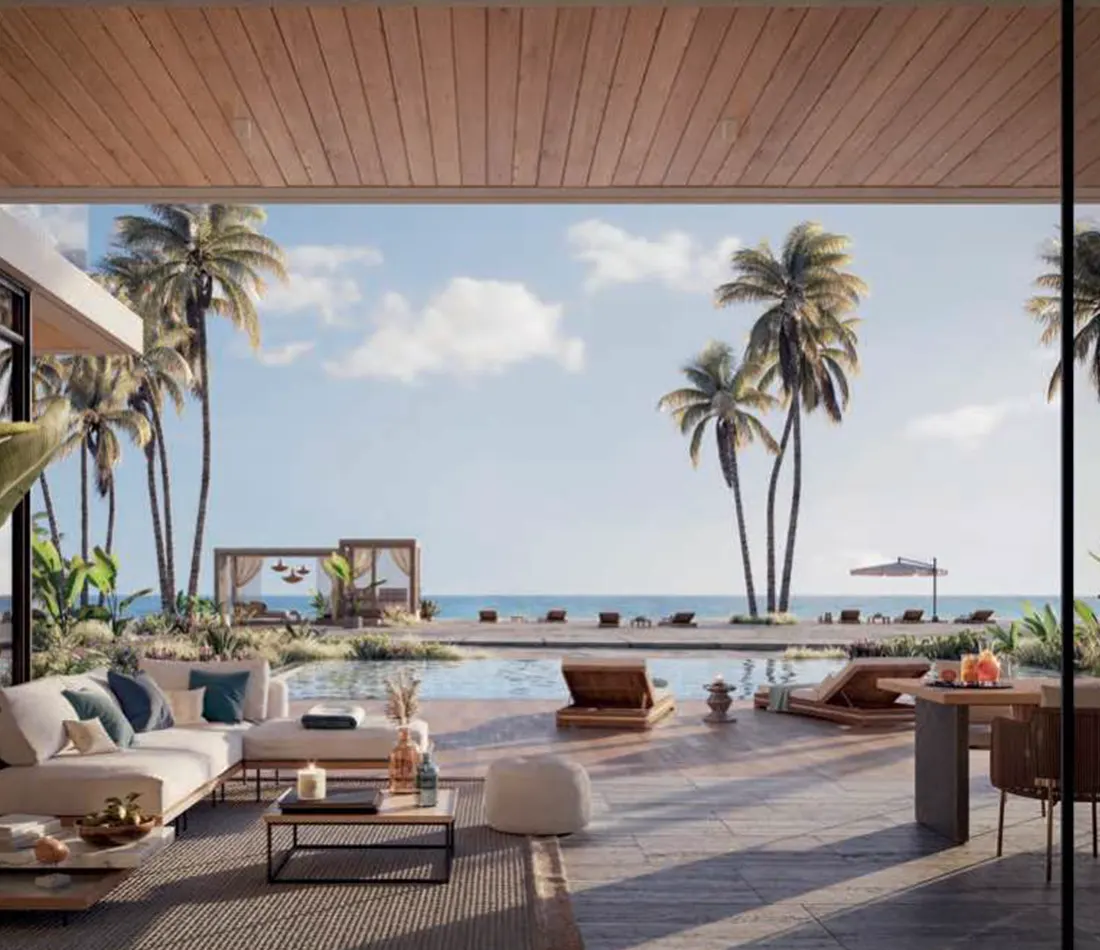
Nakheel built the image Dubai sells to the world. Palm Jumeirah, the frond-and-trunk island that redefined waterfront real estate, sits under Nakheel’s master-plan authority alongside Palm Jebel Ali, Dubai Islands, and Deira Islands. As part of Dubai Holding, Nakheel carries government-linked institutional backing that private developers cannot match for financing billion-dirham island infrastructure.
For investors, the Nakheel question is not reputation. It is whether waterfront scarcity, trophy address premium, and compressed yields produce acceptable risk-adjusted returns on the specific island phase you are considering, because island branding and cash-flow performance pull in opposite directions.
Quick answer: ~90% delivery across 50+ projects. Government-backed via Dubai Holding. Flagships: Palm Jumeirah, Palm Jebel Ali (~2028), Dubai Islands, Deira Islands. Best for waterfront capital preservation and trophy assets. Not best for rental yield or flexible payment plans.
Compare all Tier 1 developers: Dubai Developers Guide 2026. Palm Jumeirah investment context: Palm Jumeirah Property Investment.
Nakheel: 2026 developer snapshot
| Metric | Nakheel | Emaar | DAMAC | Sobha Realty |
|---|---|---|---|---|
| Parent / backing | Dubai Holding (gov-linked) | DFM-listed public | Private (founder-led) | Sobha Group (India/UAE) |
| Founded | 2000 | 1997 | 2002 | UAE 2014 |
| Delivery rate | ~90% | ~95% | ~88% | A-band (~95%+) |
| Projects tracked | 50+ | 87+ | 60+ | 25+ |
| Tier | 1 (waterfront) | 1 (benchmark) | 1 (branded volume) | 1 (premium build) |
| Core positioning | Island scarcity | Master-plan liquidity | Branded + payment plans | In-house quality |
| Escrow compliance | Strong | Strong | Strong | Strong |
| Secondary liquidity | Good (waterfront) | Best-in-class | Good | Moderate |
| Typical gross yield | 4.5–6.5% (Palm apts) | 5.0–7.5% (varies) | 6.0–7.5% | 5.5–6.5% |
| Service charge profile | High (island premium) | Moderate–high | Moderate | Moderate–high |
Sources: Sikandar/Oliva delivery-rate databases Q2 2026, DLD/RERA Trakheesi records, Dubai Holding corporate disclosures.
Government backing: what Dubai Holding actually means
Nakheel’s position within Dubai Holding provides structural advantages that matter for long-horizon island investment:
Financing capacity for mega-master-plans. Palm Jebel Ali, approximately twice the land mass of Palm Jumeirah, requires infrastructure investment that only government-linked entities can underwrite across multi-year construction cycles. Private developers launch towers; Nakheel launches islands.
Reduced developer-default risk. Off-plan deposits sit in RERA-regulated escrow regardless of developer, but counterparty confidence affects resale sentiment on assignments and secondary pricing during construction. Dubai Holding linkage supports buyer confidence on multi-year off-plan exposure.
Coordination with Dubai infrastructure planning. Island projects connect to RTA road networks, DEWA utility capacity, and coastal engineering approvals that require government coordination. Nakheel’s institutional position facilitates these approvals relative to standalone private developers.
What government backing does not guarantee:
- On-time handover on every tower within an island master plan
- Capital appreciation, Palm Jumeirah prices are cycle-sensitive
- Low service charges, island maintenance is expensive
- High rental yield, trophy addresses compress yield by design
- Protection from SPA penalty asymmetry on delays
Verify the specific project phase, not the corporate parent’s balance sheet.
Delivery track record: what 90% means in practice
Nakheel’s ~90% on-time delivery across 50+ projects places it in the upper tier of Dubai developers, behind Emaar’s ~95% but materially ahead of DAMAC’s ~88% and most Tier 2 volume developers.
Historical context matters. Nakheel’s delivery reputation was tested severely during the 2009–2011 global financial crisis, when several Palm Jumeirah and waterfront projects stalled. Post-restructuring under Dubai Holding, delivery performance improved, but legacy buyers from that period carry long memories. The current ~90% figure reflects post-restructuring performance, not the full 25-year corporate history.
What 90% buys investors today:
- Reasonable confidence in handover timelines on current pipeline projects
- Government-linked counterparty quality on escrow deposits
- Resale market recognition of Nakheel brand on waterfront stock
- Institutional buyer comfort for Palm Jebel Ali and Dubai Islands off-plan
What 90% does not buy:
- Yield, Palm Jumeirah gross returns remain in the 4.5–6.5% range
- Low operating costs, island service charges are among Dubai’s highest
- Fast off-plan assignment liquidity during early construction phases
- Immunity from macro cycles, waterfront premium compresses in soft markets
Always verify delivery on your specific building, not the portfolio average. A 90% rate across 50 projects still allows several delayed towers in a community of thirty.
Flagship projects: where Nakheel capital sits
Palm Jumeirah: established trophy waterfront
Palm Jumeirah is Nakheel’s anchor asset and Dubai’s most recognised address. Frond villas, trunk apartments, and podium units on the world’s largest man-made island command scarcity premium that has persisted through multiple market cycles.
| Segment | Typical entry (Q1 2026) | Gross yield | Service charges | Investor profile |
|---|---|---|---|---|
| Trunk 1-bed apartment | AED 1.8M–2.8M | 5.0–6.0% | AED 28–35/sqft | Trophy + moderate yield |
| Frond garden villa | AED 8M–25M+ | 3.5–5.0% | AED 30–50/sqft | Capital preservation |
| Shoreline apartment | AED 2.5M–4.5M | 4.5–5.5% | AED 30–40/sqft | Lifestyle + long hold |
| Golden Mile retail/resi | AED 1.5M–3.0M | 5.5–6.5% | AED 25–32/sqft | Yield within Palm |
Investment thesis: Palm Jumeirah is not a yield play. It is a scarcity and capital-preservation asset where rental income partially offsets holding costs. UK buyers (8–17% of foreign transactions, average AED 2.5–3.2M) and Russian/CIS buyers (7–9%, AED 2.8–2.9M) dominate Palm demand, driven by tax considerations and capital preservation, not cash-flow optimisation.
Full area analysis: Palm Jumeirah Property Investment.
Palm Jebel Ali: the next-generation island bet
Palm Jebel Ali represents Nakheel’s largest active pipeline, an island master plan approximately twice the size of Palm Jumeirah with residential, hospitality, and retail components. Completion phases extend toward 2028 and beyond.
| Factor | Palm Jebel Ali | Palm Jumeirah (mature) |
|---|---|---|
| Stage | Off-plan / early handover | Established 15+ years |
| Pricing basis | Future scarcity premium | Proven resale comparables |
| Rental data | Limited Ejari history | Deep Ejari history |
| Liquidity | Thin (construction phase) | Active daily trading |
| Yield profile | Unknown until stabilised | 4.5–6.5% gross established |
| Risk profile | Construction + cycle | Market cycle only |
| Hold horizon | 7–10 years minimum | 3–5 years viable |
Who should consider Palm Jebel Ali off-plan:
- Buyers with 7–10 year horizons who believe second-generation island scarcity will replicate Palm Jumeirah’s appreciation trajectory
- Investors already holding Palm Jumeirah who want adjacent island exposure
- End-users planning future relocation to waterfront villa stock
Who should avoid:
- Yield-first investors, no transacted rental data exists for new phases
- Short-hold off-plan flippers, assignment liquidity is thin during early construction
- Buyers who cannot verify escrow and SPA terms independently
Dubai Islands and Deira Islands: waterfront redevelopment
Dubai Islands (the rebranded Deira Islands master plan) represents Nakheel’s urban waterfront redevelopment play, closer to the city core than Palm Jumeirah, with mixed residential, hospitality, and retail components. Entry pricing sits below Palm Jumeirah with potentially better yield characteristics as communities mature.
Deira Islands targets a different buyer: more accessible waterfront pricing with proximity to traditional Dubai commercial districts. Service charges on newer phases typically run AED 18–25 per sqft, below Palm Jumeirah but above mid-market inland communities.
Area investment guide: Dubai Islands Property Investment.
JVC waterfront and other Nakheel zones
Nakheel also develops within Jumeirah Village Circle, including waterfront-adjacent phases that carry Nakheel branding without island premium pricing. These projects offer a middle ground: Nakheel escrow protection and developer track record at JVC-scale entry prices. Yield profiles on JVC Nakheel stock align more closely with the broader JVC market (7.0–8.5% gross) than with Palm Jumeirah.
Cross-reference: JVC Property Investment.
The yield math: why Nakheel compresses returns
Nakheel waterfront product carries a structural yield discount that investors must model before purchase, not discover after handover.
Worked example, Palm Jumeirah trunk 1-bed at AED 2.4M:
| Item | Annual figure |
|---|---|
| Gross rent (Ejari transacted, Q1 2026) | AED 130,000 |
| Gross yield | 5.42% |
| Service charges (AED 32/sqft × 900 sqft) | AED 28,800 |
| Property management (6% of rent) | AED 7,800 |
| Ejari registration + admin | AED 400 |
| Vacancy allowance (7%) | AED 9,100 |
| Maintenance provision | AED 3,000 |
| Total costs | AED 49,100 |
| Net income | AED 80,900 |
| Net yield | 3.37% |
Compare with a JVC one-bedroom at AED 650,000 earning AED 55,000 gross rent:
| Item | JVC 1-bed | Palm 1-bed |
|---|---|---|
| Purchase price | AED 650,000 | AED 2,400,000 |
| Gross yield | 8.46% | 5.42% |
| Service charges | AED 9,750 | AED 28,800 |
| Net yield | 5.58% | 3.37% |
| Capital required | 3.7× less | Baseline |
The Palm unit earns more absolute dirhams (AED 80,900 vs AED 36,250 net), but requires 3.7× the capital for a lower percentage return. Nakheel investors accept this trade-off for scarcity, address prestige, and long-hold appreciation potential.
Full net-yield methodology: Gross vs Net Yield Dubai.
Service charges: the hidden cost of island living
Nakheel island and waterfront properties carry among the highest service charges in Dubai, a direct consequence of marine infrastructure, private beach maintenance, landscaping, and security on man-made islands.
| Property type | Typical service charge AED/sqft/year | Annual cost (900 sqft unit) |
|---|---|---|
| Palm Jumeirah apartment | 28–40 | AED 25,200–36,000 |
| Palm Jumeirah villa | 30–50 | AED 45,000+ (larger area) |
| Dubai Islands apartment | 18–28 | AED 16,200–25,200 |
| Deira Islands apartment | 16–24 | AED 14,400–21,600 |
| JVC Nakheel tower | 12–18 | AED 10,800–16,200 |
Why island charges run high:
- Marine wall and coastal erosion maintenance
- Private beach and sea access upkeep
- Higher insurance premiums for coastal properties
- Specialist facilities management for island infrastructure
- Reserve fund requirements for long-term structural works
Always verify via Mollak and Dubai REST, not SPA estimates. See Dubai Service Charge Index Explained for lookup instructions.
Nakheel vs competitors: where each developer wins
| Investment priority | Best developer | Why |
|---|---|---|
| Waterfront island scarcity | Nakheel (~90%) | Palm, Dubai Islands, Palm Jebel Ali |
| Delivery reliability | Emaar (~95%) | Highest on-time rate among volume developers |
| Payment-plan flexibility | DAMAC (~88%) | Post-handover and branded residence focus |
| Build quality premium | Sobha (A-band) | In-house construction, lower snagging |
| Secondary resale speed | Emaar | Deepest liquidity in established communities |
| Trophy ultra-luxury | Omniyat (~93%) | The Opus, One Palm, Dorchester Collection |
| Yield maximisation | Not Nakheel, JVC, Sports City, Al Reef | Mid-market inland communities |
| Government-backed counterparty | Nakheel / Aldar | Dubai Holding / ADX-listed institutional backing |
Full Tier 1 matrix: Dubai Developers Guide.
Off-plan vs ready: Nakheel-specific considerations
Off-plan on island projects
Nakheel off-plan purchases on Palm Jebel Ali and Dubai Islands follow standard RERA escrow protection, deposits flow into DLD-regulated accounts, not Nakheel operating cash. However, island off-plan carries additional considerations:
Longer construction timelines. Island infrastructure, marine works, utility connections, road access, extends construction schedules relative to inland tower projects. Budget 3–5 years from booking to handover on new island phases.
Thin assignment market. Off-plan assignments on island projects during early construction attract fewer buyers than Emaar Creek Harbour or DAMAC Hills assignments. If you plan to flip before handover, confirm NOC policy and realistic assignment pricing with a registered broker.
Service charge uncertainty. No Mollak data exists for buildings that have not operated for 12 months. Model charges using comparable Palm Jumeirah or Dubai Marina buildings of similar spec, then add 15% contingency.
Process guide: Off-Plan Property Dubai Guide. Escrow mechanics: Escrow and Oqood Dubai Explained.
Ready property on established islands
Palm Jumeirah ready stock offers the deepest Ejari rental history and most active secondary market within the Nakheel portfolio. Liquidity is good, not Emaar Downtown levels, but functional for correctly priced units with 60–120 day marketing periods.
Ready-buyer checklist:
- Mollak service charge rate for the specific building
- Ejari transacted rents (not listing prices) for the same tower
- Building age and reserve fund status
- Tenant profile and average tenancy length
- Recent comparable sales in the same frond or trunk segment
- Any upcoming OA special assessments for capital works
Pros and cons
Pros
- Government-linked backing via Dubai Holding, institutional counterparty quality
- Waterfront island scarcity, structurally constrained land supply on Palm and Dubai Islands
- ~90% delivery rate, upper tier among volume developers
- Trophy address recognition, Palm Jumeirah global brand supports international buyer demand
- RERA escrow compliance, standard deposit protection on off-plan
- Palm Jebel Ali pipeline, next-generation island inventory for long-horizon investors
- Diversified price points, from Deira Islands entry stock to frond villa ultra-premium
Cons
- Compressed yields, Palm apartments gross 4.5–6.5%, net often under 4%
- High service charges, island maintenance AED 28–50/sqft erodes returns
- Premium entry pricing, waterfront scarcity priced into launch PSF
- Historical delivery gaps, 2009–2011 legacy still referenced by experienced buyers
- Thin off-plan assignment liquidity on early-phase island projects
- Long construction timelines on mega-master-plans
- Cycle sensitivity, waterfront premium compresses fastest in soft markets
Due diligence checklist: Nakheel-specific
Before signing a Nakheel SPA:
- Trakheesi registration: project number on DLD portal; confirm Nakheel as registered developer
- Escrow account: verify on Dubai REST app (bank, account number, current balance)
- Phase-specific delivery: handover dates for your building, not island-wide marketing timeline
- Mollak service charges: on nearest comparable handed-over building in same tier
- SPA delay clause: read penalty cap, force majeure, and termination rights
- Ejari rental data: transacted rents on ready phases (not sales centre projections)
- Island infrastructure status: road access, DEWA capacity, marine works completion for off-plan
- NOC policy: assignment fees and timing restrictions if planning off-plan exit
- Snagging process: developer handover team vs OA transition timeline
- District cooling: confirm whether chilled water is included in service charges or billed separately
Full framework: How to Evaluate a Dubai Developer and Due Diligence Dubai Property. REST app walkthrough: Dubai REST App Property Due Diligence.
Who should buy from Nakheel
Nakheel suits investors who:
- Prioritise waterfront scarcity and trophy address over maximum yield
- Accept 3–5% net yield on Palm stock as fair for capital-preservation positioning
- Hold 7–10 year horizons on Palm Jebel Ali and Dubai Islands off-plan
- Want government-linked counterparty quality on multi-year island exposure
- Target UK, Russian/CIS, or GCC buyer segments that dominate waterfront demand
- Already hold Dubai property and want island diversification within their portfolio
Consider alternatives if:
- Maximum yield is priority, JVC, Business Bay, or Ras Al Khaimah mid-market
- Delivery certainty above all else, Emaar (~95%)
- Flexible post-handover payments needed, DAMAC or Danube
- Premium build quality over island address, Sobha Realty
- Fast off-plan assignment liquidity required, Emaar Creek Harbour or DAMAC Hills
Five-year hold: Palm vs inland cash flow comparison
| Year | Palm 1-bed (AED 2.4M) net income | JVC 1-bed (AED 650K) net income |
|---|---|---|
| Year 1 | AED 80,900 | AED 36,250 |
| Year 2 | AED 83,300 | AED 37,300 |
| Year 3 | AED 85,800 | AED 38,400 |
| Year 4 | AED 88,400 | AED 39,550 |
| Year 5 | AED 91,100 | AED 40,750 |
| 5-year cumulative | AED 429,500 | AED 192,250 |
| Capital deployed | AED 2,400,000 | AED 650,000 |
| Cumulative return on capital | 17.9% | 29.6% |
Palm earns more absolute dirhams but delivers lower return on capital deployed. Nakheel investors betting on Palm need a capital-gain component on exit, not rental income alone, to justify the entry premium. Historical Palm Jumeirah appreciation has delivered this for long-hold buyers; it is not guaranteed for every cycle or every frond.
Red flags: even with Nakheel
- Assuming island = appreciation: Palm Jebel Ali off-plan prices embed future scarcity, not current value
- Ignoring service charge reality: AED 32/sqft on a 900 sqft unit costs AED 28,800/year, model it before signing
- Portfolio-average delivery on new phase: verify building-specific timeline on Palm Jebel Ali
- Listing rents for yield analysis: use Ejari transacted data, listings overstate by 5–10%
- Government backing = guaranteed handover: escrow protects deposits, not your time value
- Off-plan flip without NOC clarity: island assignment markets are thinner than inland communities
- Skipping snagging at handover: island buildings have marine-specific defects, hire a specialist inspector
Snagging guide: Property Snagging Dubai. Handover process: Dubai Property Handover Checklist.
2026 supply note
Palm Jebel Ali and Dubai Islands handovers through 2028 add high-ticket inventory while Dubai runs record transaction volume. Island thesis can still work on 10+ year holds, underwrite from Ejari and DLD comps, not launch scarcity copy alone.
Delivery rates, launch pricing, and promotional terms change quarterly. Verify Trakheesi status, escrow on Dubai REST, and SPA clauses on the specific project before commitment. This review is for information only and does not constitute investment or legal advice.
Frequently Asked Questions
Nakheel reports approximately 90% on-time delivery across 50+ tracked projects per independent delivery databases (Sikandar/Oliva Q2 2026). This places Nakheel behind Emaar (~95%) and Omniyat (~93%) but ahead of DAMAC (~88%) among Tier 1 volume developers. Government backing through Dubai Holding reduces developer-default risk compared with private Tier 2 developers.
Nakheel is part of Dubai Holding, a government-linked investment conglomerate. This institutional backing supports project financing for large-scale island master plans, Palm Jebel Ali, Dubai Islands, Deira Islands, that private developers cannot replicate at the same scale. Government linkage does not guarantee individual project timelines; always verify Trakheesi registration and escrow on Dubai REST for the specific building.
Flagship communities include Palm Jumeirah (established trophy waterfront), Palm Jebel Ali (approximately twice the size of Palm Jumeirah, completion targeted around 2028), Dubai Islands (formerly Deira Islands redevelopment), Deira Islands, and waterfront phases within Jumeirah Village Circle. Palm Jumeirah remains the liquidity and brand anchor; Palm Jebel Ali is the primary growth pipeline for new island inventory.
Nakheel is a capital-preservation and scarcity play, not a yield leader. Palm Jumeirah apartments gross 4.5–6.5%, well below JVC or Business Bay mid-market at 7%+. Service charges on island stock run AED 15–25 per sqft on apartments and AED 25–40 on villas, which compresses net yield further. Nakheel suits buyers prioritising waterfront scarcity, trophy address, and long-hold capital retention over cash-flow maximisation.
Emaar leads on delivery rate (~95% vs Nakheel ~90%), secondary-market liquidity in established communities, and master-plan maturity across inland districts. Nakheel leads on waterfront island scarcity, Palm Jumeirah, Dubai Islands, Palm Jebel Ali, where land supply is structurally constrained. Emaar suits institutional reliability and resale speed; Nakheel suits waterfront capital preservation and trophy positioning.
Palm Jumeirah apartments typically run AED 28–40 per sqft per year; villas AED 30–50. Dubai Islands and newer Nakheel waterfront towers vary AED 18–28 depending on phase and facilities. Always verify the Mollak-filed rate for the specific building via Dubai REST, SPA estimates on off-plan Nakheel stock routinely understate operational charges by 20–30%.
Palm Jebel Ali is a long-horizon appreciation bet tied to Nakheel's second-generation island master plan, with handover phases extending toward 2028 and beyond. Entry pricing reflects future scarcity premium rather than current rental income. Suitable for buyers with 7–10 year holds, tolerance for construction-phase illiquidity, and confidence in Dubai Holding's ability to deliver island infrastructure at scale. Not suitable for yield-first or short-hold investors.
Standard Tier 1 checks apply: Trakheesi project registration on DLD portal, escrow account verification on Dubai REST, SPA clause review (delay penalties, handover conditions), Mollak service-charge filings on comparable handed-over buildings, Ejari transacted rent data on ready phases, and independent snagging at handover. Nakheel's government backing reduces counterparty-default risk but does not eliminate project-specific delay or pricing risk.
Get a Gulf property shortlist
Tell us your budget and market (Dubai, Abu Dhabi, RAK). We reply within one business day with options matched to your goals.