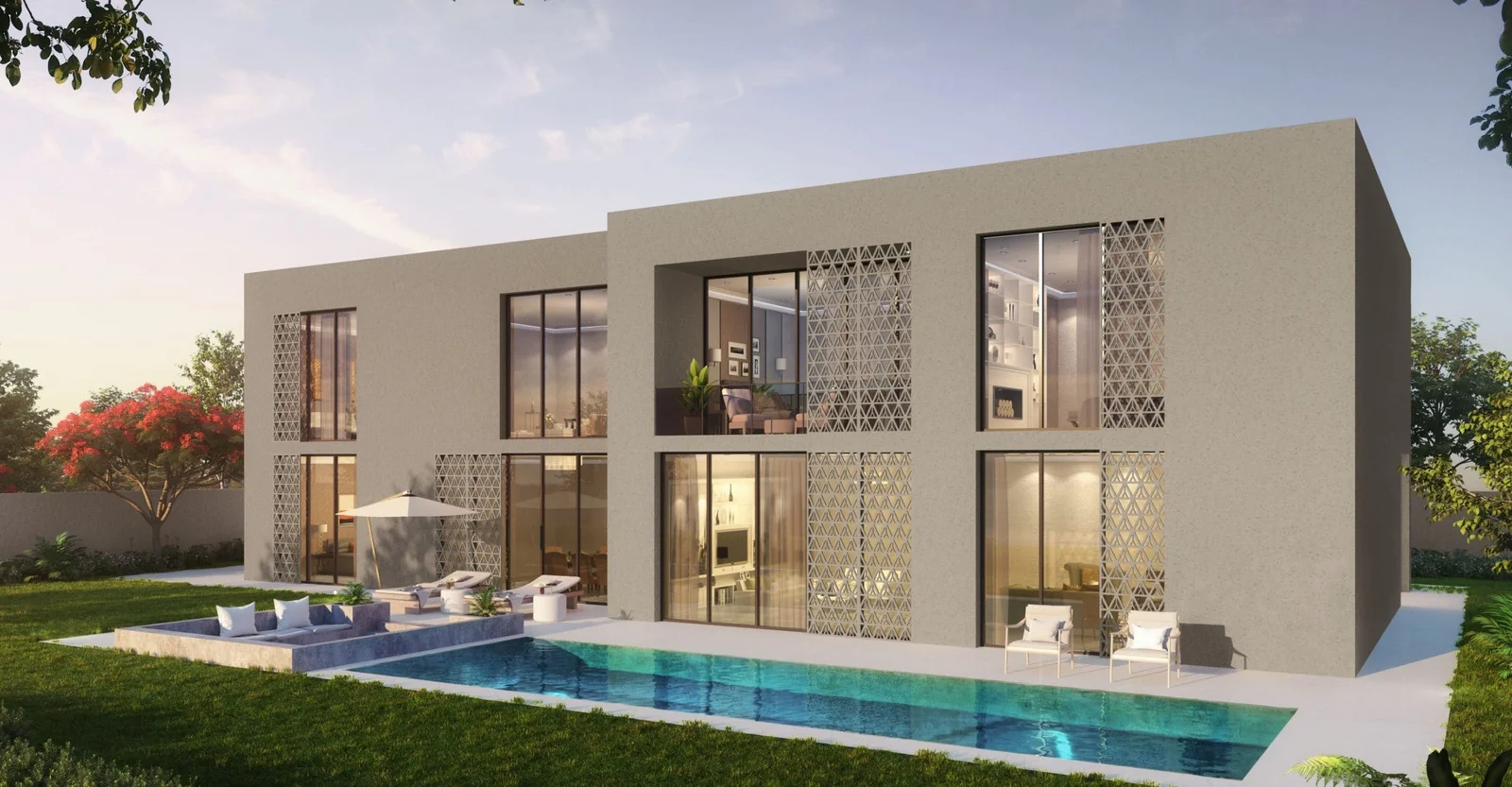
Sharjah remains the UAE affordability valve for tenants priced out of Dubai Marina and JVC, which keeps rent levels supported even when towers age. Yield investors should underwrite net cash flow, not broker gross slides.
Invest Gulf underwriting for Sharjah yield units starts with net cash flow, not broker gross slides: a worked AED 480,000 purchase with AED 38,000 rent and AED 9,500 annual costs leaves about AED 28,500 net near 5.9%, before any second month of void. Mid-market Muwaileh and older Al Majaz stock often prints 7% to 9% gross, while Aljada and Al Zahia freehold commonly land 6% to 7.5% gross with lower maintenance risk. Service charges in the AED 8 to AED 12 per sqft band, agency renewal at 2% to 5% of annual rent, and management at 5% to 8% typically cut 1.5 to 2.5 percentage points off the headline. Resale marketing of 60 to 120 days means a 5 year or longer hold usually fits better than a 3 year flip.
How is the Sharjah rental yield market structured in 2026?
Sharjah yield stock typically splits into higher-gross Muwaileh corridors, steadier Al Majaz waterfront, and mid-gross Aljada or Al Zahia freehold, with entry often 30% to 40% below comparable Dubai tickets that our analysts model for foreign buyers.
| Market layer | Yield feel | Title clarity |
|---|---|---|
| Muwaileh corridor | Higher gross, more turnover | Mixed age, diligence heavy |
| Al Majaz waterfront | Mid gross, steadier tenants | Established buildings |
| Aljada / Al Zahia | Mid gross, family tenants | Freehold, developer PM |
Foreign ownership concentrates in master-planned freehold such as Aljada and Al Zahia, while older Muwaileh and Al Majaz stock mixes leasehold and older freehold titles. Registration paths differ from Dubai Ejari; verify title type before marketing.
Which Sharjah districts print the strongest yields?
Muwaileh and university-corridor apartments typically lead at 7.5% to 9% gross when entry stays low, Al Majaz often prints 6% to 7.5%, and Aljada or Al Zahia land near 6% to 7.5% on newer stock that Invest Gulf prefers when foreign buyers want clearer freehold title.
| Unit | Gross | Notes |
|---|---|---|
| 1-bed Aljada | 6-7.5% | Arada developer, growing retail |
| 2-bed family | 5.5-7% | School-driven tenancy |
| Muwaileh 1-bed | 7.5-9% | Higher turnover, diligence heavy |
Net example for underwriting: AED 480,000 purchase, AED 38,000 rent, AED 9,500 annual costs yields about AED 28,500 net (near 5.9 percent). Adjust void to 2 months if parking is weak. See Aljada Sharjah property and Al Zahia.
Who rents Sharjah yield stock and on what lease terms?
Sharjah yield tenants typically include price-sensitive families, university staff, healthcare workers, and Dubai commuters on 12 month leases with 1 to 4 cheques, with higher turnover than premium Dubai districts that Invest Gulf offsets against the affordability gap.
- Families priced out of Marina and JVC keep rent floors supported
- University and hospital corridors see more annual churn
- Commuter demand fails if the Dubai drive story breaks
How do gross Sharjah yields convert to net cash flow?
Converting Sharjah gross to net typically means deducting management at 5% to 8% of rent, service charges, 1 to 2 months void in year one, and agency renewal fees, which Invest Gulf finds cuts 1.5 to 2.5 percentage points versus headline slides for foreign buyers.
| Cost line | Sharjah planning default |
|---|---|
| Service charge | Often AED 8-12/sqft; spikes in older towers |
| Void allowance | 4 to 8 weeks in year one for Muwaileh stock |
| Agency renewal | 2 to 5 percent of annual rent on new tenancy |
| Maintenance reserve | 2 to 3 percent of rent for buildings over ten years |
| Management | 5 to 8 percent of annual rent |
Compare outputs to Dubai rental yield guide and Dubai vs Sharjah property investment.
What should you verify on freehold versus usufruct titles?
Usufruct and freehold in Sharjah typically require counsel review of registration and renewal rules before you quote exit timelines, because resale pools differ and we treat title type as a 5 to 10 year hold input for foreign buyers across a 30 to 90 day diligence window.
- Confirm current official rules with the developer and Sharjah registration office
- Read offering documents before modelling IRR
- Do not assume Dubai freehold liquidity on usufruct stock
Insider tip: Walk the parking level at night and ask security about turnover before you accept a 7.5% to 9% Muwaileh gross quote; we see void jump to 2 months when allocated bays are missing.
When does Sharjah beat Dubai on net yield?
Sharjah typically beats Dubai on net when the 30% to 40% entry discount exceeds liquidity and void penalties over a 5 to 10 year hold, while 3 year exit plans still favour Dubai mid-market depth on Invest Gulf comparisons for foreign buyers.
- Prefer Sharjah for lower tickets and patient landlords
- Prefer Dubai when Ejari depth and resale speed dominate
- Many portfolios pair Sharjah yield satellites with Dubai core
How should you stress-test Sharjah yield before you wire?
Stress-testing Sharjah yield typically means three net scenarios: base with 4 week void, downside with rent 10% below asking and 8 week void, and upside with 2 week void, plus six months of AED carry that we require even on tenanted units.
- Base case: current asking rent, four-week void, owners association service charges
- Downside: rent 10 percent below asking, eight-week void, maintenance levy increase on older towers
- Upside: modest rent growth and two-week void only if multi-year tenants already exist
Ask brokers for the last three tenancy contracts in the same floor plate. Verify Sharjah registration and any usufruct renewal fees with counsel. Compare net output to Sharjah property investment guide benchmarks.
Invest Gulf Sharjah files flag the same underwriting traps across Muwaileh and Al Majaz: quoting 7% to 9% gross without parking proof, ignoring service charges in the AED 8 to AED 12 per sqft band, and modelling a 3 year exit when marketing periods of 60 to 120 days are common. A unit bought at AED 480,000 with AED 38,000 rent can still land near 5.9% net after AED 9,500 costs, then fall under 5.5% if void stretches to 2 months. Agency renewal at 2% to 5% of annual rent and management at 5% to 8% should sit in every spreadsheet before wire. Freehold communities such as Aljada and Al Zahia often trade some gross for clearer title and family tenants, while university corridors need a 1.5 month void budget in year one.
How do you underwrite Sharjah rental yields in 2026?
Underwriting Sharjah in 2026 typically means diligence on the exact community, not the emirate average, with checks on title, service charge history, employer mix, Dubai commute story, and resale comps across a 5 to 10 year hold that we use.
| Check | Why |
|---|---|
| Freehold vs other title | Eligibility and exit differ (confirm current official rules) |
| Service charge history | Year-one brochure fees drift |
| Tenant employer mix | Education and government tenants behave differently from short-let tourists |
| Commute story to Dubai | Drives family rent demand |
| Resale comps | Yield means little without exit depth |
Cross-check living tradeoffs in RAK vs Sharjah living and Sharjah vs Dubai commute property before you optimise for yield alone.
How should Al Majaz and Muwaileh be compared?
Al Majaz versus Muwaileh typically means trading some gross yield for steadier waterfront tenants against higher-gross university-corridor stock with more turnover, so we compare like-for-like bed counts and parking before foreign buyers pick a 12 month lease strategy.
- Aljada and Al Zahia for title clarity and family phases
- Muwaileh for gross-led hunters accepting diligence burden
- Night visits still catch maintenance issues daytime tours hide
Waterfront Al Majaz stock often keeps void closer to 4 weeks in managed towers, while Muwaileh can stretch toward 8 weeks when parking is weak. Compare school-driven 2-bed demand in Aljada against studio and 1-bed university corridors before you lock a gross target of 7.5% to 9%.
What offer and transfer costs should yield buyers budget?
Offer and transfer budgeting for Sharjah yield units typically includes agency fees, registration path costs, and a reserve for first-year reletting at 2% to 5% of annual rent, which we add on top of the AED purchase price across a 30 to 90 day close.
| Budget line | Planning note |
|---|---|
| Agency on purchase | Confirm emirate schedule before SPA |
| Registration / title path | Freehold vs usufruct changes exit depth |
| Year-one reletting | 2% to 5% of annual rent |
| Carry reserve | Six months of AED even if tenanted |
| Night diligence | Catch AC and parking issues day tours miss |
Budget transfer and agency costs for the emirate you are buying in, verify building maintenance quality on a night visit, and avoid underwriting at peak asking rent without signed lease evidence from the last 12 months. If financing, stress-test rate rises because thinner resale of 60 to 120 days can trap a forced seller in a soft quarter.
Run a simple stress case before wire: asking rent minus one month void, minus service charges in the AED 8 to AED 12 per sqft band, minus agency on reletting. If that net falls under your home-currency hurdle rate, you need either a lower entry price or a hold closer to 5 to 10 years than a 3 year flip.
If that decision is on your list, Fujairah Rental Yield Guide covers it in detail.
Talk to Invest Gulf
Get market-specific guidance.
Frequently Asked Questions
Sharjah mid-market apartments in Muwaileh, Al Nahda, and older Al Majaz stock often deliver 7-9% gross yields, comparable to Dubai JVC on headline percentages. Master-planned communities (Aljada, Al Zahia) run 6-7.5% gross on newer stock. Net yields after fees typically land at 5-7% when service charges stay moderate.
Gross yields can match or exceed Dubai when Sharjah entry prices are 30-40% lower per sqft. Net comparison depends on building quality and service charges. Sharjah wins on acquisition cost; Dubai wins on liquidity, Ejari depth, and resale speed.
Muwaileh and university-corridor apartments often lead at 7.5-9% gross. Established Al Majaz waterfront stock runs 6-7.5%. Aljada and Al Zahia offer 6-7% with newer tenants and lower maintenance risk but higher entry prices.
Price-sensitive expat families, university staff, healthcare workers, and Dubai commuters who accept cross-emirate drives. Tenant turnover can be higher than Dubai premium districts but rent levels hold due to affordability gap versus Dubai.
Property management (5-8%), building maintenance, DEWA/SEWA utilities passed through, vacancy (1-2 months), and agent renewal fees. Sharjah service charges are often lower than Dubai Marina but vary by tower age.
Foreign ownership is limited to designated freehold areas including Aljada, Al Zahia, and specific Sharjah projects, not the entire emirate. Verify freehold title and rental registration rules before purchase.
Sharjah resale is slower than Dubai mid-market, 60-120 day marketing is common. Yield premium compensates liquidity only if you plan 5+ year holds. Dubai remains the UAE exit market of choice.
Sharjah suits investors who want UAE exposure with lower tickets and can accept thinner resale. Dubai suits investors who need maximum Ejari data and fastest exit. Many hold Sharjah yield satellites alongside Dubai core positions.
Get a Gulf property shortlist
Tell us your budget and target market. Independent research first; enquiries are matched with licensed local partners. We reply within one business day.