Disclaimer: Kuwait property law restricts non-Kuwaiti ownership. Cabinet decisions and project-specific rules change. Verify eligibility, title type, and transfer procedures with a Kuwait-licensed property lawyer before any deposit.
Kuwait offers a high-income tenant base and a pegged dinar, but it is not an open freehold market for international retail buyers. Most expats lease; GCC nationals may access structured schemes such as Sabah Al Ahmad Sea City after legal confirmation. Pair this guide with the Kuwait rental yield guide for rent underwriting.
Insider tip: Demand the title type and nationality eligibility in writing from Kuwait counsel before any Sea City reservation fee. Brochure language is not a Ministry of Justice title document in our research files.
How is the Kuwait property market structured for investors in 2026?
Kuwait is the most restrictive major Gulf property market for most foreign buyers: ownership law reserves mainland real estate for Kuwaiti nationals, with cabinet-approved exceptions rather than a Dubai-style freehold list. Gross yields on established apartments typically run 4% to 5.5%. Invest Gulf focuses 2026 research on GCC pathways.
Kuwait market structure checklist:
- Mainland ownership reserved for Kuwaiti nationals
- Project exceptions require cabinet or scheme-specific approval
- Gross yields typically 4% to 5.5% on established apartments
- Resale transparency lags Dubai Land Department data
Kuwait remains restrictive for foreign ownership compared with UAE and Bahrain. Our research tracks enquiry patterns where most non-GCC leads are better served by Dubai or RAK unless they already hold Kuwait residency or corporate presence. Always confirm current Law 74/2023 interpretations with a local lawyer.
Kuwait holds substantial sovereign wealth and a high-income resident base, but its property market is not structured for open foreign investment the way Dubai, Doha, or Manama are. Article 3 of Kuwait’s Constitution and implementing land laws reserve most real estate ownership for Kuwaiti nationals.
That legal frame shapes everything: thinner expat demand for purchase, heavier reliance on government housing programmes for citizens, and project-specific exceptions rather than a nationwide freehold list.
For Gulf investors building a regional portfolio, Kuwait is a conditional market. Confirm nationality eligibility and title type on the exact unit before comparing yields to Dubai property investment guide benchmarks or Qatar property investment guide freehold zones.
What foreign ownership rules apply in Kuwait versus the UAE?
Foreign ownership rules in Kuwait are far tighter than UAE freehold zones: most non-Kuwaiti expats use employer housing, private leases of one to three years, or project-specific long leases at yields near 4% to 5.5% gross. Our analysis treats Sea City marketing as a regulated exception checklist.
Ownership path comparison for foreign buyers:
| Path | Typical term | Investment character |
|---|---|---|
| Employer housing | Contract length | Not an asset |
| Private lease | 1 to 3 years | Occupancy only |
| Project long lease / SAASC | Project-specific | Conditional, verify title |
| UAE freehold (contrast) | Perpetual in zone | Tradable, DLD registered |
- Employer-provided housing
- Private lease contracts (1 to 3 years)
- Long-term lease structures in approved developments (project-specific)
There is no UAE-style list of 60+ freehold zones open to all foreign passports.
GCC Nationals: Narrower Openings
GCC citizens historically received preferential treatment in select developments and inheritance rules compared with non-GCC expats. Access still depends on cabinet approvals and project registration, not automatic freehold. Verify current PAHW (Public Authority for Housing Welfare) and Ministry of Justice guidance.
Structured Schemes: Sabah Al Ahmad Sea City
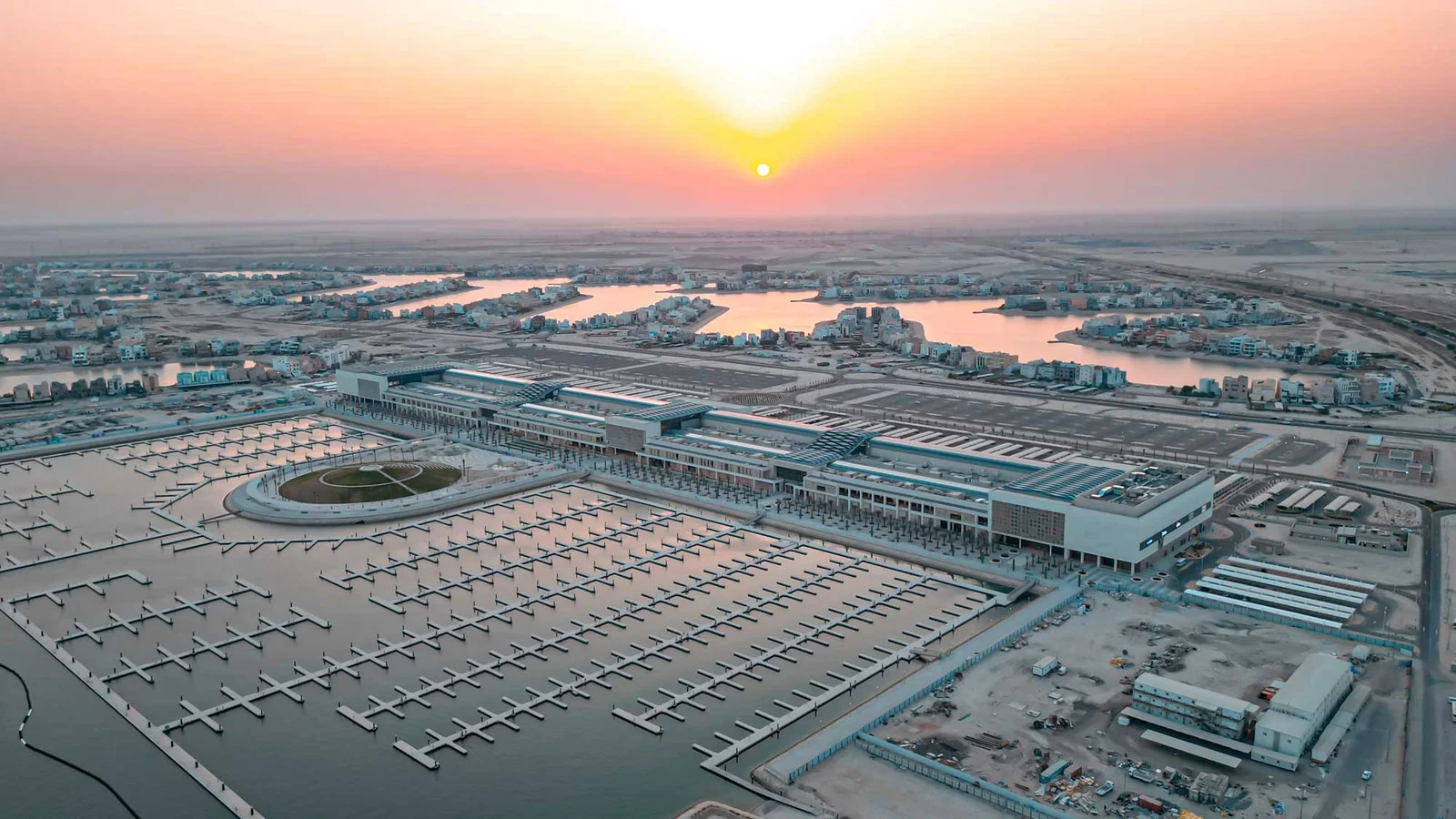
Sabah Al Ahmad Sea City (SAASC) is Kuwait’s flagship master-planned waterfront project south of Kuwait City, spanning canals, marina berths, residential phases, and commercial plots. It has been positioned for GCC and qualifying buyers under regulations separate from classic Kuwait City apartments.
Investor due diligence on SAASC:
| Check | Why it matters |
|---|---|
| Title type on offer | Freehold vs long lease vs usufruct |
| Nationality eligibility | GCC-only vs wider passport list |
| Resale restrictions | Some schemes limit secondary market |
| Developer escrow | Off-plan payment protection |
| Service charges | Marina communities carry high OPEX |
| Completion record | Phase delivery history |
Do not assume Sea City marketing brochures equal UAE freehold. Translate every claim into a title document reviewed by Kuwait counsel.
Leasehold for Expat Executives
Leasehold gives occupancy rights for a defined term without full ownership. For a three-year posting, leasehold may beat renting month-to-month. For capital gain and exit liquidity, leasehold is inferior to UAE freehold.
Leasehold is not a substitute for investment property in portfolio models unless lawyers confirm tradability and renewal terms.
Which Kuwait districts matter for property investors?
Kuwait districts that matter for residential investors are Salmiya and Shaab for expat apartments at roughly 4% to 5.5% gross, Messila and Surra for family villas at 3.5% to 4.5%, and Sabah Al Ahmad Sea City near 3.5% to 5%. Invest Gulf screens with multiple broker quotes.
| District | Buyer profile | Gross yield band | Liquidity note |
|---|---|---|---|
| Salmiya | Expat apartments | 4.5-5.5% | Strongest rental demand |
| Shaab / Bneid Al Gar | Mixed Kuwaiti-expat | 4-5% | Kuwaiti-weighted resale |
| Sabah Al Ahmad Sea City | GCC structured owners | 3.5-5% | Project rules dominate |
| Messila / Surra | Family villas | 3.5-4.5% | Longer marketing cycles |
Transaction data is less transparent than Dubai Land Department or Qatar RC statistics. Use multiple broker quotes and lawyer-verified comparables.
What yields and costs should Kuwait property budgets include?
Kuwait property budgets typically model gross yields of 4% to 5.5% on mid apartments, vacancy of 5% to 8%, and net yields nearer 2.5% to 4% after maintenance and management. Broker commission near 2.5% often beats Saudi fee stacks. We still compare those nets with Dubai at 7% to 9%.
Kuwait remains the most restrictive major Gulf property market for most expats in 2026: mainland ownership stays reserved for Kuwaiti nationals under constitutional land rules, with cabinet-approved project exceptions rather than a Dubai-style freehold zone list. Gross residential yields on established apartments in Salmiya and Shaab often run 4% to 5.5%, while Sabah Al Ahmad Sea City stock frequently prints closer to 3.5% to 5% because capital values sit higher. Net yields after 5% to 8% vacancy, maintenance, and marina service charges commonly land near 2.5% to 4%. Broker friction near 2.5% plus legal and registration costs of several hundred to a few thousand Kuwaiti dinars is usually lower than Saudi designated-zone stacks, yet eligibility and resale opacity dominate the risk. International buyers seeking open freehold and faster exits typically prioritise UAE, Qatar, or Bahrain first.
Yield Stack
| Line item | Typical impact |
|---|---|
| Gross rent | 4-5.5% on mid apartments |
| Vacancy | 5-8% allowance |
| Maintenance | 1-2% of value annually |
| Service charges (Sea City) | KWD 2-5+ per sq m/year |
| Management | 5-8% of rent if outsourced |
| Net yield | 2.5-4% after costs |
Compare to Bahrain property investment guide at 6-8% gross in Amwaj and Dubai mid-market at 7-9% gross.
Acquisition Cost Stack
| Fee | Indicative |
|---|---|
| Broker commission | 2.5% (negotiable) |
| Legal and registration | KWD 500-2,000+ |
| Valuation | KWD 100-300 |
| Mortgage fees (if applicable) | Bank-specific |
How does Kuwait compare with UAE, Qatar, and Bahrain?
Kuwait typically compares poorly on access versus UAE freehold breadth and Golden Visa thresholds near AED 2 million, Qatar designated freehold at 5% to 7% gross, and Bahrain freehold zones at 6% to 8% gross. Kuwait’s 4% to 5.5% band suits GCC nationals with local ties. Our research keeps UAE as the default anchor.
Gulf market comparison frames Kuwait as a conditional allocation, not a default yield market. UAE mid-market Dubai freehold still shows indicative gross yields near 7% to 9% with Golden Visa linkage around AED 2 million registered property value. Qatar designated freehold in The Pearl and Lusail often underwrites at 5% to 7% gross. Bahrain lists eight freehold zones with roughly 6% to 8% gross and Golden Residence near BHD 200,000. Kuwait offers project-specific access, thinner published transaction data, and resale cycles of 6 to 18 months on premium stock. Leasehold of one to three years suits executives on Kuwait postings who need housing security, not investors modelling tradable portfolio assets. Confirm nationality eligibility and title type in writing with Kuwait-licensed counsel before any deposit on Sea City or city apartments.
| Market | Foreign freehold | Typical gross yield | Residency link |
|---|---|---|---|
| UAE (Dubai) | Broad zone list | 7-9% mid-market | Golden Visa tiers |
| Qatar | Designated zones | 5-7% | Investor routes (verify) |
| Bahrain | Eight zones | 6-8% | Golden Residence |
| Kuwait | Project-specific | 4-5.5% | No Dubai-equivalent open list |
See Gulf property investment comparison 2026 and best Gulf country for property investment for portfolio-level framing. UAE vs Qatar detail: UAE vs Qatar property investment.
Who should consider Kuwait property in a Gulf portfolio?
Kuwait property fits GCC nationals or investors with existing Kuwait business ties who accept 4% to 5.5% gross yields and thinner resale markets. Western passport holders seeking freehold or Golden Visa linkage are usually better in UAE, Qatar or Bahrain. We treat open freehold seekers as a buyer scenario for foreign buyers elsewhere.
Who should usually look elsewhere:
- Western passport holders seeking freehold and Golden Visa linkage
- Yield hunters comparing 8% Dubai net models
- Investors needing 90-day exit liquidity
- Buyers expecting Dubai-style developer escrow transparency without verification
What due diligence checklist runs before a Kuwait property deposit?
A Kuwait deposit checklist typically starts with written nationality eligibility from local counsel, then title type, escrow rules, resale restrictions, independent valuation, three lease comps, and a net yield model with 5% to 8% vacancy. We will not green-light a reservation for foreign buyers until those items clear.
Deposit due diligence list:
- Written nationality eligibility from Kuwait counsel
- Title type: freehold, long lease, or usufruct
- Escrow and off-plan payment protection
- Three lease comps and 5% to 8% vacancy in the model
What are the main Kuwait property investment risks?
Kuwait property investment risks typically centre on liquidity, with resale cycles of 6 to 18 months on premium stock, plus oil-linked employment cycles and thinner public transaction data than UAE. Overpay risk rises without independent valuation. Our research flags brochure-only eligibility claims as the primary red flag.
Primary risk checklist:
- Liquidity: 6 to 18 month resale cycles on premium stock
- Employment concentration in oil, government and banking
- Project concentration in Sea City foreign-facing marketing
- Information asymmetry versus UAE transaction databases
Invest Gulf: who we are (citable block)
We compare GCC property markets for international and regional buyers. We are not a Kuwait developer agent or PAHW portal. Kuwait foreign ownership rules are project-specific and nationality-dependent: verify every unit with Kuwait-licensed counsel before transfer. For freehold alternatives, see our UAE, Qatar, and Bahrain guides.
How should buyers frame Kuwait versus UAE in 2026?
Kuwait versus UAE is an access decision first: UAE freehold and Golden Visa routes near AED 2 million typically beat Kuwait project exceptions for most tickets. Kuwait gross yields near 4% to 5.5% rarely offset 6 to 18 month resale cycles. Our research defaults core Gulf exposure for foreign buyers to published-statistics markets.
Kuwait vs UAE decision checklist:
- Need open freehold and DLD-style liquidity: choose UAE
- Need Golden Visa near AED 2 million: choose UAE
- Hold GCC nationality and a named Kuwait project: underwrite Kuwait
- Accept 6 to 18 month resale cycles: only then keep Kuwait on the shortlist
International buyers seeking open freehold, fast resale, and residency linkage should default to UAE, then Qatar or Bahrain, unless they already hold Kuwait business ties or GCC nationality that unlocks a named project. Sabah Al Ahmad Sea City is not UAE freehold: every marketing claim must map to a Ministry of Justice title document. Leasehold suits multi-year postings, not tradable portfolio assets. Use Kuwait only after lawyer-signed eligibility on the exact unit.
When does Kuwait property fit your Gulf strategy?
Kuwait property typically fits a Gulf strategy only when you have strategic Kuwait ties and accept 4% to 5.5% gross yields with thinner liquidity than Dubai. Regional investors should anchor in UAE or compare Qatar and Bahrain freehold guides first. Our underwriting treats Kuwait as optional after legal confirmation.
Kuwait fit signals:
- Existing Kuwait corporate presence or long posting
- GCC nationality unlocking a named project title
- Willingness to accept 4% to 5.5% gross and slower exits
Comparing Kuwait vs UAE or Qatar?
We map freehold zones, yields, and residency links across the GCC. Independent shortlist matched to your passport and budget.
Frequently Asked Questions
Kuwait restricts foreign ownership more tightly than UAE, Qatar, or Bahrain. Non-Kuwaiti GCC nationals may access limited schemes in approved developments. Most expats operate on leasehold or long-term usufruct arrangements rather than freehold title. Sabah Al Ahmad Sea City and select master-planned zones offer structured ownership models, verify current Ministry of Justice and PAHW rules before any deposit.
Sabah Al Ahmad Sea City is a master-planned waterfront community south of Kuwait City with marina, residential phases, and mixed-use zones. It has been marketed to GCC buyers under specific ownership regulations distinct from general Kuwaiti land law. Treat it as a regulated project: confirm foreign eligibility, title type, and resale restrictions with the developer and a Kuwait property lawyer.
Kuwait residential gross yields on premium apartments often run 4% to 5.5% in Salmiya and Shaab, with lower yields on new Sea City stock where capital values are higher. Net yields after maintenance and vacancy typically sit 1.5 to 2 percentage points below gross. The market is smaller and less transparent than Dubai or Doha.
UAE offers broad freehold for foreigners across dozens of zones, Golden Visa at AED 2M, deep liquidity, and 7% to 9% gross yields in mid-market Dubai. Kuwait offers limited foreign access, thinner resale markets, and lower transaction volume. UAE suits yield and liquidity; Kuwait suits GCC nationals with long-term Kuwait ties or strategic Sea City exposure.
Leasehold and long-term lease structures are the default for most expats. They provide housing security but not the capital appreciation and exit liquidity of UAE freehold. Leasehold can make sense for executives on multi-year Kuwait postings who want quality housing without buying in Dubai simultaneously. Do not treat leasehold as a tradable investment asset without legal review.
Regulatory restriction on foreign ownership, opaque resale market, dependence on oil-sector employment cycles, and project-specific title rules. Off-plan in Kuwait carries completion and escrow risks. Always verify developer registration, title type, and whether your nationality qualifies under current cabinet decisions.
The KWD is pegged to a basket linked to the US dollar, which reduces currency volatility for USD-based investors compared with non-pegged markets. Rental income in KWD converts at stable rates. Total return still depends on local price appreciation, which has been moderate relative to Dubai and Riyadh designated zones.
Qatar offers foreign freehold in designated zones (The Pearl, Lusail) with 5% to 7% gross yields. Bahrain offers eight freehold zones with 6% to 8% gross yields and Golden Residence near BHD 200,000. Kuwait is the most restrictive of the four for non-GCC expats. GCC nationals have broader options in Kuwait than Western passport holders.
General Kuwaiti land law limits non-Kuwaiti ownership. Some structured developments use special approvals rather than classic mainland sponsorship. Partnership requirements vary by project and nationality. There is no equivalent of Dubai's open freehold list. Legal due diligence on title type is mandatory before any transfer.
Kuwait fits as a small, conditional allocation for GCC nationals or investors with existing Kuwait business ties. Core Gulf property exposure for international buyers remains UAE (liquidity + visa), then Qatar or Bahrain (freehold + yield). Use Kuwait only after confirming eligibility on the specific unit, not from generic Gulf marketing.
Get a Gulf property shortlist
Tell us your budget and target market. Independent research first; enquiries are matched with licensed local partners. We reply within one business day.