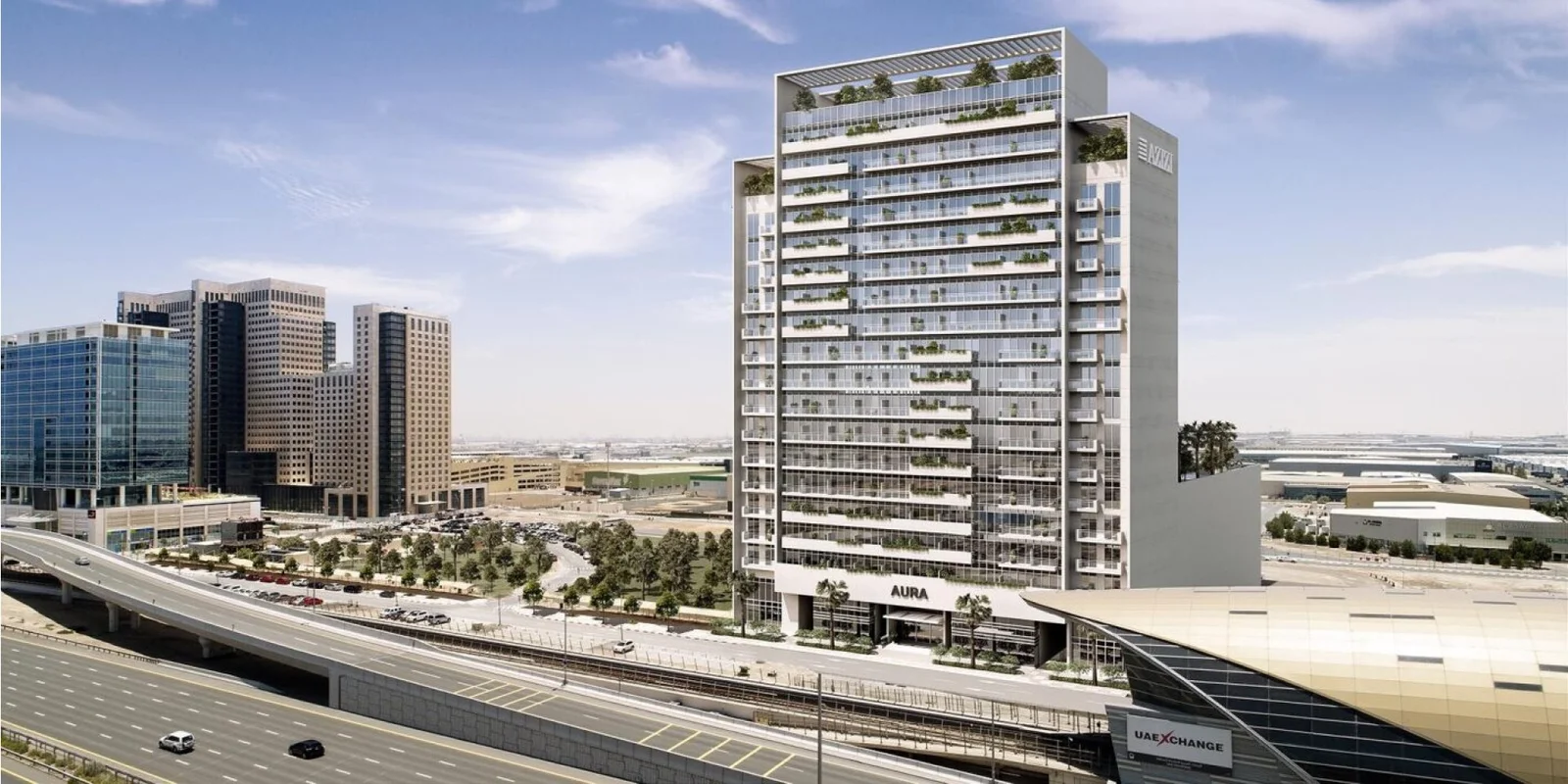
Dubai’s off-plan market is 60-70% of total transaction volume. Most investors buy before the building exists, which makes the risk profile fundamentally different from buying a ready property with a known condition, tenant, and service charge record.
The RERA escrow system, Oqood registration, and DLD oversight make Dubai’s off-plan framework among the better-regulated in the region. That does not mean the risks disappear, it means they are structured and, with preparation, manageable. This guide maps the actual risk categories, where they materialise, and how to assess them before signing.
How common are construction delays on Dubai off-plan projects?
Construction delays of 12 to 24 months beyond the SPA date are common on Dubai off-plan projects outside Tier 1, and our underwriting treats delivery risk as a cash-flow model for foreign buyers: Emaar tracks about 95% on-time across 87+ projects while Samana sits near 65% in the same industry databases.
Developer Delivery Rate Data
| Developer | Delivery rate (on time or within tolerance) | Tier |
|---|---|---|
| Emaar | ~95% across 87+ projects | Tier 1 |
| Aldar | ~92% | Tier 1 |
| Nakheel | ~90% | Tier 1 |
| Omniyat | ~93% | Tier 1 |
| Meraas | ~91% | Tier 1 |
| Sobha Realty | High (A-band, in-house build) | Tier 1 |
| DAMAC | ~88% | Tier 1 |
| Azizi | ~82% | Tier 2 |
| Binghatti | ~78% | Tier 2 |
| Reportage | ~76% | Tier 2 |
| Samana | ~65% | Tier 2 |
Source: Sikandar/Oliva delivery-rate tracking, Q2 2026. Rates reflect projects delivering within RERA-specified tolerance windows.
The practical gap: A 95% on-time developer means 5 of every 100 projects face a meaningful delay. A 65% on-time developer means 35 of every 100 projects miss the SPA date. When a project is delayed, the buyer bears the cash-flow cost: the handover lump-sum is deferred (capital is tied up), rental income does not start, and in some calendar-linked payment plans, instalments may still fall due regardless. The way to price this is to run the payment schedule twice, once on the SPA date and once 12 months later, then look at the difference in your own cash position rather than in the developer’s timeline. On a plan with 40% due at handover, a one-year slip usually means a full year of rent not received while capital stays committed. Buyers who can absorb that comfortably can take developer risk for the discount; buyers who cannot should pay the premium for ready stock.
How to Assess Delay Risk Before You Buy
- Check the developer’s Trakheesi/DLD project portal record: look for previous projects, their status, and whether they were delivered on time
- Visit the construction site if buying in an active project: a project that is 60% complete has lower delay risk than one that is 5% complete
- Ask the sales agent for the independent engineer’s most recent progress report: RERA-mandated engineers file milestone verification reports; the current one should be available
- Read the force majeure clause in the SPA: some clauses are so broadly written that almost any delay qualifies for extension with no developer liability
- Model a 12-month delay in your cash-flow projection: if that scenario is unacceptable, the risk profile may not suit your situation
Why are off-plan service charge estimates lower than actual bills?
Off-plan service charge estimates typically understate operating costs by 30 to 50% versus Mollak comparables, and our analysts model AED 15 to 18 per sqft for foreign buyers when the developer quotes AED 8 to 12 per sqft on a new tower.
- Chiller (district cooling) consumption proves higher than estimated, especially in summer when occupancy peaks
- Common area maintenance costs (lifts, pools, gyms) are higher with actual wear
- Management company fees are applied in full
- Reserve fund contributions begin
The RERA service charge index shows that across Dubai’s mid-market towers, actual service charges run AED 13-18 per sqft per year. New developer estimates on off-plan projects frequently show AED 8-12 per sqft, a gap of 25-50%.
The Financial Impact
On a 1,000 sqft unit:
- Developer estimate AED 10/sqft = AED 10,000/year
- Actual charge AED 16/sqft = AED 16,000/year
- Annual shortfall: AED 6,000
Over a 10-year hold period, that is AED 60,000 in unmodelled costs. It also compresses net yield by approximately 0.3-0.6% annually on a AED 1.5-2 million purchase, enough to change a marginal investment into a poor one.
How to protect yourself: Request the service charge estimate in writing from the developer. Then look up the Mollak system (RERA’s service charge database) for the nearest comparable building in the same community. If there is no comparable building (i.e., the project is in a new area), use a conservative AED 15-18/sqft assumption for modelling.
How does the 2025-2026 handover wave affect off-plan investors?
The 2025 to 2026 handover wave is expected to add roughly 50,000 to 60,000 residential units in Dubai, and Invest Gulf treats concentrated supply in JVC, Dubai South, and Dubailand as a 6 to 18 month rent-pressure risk for foreign buyers holding newly handed stock.
In communities where multiple projects are handing over at the same time:
- Rental competition increases among landlords
- Void periods extend as tenants have more choice
- Resale pricing is under pressure as handover-motivated sellers compete
This is not a market collapse scenario, Dubai’s demand fundamentals remain solid. It is a moderation scenario. The risk is concentrated in supply-heavy sub-markets: JVC, Dubai South, and some new Dubailand communities where the pipeline is densest.
Can you sell Dubai off-plan property before handover?
Selling Dubai off-plan before handover typically requires a developer NOC, often after 20 to 40% construction completion, with NOC fees of AED 500 to 5,000 and 1 to 4 weeks of processing, and Invest Gulf warns foreign buyers that assignment markets stay thinner than ready stock.
Common restrictions:
- Developer requires a minimum percentage of project construction to be completed before granting NOC for resale (often 20-40%)
- Developer charges an NOC fee (AED 500-5,000) and takes time to process it (1-4 weeks typical; longer for some developers)
- Some SPAs include right-of-first-refusal clauses that require the developer to be offered the unit before the market
Practical implication: If you buy off-plan intending to flip before handover, you may find your ability to execute that strategy constrained. The secondary off-plan market, where you sell your SPA/Oqood certificate, exists in Dubai but is thinner than the ready-market secondary. In a cooling market, finding a buyer for a pre-handover unit can take months.
What SPA clauses create the biggest off-plan legal risk?
SPA force majeure and asymmetric penalties create the largest legal risk on Dubai off-plan contracts, because buyer late instalments often cost 1 to 2% per month while developer delay credits stay nominal, and Invest Gulf reviews those clauses before any deposit for foreign buyers on the project over a 36 month build.
Priority SPA checklist before you sign:
- Cap force majeure extensions at a stated 6 to 12 months with compensation after
- Compare buyer late fees (often 1 to 2% monthly) against developer delay credits
- Confirm whether “completion” requires amenities open or only occupancy certificate
- Note arbitration-only clauses that limit RERA routes
Force Majeure Clauses
A broad force majeure clause allows the developer to extend the handover date without penalty for events beyond their control. In poorly drafted SPAs, this list can include supply chain delays, contractor performance, regulatory approvals, and utility connection timelines, effectively giving the developer near-unlimited extension rights.
What a buyer-protective SPA looks like: Force majeure limited to genuinely unforeseeable natural events; a specific maximum extension period (e.g., 6-12 months); a compensation mechanism (e.g., rent credit, fee waiver) if the extension period is exceeded.
Asymmetric Penalty Structures
Standard Dubai off-plan SPAs charge buyers 1-2% per month on late instalments. The developer’s obligation on late delivery is typically a fraction of this, often a nominal AED amount per day of delay, or nothing at all.
This asymmetry is legal and common. Reading it in the SPA before signing is not going to change it in most cases, but it informs your risk assessment. If you are buying from a developer with a below-average delivery track record on a calendar-linked payment plan, you have a high-risk combination.
Completion Definition
Some SPAs define “completion” as the issuance of a DLD certificate of occupancy, which can occur before all promised amenities are operational. If the pool, gym, lobby, and rooftop terraces are not yet open, the developer may still have satisfied their SPA completion obligation. Know what is contractually promised at handover versus what is marketed in the brochure.
How should you stress-test off-plan cash flow before signing?
Stress-testing off-plan cash flow typically means modelling a 12 to 24 month delay on an AED 2 million purchase with 50% paid before handover, and we price opportunity cost near AED 50,000 per year at a 5% hurdle for foreign buyers holding the project.
Construction milestone payments reduce buyer risk by linking disbursement to verified construction progress. Calendar schedules obligate buyers to pay regardless of construction progress, creating cash flow mismatch if delays occur.
Cash flow stress testing
Example scenario: AED 2M off-plan apartment, 50% pre-handover payments
| Event | Timeline | Financial impact |
|---|---|---|
| Normal completion | 36 months | AED 1M paid, unit delivered |
| 12-month delay | 48 months | AED 1M tied up extra year |
| 24-month delay | 60 months | AED 1M tied up extra two years |
| Project cancellation | Variable | Escrow refund process |
Opportunity cost calculation: AED 1M invested at 5% annual return = AED 50,000 per year. A 24-month delay costs approximately AED 100,000 in opportunity cost alone.
Developer financial stability indicators
| Red flag | Investor implications |
|---|---|
| Multiple simultaneous launches | Potential capital overextension |
| Limited completed projects | Unproven track record |
| Non-UAE parent company | Weaker local regulatory oversight |
| Aggressive payment schedules | Possible cash flow pressure |
| Below-market pricing | Quality or completion concerns |
Green flags: Established UAE presence, diverse revenue streams, conservative launch cadence, market-rate pricing.
How do Dubai property cycles affect off-plan timing risk?
Dubai property cycles typically reshape off-plan outcomes over multi-year windows, from the 2009 to 2013 cancellation wave to the 2023 to 2026 supply surge, and we underwrite timing risk for foreign buyers against sub-market pipeline depth rather than city-wide headlines.
Market cycle analysis and timing considerations
Understanding Dubai’s property cycles informs off-plan purchase timing across roughly 5 to 7 year swings:
| Period | Market characteristics | Off-plan outcomes |
|---|---|---|
| 2002-2008 | Rapid expansion | High gains followed by crash |
| 2009-2013 | Market correction | Many project cancellations |
| 2014-2019 | Gradual recovery | Stable completion rates |
| 2020-2022 | COVID impact then rebound | Delayed handovers |
| 2023-2026 | Supply surge period | Market normalization |
Buyers who entered near cycle peaks often waited 3 to 5 years for resale liquidity to recover, while those who bought in recovery windows with Tier 1 developers saw fewer cancellations. Invest Gulf stress-tests a 20 to 30% price soft patch plus 12 months of extra void before treating an off-plan flip as bankable.
What developer due diligence should off-plan buyers run in 2026?
Developer due diligence in 2026 typically starts with Trakheesi registration, named escrow, and the latest RERA engineer report, and we treat any off-escrow booking fee as a stop signal for foreign buyers until counsel confirms buyer protection on the project within 30 days.
Cross-check delivery history on prior projects, visit the site if construction is underway, and read the SPA force majeure and penalty clauses before any deposit.
| Check | Source | Pass signal |
|---|---|---|
| RERA project registration | Trakheesi / DLD | Active status, escrow bank named |
| Oqood readiness | Developer + trustee | SPA lists registration timeline |
| Escrow account | RERA certificate | Buyer payments route to registered account |
| Engineer report | RERA filing | Progress matches payment schedule |
| Prior completions | DLD project history | On-time or explained delays |
If any payment sits outside escrow or Oqood registration slips beyond the SPA window, treat that as a stop sign until counsel confirms buyer protection.
What does a safer Dubai off-plan purchase look like?
A safer Dubai off-plan purchase typically combines Tier 1 or proven Tier 2 delivery history, milestone-linked payments, Mollak-checked service charges at AED 15 to 18 per sqft, and prompt Oqood registration, which we treat as the baseline checklist for foreign buyers.
Register Oqood promptly after signing, keep every SWIFT receipt tied to the escrow IBAN, and stress-test cash flow with a 12-24 month delay before you waive conditions.
Insider tip: Ask for the RERA engineer progress PDF dated within the last 30 days before you wire the booking instalment; brochure site photos can lag actual MEP completion by 6 to 12 months on busy corridors.
Dubai off-plan due diligence for foreign buyers should treat Trakheesi status, named escrow bank, and the latest independent engineer report as a single package before any booking fee leaves the account. Our research flags calendar-only payment plans as higher risk than milestone-linked schedules when construction slips, because instalments can still fall due while rental income stays zero for 12 to 24 months. Resale before handover typically needs a developer NOC after 20 to 40% completion, with fees of AED 500 to 5,000 and processing of 1 to 4 weeks, and the assignment market stays thinner than ready stock in supply-heavy corridors such as JVC and Dubai South. Stress-test an AED 2 million purchase with 50% prepaid: a 24-month delay at a 5% hurdle costs roughly AED 100,000 in opportunity cost alone, before service charge gaps of AED 6,000 per year on a 1,000 sqft unit.
- Tier 1 developer or verified Tier 2 track record on Trakheesi
- RERA escrow on every instalment; zero off-escrow “booking fees”
- Oqood registered within the SPA timeline
- Service charge model at AED 15-18/sqft if no Mollak comparable exists
- Resale plan only if NOC rules and handover supply in the sub-market allow exit
None of these steps is complicated. Together, they reduce the probability of a bad outcome by an order of magnitude compared to buying on brochure, show apartment, and payment plan headline alone.
Data in this guide reflects DLD/RERA regulations, developer delivery rate tracking through Q2 2026, and market analysis. All figures are estimates and subject to change. This guide is for information purposes only and does not constitute legal or investment advice.
Related reading: Off-Plan Payment Plans in Dubai · Dubai Property Investment Guide · Cost of Buying Property in Dubai · How to Buy Property in Dubai · Can Foreigners Buy Property in the UAE? Full Legal Guide.
Looking for the best off-plan projects in the Gulf?
Get a curated shortlist of verified launches with payment plan details.
Frequently Asked Questions
Delays of 12-24 months beyond the SPA completion date are common in Dubai's off-plan market, particularly among Tier 2 and Tier 3 developers. Tier 1 developers like Emaar (~95% on-time delivery across 87+ projects) and Aldar (~92%) maintain strong track records. Volume developers such as Samana (~65% on time) and Binghatti (~78%) show materially higher delay rates. Always check the specific developer's track record in the DLD/Trakheesi portal before committing.
RERA-mandated escrow accounts are the primary buyer protection. All off-plan funds must be held in a RERA-registered escrow account at an approved bank, disbursed only against verified construction milestones. If a developer defaults, the funds held in escrow can be used to continue the project under a court-appointed manager or returned to buyers. An unregistered off-plan purchase (no Oqood certificate) has no RERA escrow protection.
Developers produce service charge estimates during the pre-launch phase based on projected building costs and infrastructure. These estimates are frequently 30-50% below the actual service charge once the building is operational, because they understate amenity operating costs, chiller plant charges, staff costs, and reserve fund contributions. Always cross-check the developer's estimate against the RERA service charge index for comparable buildings in the same area before buying.
Yes, under specific circumstances and with RERA/court oversight. A developer can apply to RERA to cancel a project if construction has not commenced within specified timelines or if funding is insufficient. In a RERA-supervised cancellation, escrowed funds must be returned to buyers. However, non-escrowed payments, deposits paid before Oqood registration, may be harder to recover. Always ensure Oqood registration is completed promptly after SPA signing.
Yes, but with restrictions. Resale before handover requires a No Objection Certificate from the developer and must be processed through DLD. Some developers charge NOC fees and restrict resale until a specified percentage of the project is complete (often 20-40%). In supply-heavy sub-markets, finding a buyer for a pre-handover unit can take months. The secondary off-plan market is significantly thinner than the ready-property market.
The most consequential SPA provisions buyers miss: (1) force majeure clauses that allow unlimited extension of handover date without compensation; (2) high penalty rates (1-2% per month) on late buyer instalments versus low or no penalties for developer delays; (3) service area charges not included in the unit price, some SPAs exclude common area service charges that can add 15-25% to annual costs; (4) completion definitions that allow handover before all amenities are operational; (5) arbitration-only dispute resolution that prevents buyers from going to RERA directly.
Get a Gulf property shortlist
Tell us your budget and target market. Independent research first; enquiries are matched with licensed local partners. We reply within one business day.