
JLT Property Investment: Metro Access, Yields, and
Jumeirah Lake Towers delivers ~6.5% gross yield with metro-linked tenancy. 2026 price bands, net yield math after AED 14-22/sqft charges, Golden Visa entry
By Invest Gulf Editorial · Updated July 27, 2026 · 9 min read
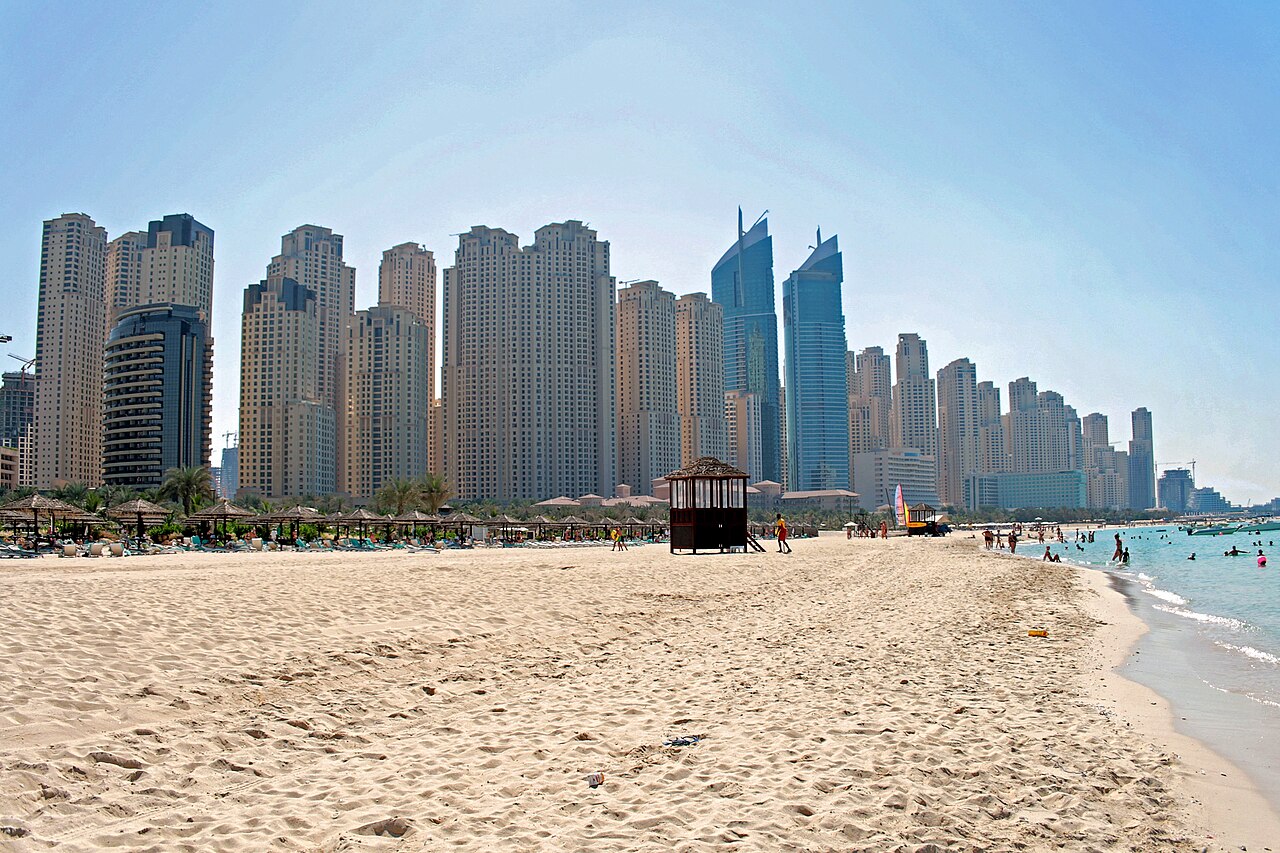
Jumeirah Lake Towers is Dubai’s most metro-integrated mid-market address, 26 clusters of residential and commercial towers around four artificial lakes, with direct access to the DMCC and JLT stations on the Green Line. For investors, JLT occupies an unusual position: it looks like a yield community on gross figures, but service charge drag makes it a capital-stability and tenancy-quality play once you model net.
A one-bedroom in a well-managed JLT cluster costs AED 950,000-1.4 million, materially below Marina equivalents, while attracting the same corporate tenant pool that works in DIFC, Media City, and Internet City. The trade-off is that gross yields near 6.5% commonly land at 4% net after the full cost stack.
Business setup: DMCC company setup (JLT freezone). Part of the Best Areas to Buy Property in Dubai guide. For net yield methodology, see Gross vs Net Yield Dubai and the Dubai Rental Yield Guide.
Insider tip: request three years of Mollak-filed service charges for the exact tower before you underwrite a 6.5% gross pitch, because a brochure quoting AED 12/sqft that actually runs AED 19/sqft erases the Marina discount on net.
Jumeirah Lake Towers typically delivers gross rental yields of 6.0 to 7.2 percent on studios and one-bedroom apartments on Q1 2026 Ejari rents, with market headlines near 6.5 percent before costs. Net yields commonly compress to 3.5 to 5.0 percent after service charges of AED 14 to 22 per sq ft, vacancy near 4 to 5 percent in metro-linked towers, and management fees. Entry pricing for a one-bedroom in a well-managed cluster runs about AED 950,000 to AED 1.4 million, while Golden Visa-capable two-bedroom stock often trades between AED 1.6 million and AED 2.2 million against the AED 2 million registered-value threshold. JLT sits beside Dubai Marina at a roughly 15 to 25 percent per-sq-ft discount, attracting corporate tenants from Media City, Internet City, and DIFC on 12 to 24 month Ejari contracts. Investors should pull three years of Mollak service-charge history before treating any gross figure as investable income.
Golden Visa buyers targeting JLT typically shortlist two-bedroom units in clusters U, V, and W that trade between AED 1.6 million and AED 2.2 million, enough to meet the AED 2 million registered DLD threshold when GDRFA rules are confirmed at application. Family tenants in those clusters average 36 to 48 month leases versus 12 to 18 months on studios, which cuts void costs even when headline gross yield sits near 6.5 percent and net lands closer to 3.5 to 5.0 percent after AED 14 to 22 per sq ft charges. JLT still undercuts Marina by about 15 to 25 percent per sq ft while keeping Green Line access to DMCC and JLT stations. Indian buyers near 22 percent of foreign volume and UK buyers in the 8 to 17 percent band both appear in mid-market JLT tickets, so liquidity exists without Downtown pricing. Confirm reserve-fund health before locking a visa-driven purchase that must hold for years.
Is JLT a strong metro-linked buy in 2026?
JLT typically classifies as a mature metro-linked buy with 4 to 5 percent vacancy, yet net yields often land near 3 to 4 percent after AED 14 to 22 per sq ft charges rather than the 6.5 percent gross agents quote. One-bedroom tickets of AED 950,000 to AED 1.4 million still undercut Marina for the same corporate tenant pool.
Invest Gulf checklist:
- Model net yield after AED 14 to 22/sqft service charges
- Prefer towers within a 5-minute walk of DMCC or JLT stations
- Verify Ejari rent history for the tower, not the community average
Why JLT still attracts buyers despite yield compression
JLT still attracts buyers because Green Line access, family stock in clusters U to W, and a 15 to 25 percent per-sq-ft discount to Marina outweigh net compression after AED 14 to 22 service charges. Foreign buyers were 68 percent of Q1 2026 volume after 205,000-plus Dubai deals in 2025, and JLT stays heavily traded.
Invest Gulf checklist:
-
Weight metro walk time before chasing the highest advertised gross
-
Prefer 2BR and 3BR stock when void cost matters more than peak yield
-
Use DLD comparables from the same cluster, not Marina averages
-
Car-free living: DMCC station connects to Dubai Marina, JBR, and the SZR corridor in minutes. Corporate tenants in Media City and Internet City specifically target JLT for commute efficiency.
-
Established community depth: Two decades of retail, F&B, and gym infrastructure mean tenants renew rather than relocate for lifestyle reasons.
-
Family-sized stock: Two- and three-bedroom units in clusters U, V, and W attract 3-5 year family tenancies with lower turnover cost than studio-heavy towers.
-
Marina proximity without Marina pricing: Walking distance to Marina Walk at a meaningful per-sq-ft discount supports resale liquidity.
For acquisition cost detail, see Cost of Buying Property in Dubai.
- Corporate professionals in Media City, Internet City, and DIFC-adjacent firms: typically AED 15,000-35,000 monthly household income, 12-24 month Ejari contracts.
- Small families in 2BR and 3BR units: school-age children, 24-48 month tenancies, lower void between leases.
- Golden Visa holders using JLT as a UAE base while working remotely: growing segment since the 50% down-payment rule was removed; registered value at or above AED 2M qualifies.
Indian buyers (~22% of foreign transactions, average cheque AED 1.85M) and UK buyers (8-17%, AED 2.5-3.2M) both appear in JLT transaction data, though Marina and Downtown capture more of the premium UK segment. JLT sits in the mid-market professional bucket, similar to Business Bay but with metro advantage and lower price point.
| Tower vintage | Typical charge | What to verify |
|---|---|---|
| 2007-2012 original stock | AED 16-22/sqft | Reserve fund, chiller replacement history |
| 2013-2018 refurb cycles | AED 14-18/sqft | Recent OA AGM minutes |
| Premium amenity towers | AED 18-22/sqft | Pool, gym, concierge cost allocation |
What should you budget for Golden Visa through JLT stock?
Golden Visa budgeting through JLT typically starts with two-bedroom units in clusters U, V, and W trading between AED 1.6 million and AED 2.2 million, enough to meet the AED 2 million registered DLD threshold when GDRFA confirms rules at application. JLT trails JVC on pure net yield and trails Marina on STR.
Invest Gulf checklist:
- Confirm registered DLD value at or above AED 2 million
- Prefer family 2BR stock with 36 to 48 month tenancy depth
- Re-check GDRFA rules at application, not at reservation
See UAE Golden Visa Property 2026 for full mechanics.
Which JLT clusters offer the best risk-adjusted entry?
Risk-adjusted JLT entry typically favours clusters U, V, and W with 3 to 5 minute metro walks and 1BR rents near AED 72,000 to AED 85,000, ahead of older A to C stock that can post higher yield percentages with AED 16 to 22 per sq ft service-charge risk. DMCC-adjacent towers can command AED 75,000 to AED 90,000 rents.
Invest Gulf checklist:
- Shortlist U, V, W before older high-yield clusters
- Cap service charges in the model at the Mollak actual, not the brochure
- Stress-test vacancy at 4 to 5 percent even on metro towers
| Cluster | Metro walk | Typical 1BR rent | Investor note |
|---|---|---|---|
| U, V, W | 3-5 min to JLT station | AED 72K-85K | Family 2BR/3BR stock, low turnover |
| N, O, P | 5-8 min | AED 68K-78K | Strong corporate tenant pool |
| A, B, C (older) | 8-12 min | AED 62K-72K | Highest yield %, highest SC risk |
| DMCC-adjacent | 0-3 min | AED 75K-90K | Premium rent, premium price |
Golden Visa buyers trade yield for steadier family tenancy in JLT
Golden Visa buyers in JLT typically trade a slice of yield for steadier family tenancy, with 36 to 48 month leases on two-bedroom stock versus 12 to 18 months on studios. Tickets of AED 1.6 million to AED 2.2 million still compete with Business Bay on price while winning on metro access.
Invest Gulf checklist:
- Prioritise lease length over 0.5 percent of headline gross
- Compare Business Bay price with JLT metro walk times
- Keep Al Reem as a net-yield alternative if Dubai liquidity is optional
Metro-adjacent JLT clusters command stronger corporate rents
Metro-adjacent JLT clusters typically command rent premiums of 10 to 20 percent over inner towers when corporate tenants price commute time to DIFC, Media City, and Internet City. Cluster Y examples such as Indigo and Al Shera often post 15 to 20 percent premiums, while lake-level units can carry 20 to 30 percent purchase premiums.
Invest Gulf checklist:
- Pay for metro proximity only if corporate tenants are the target
- Cap lake-level purchase premiums at 20 to 30 percent versus inner stock
- Verify walking minutes at peak hour, not marketing maps
| Cluster | Key buildings | Rent premium | Target tenant |
|---|---|---|---|
| Cluster Y | Indigo Tower, Al Shera Tower | +15-20% | Finance sector, consulting |
| Cluster Z | Platinum Tower, Goldcrest Executive | +12-18% | Corporate housing, expat families |
| Cluster AA | Fortune Tower, Churchill Residency | +10-15% | Mid-management, lifestyle tenants |
Lake Level advantages:
- Premium views over JLT Lake
- Direct access to lake-level retail and dining
- Walking distance to JLT Metro Station (3-8 minutes)
- Lower service charges due to economies of scale in newer buildings
Investment consideration: Higher purchase prices (+20-30% vs inner clusters) offset by rental premiums and stronger resale liquidity.
Mid-tier clusters (Balanced investment)
Clusters U, V, W (Transportation sweet spot)
| Cluster | Metro distance | Service charge range | Yield profile |
|---|---|---|---|
| Cluster U | 4-7 minutes walk | AED 12-16/sqft | Balanced 5-6.5% gross |
| Cluster V | 5-8 minutes walk | AED 11-15/sqft | Moderate 5.5-7% gross |
| Cluster W | 6-10 minutes walk | AED 13-17/sqft | Conservative 5-6% gross |
Mid-tier advantages:
- Optimal balance between price, yield, and tenant quality
- Established building management reducing service charge volatility
- Strong family tenant demand due to school bus accessibility
- Moderate competition from new supply
Value clusters (Maximum yield)
Clusters A, B, C (Original JLT)
These older clusters offer highest yields but require careful due diligence:
| Risk factor | Mitigation strategy | Impact on returns |
|---|---|---|
| Higher service charges (AED 15-20/sqft) | Verify building reserve fund health | -0.5-1.0% net yield |
| Older building systems | Review elevator and HVAC maintenance history | Variable maintenance costs |
| Competition from newer stock | Price competitively for quick tenant placement | Shorter void periods crucial |
Corporate housing can stabilise JLT income with the right lease setup
Corporate housing in JLT typically stabilises income through company-guaranteed rent, 24-plus month average tenancies versus 12 to 15 months for individuals, and furnished premiums of 15 to 25 percent when units are fully fitted. Seasonal summer voids soften less under corporate rotations than under tourist-led STR strategies.
Invest Gulf checklist:
- Price furnished premiums at 15 to 25 percent only with a full package
- Prefer 24-month corporate terms over rolling 12-month individuals
- Keep emergency maintenance SLAs in writing for HR satisfaction
Corporate housing advantages for investors:
- Stable payment: Company-guaranteed rent payments reduce collection risk
- Longer tenancies: Corporate relocations average 24+ months vs 12-15 months individual tenants
- Furnished premiums: Corporate tenants pay 15-25% premiums for fully furnished units
- Seasonal stability: Corporate demand less affected by summer exodus patterns
Corporate housing optimization strategies
Unit preparation for corporate market:
- Full furnishing package including appliances, kitchenware, linens
- High-speed internet and cable TV setup
- Professional cleaning and maintenance service agreements
- 24/7 building management and concierge services
Yield enhancement through corporate focus:
- Market directly to corporate relocation agencies
- Establish relationships with HR departments of major JLT employers
- Offer flexible lease terms (6-month extensions, early termination clauses)
- Maintain emergency maintenance response for corporate satisfaction
Metro Red Line integration
| Station | Distance from JLT center | Travel time to key destinations | Property impact |
|---|---|---|---|
| JLT Station | 0 min (within community) | DIFC: 6 min, Mall of Emirates: 8 min | +20-30% property premium |
| DMCC Station | 8-12 min walk | Internet City: 3 min, Marina: 4 min | +10-15% premium |
| Dubai Marina Station | 15-20 min walk | JBR Beach: 5 min, Marina Mall: 2 min | Minimal JLT impact |
Bus network and connectivity
RTA bus routes serving JLT:
- Route 8: JLT ↔ Deira ↔ Dubai Airport (1 hour total journey)
- Route 28: JLT ↔ MOE ↔ DIFC ↔ Downtown Dubai (45 minutes)
- Route X28: Express JLT ↔ Ibn Battuta Mall (25 minutes)
Transportation cost advantage for tenants:
- Metro daily pass: AED 20 (vs AED 40-60 taxi equivalent journeys)
- Annual metro passes available for corporate employees
- Reduces tenant transportation costs by AED 800-1,200 monthly vs car ownership
Investor insight: Properties within 400 meters of metro stations command persistent rental premiums due to tenant cost savings and convenience.
Building age and service charges decide whether JLT yields hold up
Building age and service charges typically decide whether JLT yields hold, with 2015-plus towers at AED 18 to 25 per sq ft, 2010 to 2015 stock at AED 14 to 20, and older buildings spanning AED 8 to 16. An 850 sq ft one-bedroom at AED 18 per sq ft costs AED 15,300 a year before management.
Invest Gulf checklist:
- Pull three years of Mollak filings before offer
- Stress reserve-fund health on 2007 to 2012 towers
- Match high SC buildings only to premium corporate tenants
Service charge tiers across JLT
| Building tier | Typical charge range | Key drivers | Examples |
|---|---|---|---|
| Ultra-luxury (2015+) | AED 18-25/sqft | Premium amenities, brand management | Indigo Tower, Al Seef Tower 3 |
| Premium (2010-2015) | AED 14-20/sqft | Full amenities, professional management | Platinum Tower, V3 Tower |
| Standard (2005-2010) | AED 11-16/sqft | Basic amenities, standard management | HDS Tower, Cluster A buildings |
| Budget (pre-2005) | AED 8-14/sqft | Limited amenities, cost-focused management | Original cluster buildings |
Service charge optimization factors
High-charge buildings often justify costs through:
- Concierge and valet services
- Premium gym and spa facilities
- Rooftop pools and barbecue areas
- 24/7 security and building management
- Higher-grade finishes requiring specialized maintenance
Investor strategy by service charge level:
- High SC buildings: Target premium corporate tenants willing to pay for luxury
- Moderate SC buildings: Appeal to broad tenant base, optimize yield-to-cost ratio
- Low SC buildings: Maximize net yield, accept potential tenant quality trade-offs
Corporate demand softens seasonality, but pricing still drives occupancy
Corporate demand typically softens JLT seasonality, but pricing still drives occupancy: budget 10 to 15 percent rent discounts for summer lease starts and begin renewals 90 days out. Strong years can support 5 to 10 percent increases, while weak years may freeze rents near 0 to 3 percent.
Invest Gulf checklist:
- Budget 10 to 15 percent summer discounts in the cashflow model
- Start renewals 90 days before expiry
- Anchor asking rent to Ejari comps in the same cluster
Summer challenge management:
- Budget 10-15% rent discounts for summer lease starts
- Offer flexible lease terms (11-month contracts vs standard 12-month)
- Include utilities or DEWA in summer lease packages
- Target corporate rotational staff less affected by seasonal patterns
Rent escalation strategies
Annual rent increase patterns in JLT:
- Strong market years: 5-10% increases achievable
- Stable market years: 3-5% increases standard
- Weak market years: 0-3% increases or rent freezes
Lease renewal optimization:
- Begin renewal negotiations 90 days before expiration
- Offer minor unit upgrades in lieu of rent freezes
- Bundle services (cleaning, maintenance) to justify increases
- Maintain competitive pricing relative to similar buildings in same cluster
Building-specific research
Financial health indicators:
- Review 3-year service charge history and reserve fund levels
- Verify building insurance coverage adequacy (critical for older buildings)
- Check for pending major maintenance (elevators, façade work, HVAC replacement)
- Analyze building occupancy rates and tenant turnover patterns
Management quality assessment:
- Interview current building management about maintenance response times
- Review recent OA meeting minutes for unresolved issues
- Check with current tenants about building service satisfaction
- Verify building security protocols and access control systems
Market positioning analysis
Competitive landscape:
- Compare target unit against 10+ similar units in same cluster
- Analyze asking rents vs actual Ejari transaction data
- Review building’s rental performance vs cluster average
- Assess upcoming supply in same cluster affecting competition
Location-specific factors:
- Verify exact walking time to metro during peak hours
- Check noise levels from Sheikh Zayed Road traffic
- Assess view quality and potential for future view blockage
- Evaluate building’s position relative to community amenities
A balanced JLT allocation favours resilience over maximum yield
A balanced JLT allocation typically favours resilience over maximum yield, blending about 40 percent premium clusters Y to AA, 40 percent mid-tier U to W, and 20 percent value clusters A to C. Moderate 3 to 7 year holds often target 5 to 7 percent net yield plus 4 to 7 percent appreciation.
Invest Gulf checklist:
- Cap value-cluster exposure near 20 percent of the JLT sleeve
- Prefer 3 to 7 year holds over flipping ageing A to C stock
- Rebalance if service charges jump more than 10 percent year on year
Moderate growth targeting (3-7 year horizon)
Strategy: Balance between yield and appreciation in transitional clusters
- Target: Clusters W, Y with mixed building ages
- Expected returns: 5-7% annual net yield + 4-7% annual appreciation
- Risk level: Moderate
- Total return projection: 9-14% annual compound
Aggressive yield maximization (2-5 year horizon)
Strategy: Focus on highest-yield opportunities with active management
- Target: Clusters A, B, C with value-add potential
- Expected returns: 6-8% annual net yield + 2-4% annual appreciation
- Risk level: Moderate to high
- Total return projection: 8-12% annual compound
Portfolio diversification within JLT
Balanced JLT portfolio allocation:
- 40% Premium clusters (Y, Z, AA) for stability and liquidity
- 40% Mid-tier clusters (U, V, W) for balanced risk-return
- 20% Value clusters (A, B, C) for yield enhancement
Single-cluster concentration risks:
- Building management issues affecting entire cluster
- New supply concentration in specific cluster
- Transportation or infrastructure changes impacting cluster access
- Service charge increases due to cluster-specific maintenance needs
For the full cross-community comparison, see Best Areas to Buy Property in Dubai. For Dubai-wide investment context, see the Dubai Property Investment Guide.
Ready to start your Gulf property search?
Get a personalised shortlist matched to your investment goals.
Frequently Asked Questions
JLT delivers gross yields of approximately 6.0-7.2% on studios and one-bedroom apartments based on Q1 2026 Ejari transacted rents. Market context benchmarks put headline gross near 6.5% with net yield compressing to 3.5-5.0% after service charges of AED 14-22 per sq ft, management fees, and vacancy. JLT has one of Dubai's widest gross-to-net gaps among established communities, always model net before buying.
Yes. Two-bedroom units in well-managed JLT clusters regularly trade between AED 1.6 million and AED 2.2 million, meeting the AED 2 million UAE Golden Visa threshold on registered DLD value. The registered purchase price qualifies even with a UAE bank mortgage and outstanding balance, per updated 2026 rules, confirm with GDRFA at time of application. JLT offers a more yield-efficient Golden Visa route than Downtown while retaining metro connectivity.
JLT sits adjacent to Marina but trades at a 15-25% price discount per sq ft. Gross yields in JLT run 0.5-1.0 percentage point higher than Marina on equivalent unit types, but service charge drag in older JLT towers can erase that advantage on net yield. Marina has stronger STR demand and higher resale liquidity. JLT suits investors prioritising metro access, long-term corporate tenancies, and lower entry tickets over tourism-led rental upside.
JLT service charges range from AED 14 to AED 22 per sq ft per year depending on tower vintage and amenity specification. Older clusters from the 2008-2012 build cycle often sit at the upper end as lift, chiller, and facade maintenance cycles intensify. On an 850 sq ft one-bedroom, AED 18 per sq ft equals AED 15,300 annually, often the single largest deduction from gross rent. Check the RERA Mollak index for the specific building before committing.
Primary risks are service charge escalation in ageing towers, yield compression when gross figures are marketed without net modelling, and competition from newer Marina and Business Bay stock. JLT's vacancy rate in prime metro-linked communities runs 4-5% versus a citywide baseline of 7-8%. Buildings with deferred OA maintenance or thin reserve funds can face special assessments. Verify Ejari rent history for the specific tower, not community averages.
Get a Gulf property shortlist
Tell us your budget and target market. Independent research first; enquiries are matched with licensed local partners. We reply within one business day.