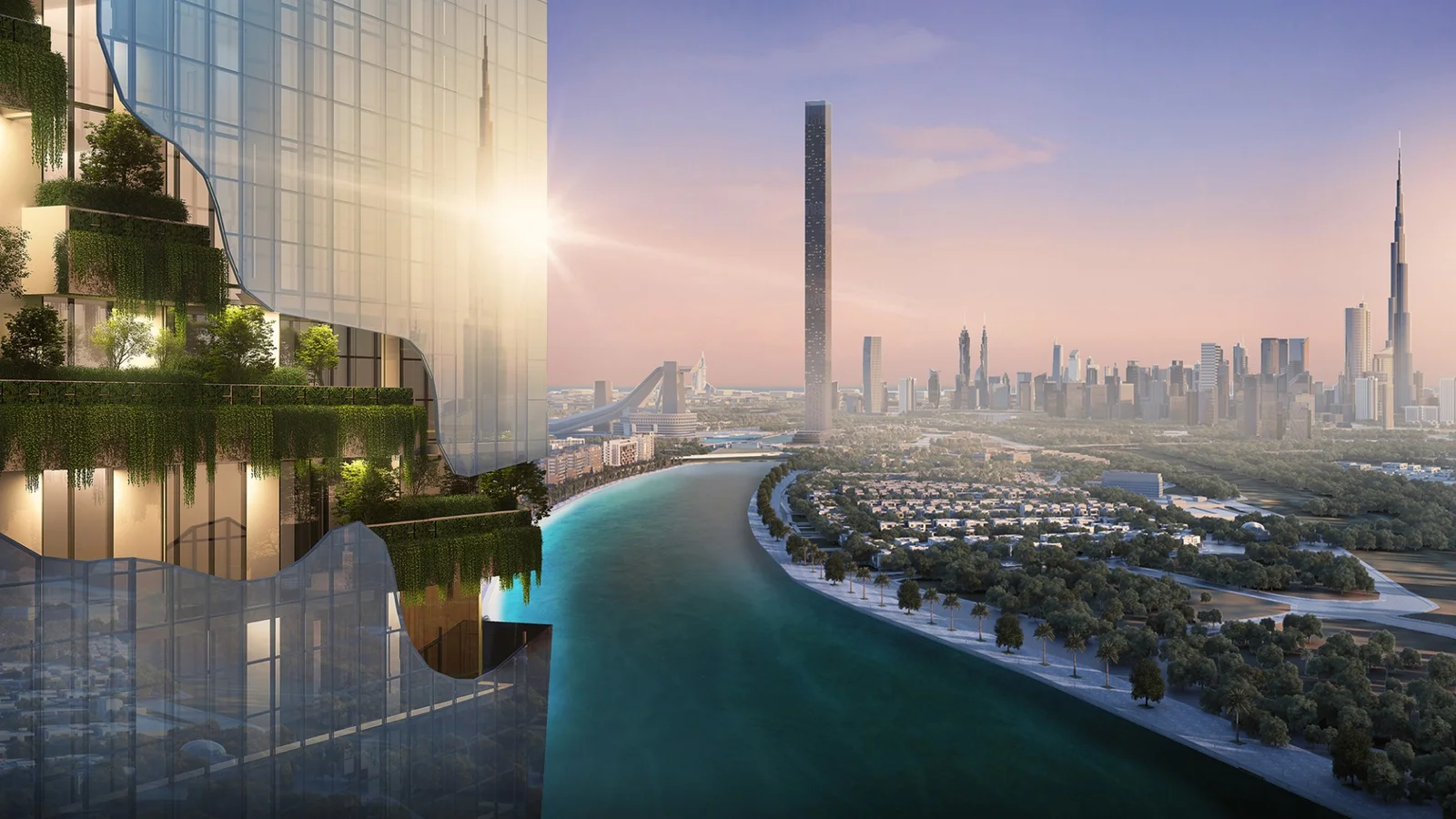
Ellington Properties sells design intention in a market flooded with identical glass towers. Founded in 2014, the developer built a niche as boutique mid-premium, curated interiors, architectural partnerships, and buildings small enough to feel residential rather than institutional.
That niche creates a specific investor equation. Ellington commands 10-15% PSF premium over volume Tier 2 stock in the same district. Gross yields compress to 6-7.5% in JVC versus 7-9% on Danube or Azizi comparables. The bet is that design differentiation supports tenant quality, lower turnover, and resale premium over a 7-10 year hold, not that Ellington out-yields volume players on Day 1.
Compare developers: Dubai Developers Guide. JVC context: JVC property investment.
Omniyat Developer Review covers the next step.
Looking for the right Gulf property?
Get a free analysis matched to your budget and target market.
How does Ellington Properties compare to volume developers in 2026?
Ellington Properties is best assessed as a design-led mid-premium Dubai developer rather than a yield-maximisation alternative to volume builders. The article’s working comparison places Ellington at about an 80% on-time delivery rate, with a 10-15% price-per-square-foot premium over comparable volume Tier 2 stock. In JVC, the stated gross-yield range is 6-7.5%, against 7-9% for Danube or Azizi comparables. Those figures describe a trade-off, not a promise: a buyer is paying for finish specification, boutique scale and a target tenant profile. Before buying, compare the exact unit against completed local stock, current Ejari evidence, service charges and the SPA handover clause. A seven to ten year hold may suit that thesis better than an early assignment exit. The conclusion should remain tied to evidence rather than a generic developer ranking.
Ellington trades higher fit-out quality and boutique scale for a 10-15% PSF premium and lower gross yield than Danube or Azizi in the same district. Expect roughly 6-7.5% gross in JVC versus 7-9% on volume towers.
| Brand | Delivery band | Yield bias | Buyer fit |
|---|---|---|---|
| Ellington | ~80% on-time | Design, mid-premium | End-user / quality tenant |
| Emaar | ~95% | Liquidity leader | Resale depth |
| Danube / Azizi | Volume Tier 2 | Yield focus | Maximum gross % |
How reliable is Ellington’s delivery track record?
Ellington tracks about 80% on-time delivery in industry databases, upper Tier 2 for a boutique brand. Verify each building separately because project count is smaller than Emaar or DAMAC.
- Inspect last Ellington handover in target community: snagging resolution speed
- Compare SPA handover date to actual key collection for Belgravia I vs Belgravia II
- Check DLD completion certificate timing on completed stock
- Review broker months-on-market for resale Ellington units
Ellington’s flagship projects define its design-led positioning in Dubai’s premium market Belgravia I, II, III, and Square form Ellington’s JVC anchor, low-rise boutique aesthetic in a district dominated by volume towers. The Belgravia line is the clearest expression of it: mid-rise, JVC-located and specified above the district average, which is what supports the pricing and also what narrows the buyer pool at resale.
| Factor | Belgravia JVC |
|---|---|
| Tenant profile | Young professionals, design-conscious |
| Gross yield | 6.5-7.5% |
| Resale liquidity | Moderate, growing with JVC depth |
| Differentiation | Design vs commodity towers |
| Best for | Long-let quality tenant |
Wilton Terraces: MBR City
Wilton Terraces positions in Mohammed Bin Rashid City, Creek and Downtown proximity with Ellington interior specification.
| Factor | Wilton Terraces |
|---|---|
| Capital thesis | MBR City maturation |
| Gross yield | 6-7% pre-maturity |
| Competition | Sobha, Emaar Creek stock |
| Best for | Design-led MBR City hold |
DT1: Downtown-adjacent
DT1 targets urban professional tenancy near Downtown corridor. Premium pricing compresses yield, capital and design play.
Ocean House and waterfront pipeline
Waterfront-adjacent Ellington stock carries location premium, underwrite against transacted waterfront comparables, not inland JVC benchmarks.
| Factor | Ocean House |
|---|---|
| Thesis | Waterfront design premium |
| Gross yield | 5-6.5% |
| Tenant | Executive, short-let potential |
| Resale | Event-driven, thinner than JVC |
| Best for | Capital + design hold |
Belgravia Square and JVC expansion
Belgravia Square extends Ellington’s JVC footprint with larger-format units targeting small families and design-conscious professionals.
| Factor | Belgravia Square |
|---|---|
| Unit mix | 1-3BR apartments |
| Gross yield | 6.5-7.5% |
| Differentiation | Square format vs tower clones |
| Best for | Long-let with design tenant |
Named flagship pipeline (2026)
| Project | Location | Product | Investor note |
|---|---|---|---|
| Belgravia I-III | JVC | Boutique low-rise | Deepest Ellington rental data |
| Belgravia Square | JVC | Mid-rise | Family tenant expansion |
| Wilton Terraces | MBR City | Apartments | Creek proximity premium |
| DT1 | Downtown-adjacent | Urban tower | Yield compressed, capital play |
| Ocean House | Palm-adjacent | Waterfront | Trophy-adjacent pricing |
Each building is independently underwritten, Ellington does not operate mega-master-plans where community average delivery dilutes building-specific risk.
Ellington’s design premium needs a price and location check at resale
Living space differentiation:
- Flooring, premium laminate or engineered wood versus basic tiles
- Built-in storage, custom wardrobes with interior organisation systems
- Lighting design, integrated LED concepts versus builder-basic fixtures
- Balcony treatment, glass railings and quality outdoor flooring
Building amenities premium:
- Gym specification, commercial-grade equipment versus basic cardio
- Pool and deck, designer furniture and landscaping
- Lobby design, marble or feature stone versus standard developer finishes
- Common area maintenance, higher standards reflected in service charges
What design premium does not guarantee:
- Resale premium in soft markets
- Higher rent than identical-size volume tower next door
- On-time handover without SPA review
- Low service charges, verify per building
- Maintenance-free ownership, premium finishes may require specialist upkeep
- Higher mortgage valuations, banks often conservative on design premiums
Payment plans and the SPA define the buyer’s exposure before signing
SPA scrutiny points specific to Ellington:
- Delay penalty caps, read compensation limits carefully
- Interior specification schedule, confirm finishes match marketing renders
- Service charge estimates, boutique buildings can run AED 14-22/sqft
- Assignment/NOC fees, confirm threshold and developer approval timeline
- Snagging process, boutique scale often means faster resolution but verify in SPA
See Off-Plan Property Dubai Guide.
Secondary-market liquidity varies by project by location
Ellington resale liquidity should be underwritten building by building because a boutique developer does not provide the transaction depth of a large master developer. The article’s indicative timeline is 45-75 days on market for completed Belgravia stock, 60-90 days for new handovers and 90-150 days for pre-handover assignments. The same table places distressed assignments at 180+ days and 20-30% below launch price. These are planning ranges, not a valuation. A buyer should compare identical layouts, actual asking-to-sale gaps, mortgage valuation and Ejari rent in the target building before assuming a design premium will survive a softer market. A completed unit with rental history can offer a clearer exit case than a newly launched unit whose resale market has not yet formed. That discipline is more useful than relying on a brand-wide yield assumption.
Typical marketing timeline by project phase:
| Project status | Average days on market | Price positioning |
|---|---|---|
| Completed Belgravia | 45-75 days | 5-10% below launch PSF |
| New handover | 60-90 days | Launch PSF to 5% below |
| Assignment pre-handover | 90-150 days | 10-20% below launch |
| Distressed assignment | 180+ days | 20-30% below launch |
Design premium retention factors:
- Market cycle, premiums compress first in corrections
- District supply, JVC volume handovers pressure all categories
- Building completion rate, snagging delays hurt first-year sales
- Rental achievement, actual Ejari rates versus pro forma projections
Practical signals:
- Months-on-market for resale Ellington units in identical layout
- Premium or discount to volume tower next door at handover
- Mortgage valuations, banks lend but often at conservative PSF versus launch price
- Assignment market depth, fewer pre-handover buyers than volume stock
Investors needing exit within 3-5 years should buy completed Belgravia stock with Ejari history, not newest off-plan at design premium.
Service charges shape post-handover returns
Check Mollak filings on handed-over Ellington buildings. Design-premium marketing does not guarantee lower service charges, boutique buildings with curated common areas can run above volume tower averages.
Ellington suits buyers who value design and location
Ellington is a design-led boutique developer rather than a volume builder, and that shapes who it suits. Buyers who want distinctive interiors in a well-located mid-rise, and who accept a smaller resale pool in exchange, are the natural fit. Buyers optimising purely for yield have cheaper options elsewhere.
Ellington is strongest for design-focused Dubai buyers
Full Tier 1 matrix: Dubai Developers Guide. The buyer this suits is choosing a specific apartment rather than a price band, and will hold it long enough that resale depth matters less than living quality. Investors screening purely on yield will find better numbers elsewhere in the same districts.
Ellington’s strengths and trade-offs at a glance
The summary below sets the developer’s genuine strengths against the trade-offs that come with a smaller portfolio. Read the trade-off column first, because on a boutique developer resale depth and delivery concentration matter more to your exit than any finish specification does.
Cons
- 10-15% PSF premium over volume stock in same district
- Compressed gross yield, 6-7.5% in JVC versus 7-9% on Danube/Azizi
- ~20% delay risk, boutique scale means each slip matters more
- Thinner resale liquidity than Emaar in same district
- Design premium not guaranteed on resale in soft markets
- Higher service charges possible on amenity-rich boutique buildings
- Not a yield-maximisation brand, volume Tier 2 wins Day 1 gross %
Which items make up a working Ellington properties checklist?
Insider tip: For an Ellington purchase, pair the design inspection with a paper trail rather than treating the marketing suite as proof of value. Keep the interior specification schedule attached to the SPA, verify the project escrow account through Dubai REST, and check Mollak charges on a handed-over building in the same quality tier. The article flags service charges of AED 14-22 per square foot as a range to verify, plus assignment and NOC terms if an early exit matters. Then compare one completed Belgravia layout against a nearby volume tower using current rent, days on market and mortgage valuation. That comparison reveals whether the 10-15% design premium is supported by tenant demand, not simply by branding.
- Trakheesi registration: project number on DLD portal
- Escrow account: verify on Dubai REST app
- Building-specific delivery: last Ellington handover in same community
- Mollak service charges: on handed-over Ellington building in same tier
- SPA delay clause: penalty cap and termination rights
- Interior specification schedule: attached to SPA, not marketing brochure alone
- Rental comparables: Ejari transacted rents on handed-over Ellington unit, same layout
- Design premium justification: compare PSF to volume tower next door with rent delta
- Assignment/NOC policy: fees and timing if pre-handover exit planned
- Oqood registration: confirm process and timeline in SPA
Ellington’s boutique positioning demands extra design-quality checks, start with How to Evaluate a Dubai Developer and follow up with the legal walkthrough in Due Diligence Dubai Property.
Who should buy from Ellington
Consider alternatives if:
- Maximum gross yield is priority, Azizi or Danube in same district
- In-house build quality over design marketing, Sobha Realty
- Deepest resale liquidity, Emaar
- Design at volume pricing, Binghatti
- Ultra-luxury landmark status, Omniyat
Which Ellington properties findings end the deal?
Two situations justify walking away. The first is a building where the owners’ association budget is unavailable or more than two years old, since design-led specifications carry higher maintenance costs than standard stock. The second is a resale priced against launch comparables rather than against recent registered transactions in the same tower.
Ellington Properties Review, due diligence checklist
Practical cost reference
Ellington charges a NOC fee in the range of 1,000-5,000 AED for resale transfers. On top of DLD’s 4% transfer fee, buyers pay a trustee charge (4,000 AED + VAT) and, if mortgaged, a bank valuation fee (2,500-3,500 AED). Ellington off-plan units registered through Oqood carry a 2% registration cost (minimum 5,000 AED). End-to-end timelines for Ellington resales average 4-6 weeks; new purchases with Ellington’s direct sales team are often faster, around 2-3 weeks, because the developer handles most admin internally.
Related reading: Off-plan property Dubai guide · How to evaluate a Dubai developer · Due diligence on Dubai property.
Ellington buyers should underwrite each boutique building on its own Ejari history, not on brand marketing alone. Compare handed-over Belgravia layouts against volume towers next door on both rent and days-on-market before you pay the design premium. Keep SPA interior schedules attached to the contract, not the brochure alone.
Frequently Asked Questions
Ellington tracks approximately 80% on-time delivery in industry databases, upper Tier 2 for a design-focused boutique developer. Below Emaar (~95%) and Sobha (A-band) but competitive with Azizi (~82%). Boutique volume means fewer projects to average, verify each building's handover history.
Ellington positions as design-led mid-premium, not ultra-luxury like Omniyat, but above volume Tier 2 on finish specification and architectural intent. Pricing runs 10-15% above comparable JVC and MBR City volume stock. You pay for design differentiation and interior specification.
Flagships include Belgravia (JVC), Wilton Terraces (MBR City), DT1 (Downtown-adjacent), Ocean House (Palm-adjacent pipeline), and Belgravia Square. Product skews boutique apartment buildings with curated interiors rather than mega-master-plans.
Ellington compresses gross yield versus volume developers in the same district, typically 6-7.5% gross in JVC versus 7-9% on volume stock. Net yield may match if tenant quality and lower turnover offset purchase premium over 7-year holds. Not a yield-maximisation brand.
Binghatti (~78% delivery) competes on design-led mid-market with more launch volume. Sobha (A-band) leads on in-house construction quality at higher PSF premium. Ellington sits between, design focus without Sobha's vertical integration or Binghatti's volume scale.
Risks include design-premium pricing compressing yield, ~80% delivery meaning 1 in 5 projects may slip, thinner secondary liquidity than Emaar in the same district, boutique building scale limiting portfolio diversification within brand, and assuming design premium automatically holds on resale.
Yes with standard RERA due diligence, Trakheesi, escrow on Dubai REST, SPA review. Ellington is an established design boutique, not a speculative launch. Apply tighter scrutiny than Tier 1 but standard protections apply.
End-users and investors who value design specification and tenant profile over maximum yield. JVC and MBR City buyers wanting boutique building scale without Sobha PSF premium. Long-hold buyers accepting moderate liquidity.
Get a Gulf property shortlist
Tell us your budget and target market. Independent research first; enquiries are matched with licensed local partners. We reply within one business day.