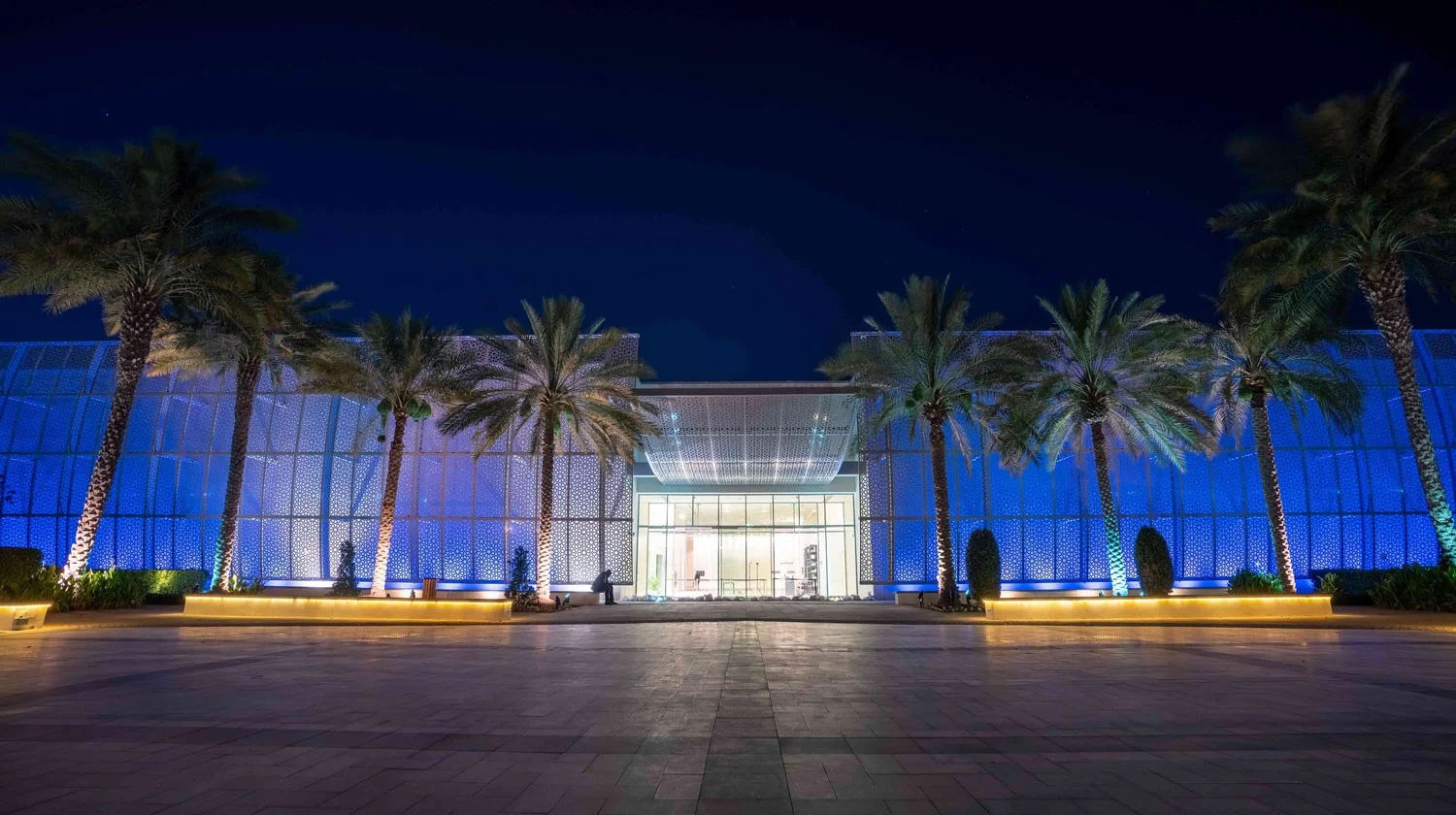
Abu Dhabi is the cheaper half of the UAE property market and the more restricted one. Prices sit roughly 30% below Dubai for equivalent product, the transaction cost is half, and the Golden Visa threshold is identical, which means the same AED 2 million buys considerably more here. The constraint is that foreign freehold exists in nine zones rather than sixty, so the shortlist is short before it is even a shortlist.
Which Abu Dhabi zones are open to foreign buyers?
Nine investment zones are open, and the list is the first filter on any Abu Dhabi search. A property outside them cannot be held freehold by a foreign national regardless of price or developer, which is the sharpest difference from Dubai, where more than 60 designated freehold zones are available.
| Investment zone | Product | Price per sq ft | Gross yield | Character |
|---|---|---|---|---|
| Saadiyat Island | Apartments and villas | AED 1,800 to 3,500 | 4% to 5.5% | Culture district, museums, NYU |
| Yas Island | Apartments and villas | AED 1,200 to 2,200 | 5.5% to 7% | Entertainment, schools, family demand |
| Al Reem Island | Apartments | AED 900 to 1,400 | 7% to 8.5% | Dense urban, closest to the CBD |
| Al Raha Beach | Apartments and villas | AED 1,100 to 1,900 | 5.5% to 7.5% | Waterfront, airport corridor |
| Al Maryah Island | Apartments | AED 1,600 to 2,600 | 5% to 6.5% | Financial district, ADGM |
| Masdar City | Apartments | AED 1,000 to 1,500 | 6% to 7.5% | Sustainability cluster, institutional tenants |
| Al Reef | Apartments and villas | AED 700 to 1,000 | 9% to 9.5% | Lowest entry, highest yield, slowest exit |
| Khalifa City, selected projects | Villas and apartments | AED 800 to 1,200 | 7% to 8% | Established, airport proximity |
| Hudayriyat Island | Villas | Under development | Not yet established | Newest zone, leisure-led |
Al Ghadeer sits on the Dubai border and functions as a tenth entry point in practice, with prices of AED 600 to 900 per square foot and yields of 8% to 8.5%. The zone-by-zone detail, including which specific Khalifa City projects qualify, is in Abu Dhabi freehold areas.
What does an Abu Dhabi purchase cost?
An Abu Dhabi purchase costs materially less than Dubai, and the gap sits in the transfer fee rather than in professional fees. The Department of Municipalities and Transport charges 2% where Dubai charges 4%, and the all-in cash stack lands at 3% to 4% against 6% to 7%.
On an AED 2 million purchase that difference is roughly AED 60,000, which is close to a full year of net rent on a mid-market unit and, on a two-property portfolio, funds most of a year of service charges.
| Cost line | Abu Dhabi | Dubai |
|---|---|---|
| Transfer fee | 2% to DMT | 4% to DLD |
| Registration admin | AED 1,000 to 4,000 | Trustee fee AED 4,000 to 5,250 |
| Agency commission | 2% plus VAT | 2% plus VAT |
| Mortgage registration | 0.25% of loan | 0.25% of loan |
| Typical cash all-in | 3% to 4% | 6% to 7% |
On an AED 2 million purchase the saving is roughly AED 60,000, which is close to a full year of net rent on a mid-market unit. For a buyer weighing the two emirates on total cost of entry rather than on headline price alone, this is the line that decides it.
The registration authority is the Department of Municipalities and Transport rather than the Dubai Land Department, and the off-plan contract register is Tawtheeq rather than Oqood. The instruments do the same work under different names.
Looking for the right Gulf property?
Get a free shortlist matched to your budget and target market. No commitment.
Which Abu Dhabi communities produce which yields?
The yield spread here runs 4% to 9.5% gross, wider than Dubai’s, and the relationship between yield and exit speed is more pronounced. Al Reef pays close to double the gross yield of Saadiyat Island and takes three times as long to sell at a price the seller accepts.
That is not an inefficiency waiting to be arbitraged. Our underwriting treats it as the market pricing liquidity, which makes the table below more useful read across than read down, and makes the intended holding period the first input rather than the yield figure.
| Community | Gross yield | Estimated net | Price per sq ft | Days on market | Negotiation |
|---|---|---|---|---|---|
| Al Reef | 9% to 9.5% | 6.5% to 7.5% | AED 700 to 1,000 | 90 to 150 | 5% to 12% |
| Al Ghadeer | 8% to 8.5% | 6% to 7% | AED 600 to 900 | 75 to 120 | 3% to 8% |
| Al Reem Island | 7% to 8.5% | 5.5% to 6.5% | AED 900 to 1,400 | 60 to 90 | 2% to 8% |
| Yas Island | 5.5% to 7% | 4.5% to 5.5% | AED 1,500 to 2,200 | 45 to 75 | 0% to 5% |
| Saadiyat Island | 4% to 5.5% | 3.5% to 4.5% | AED 2,000 to 4,000 | 30 to 60 | 0% to 3% |
Read the last two columns together with the first. Al Reef pays nearly double the gross yield of Saadiyat and takes three times as long to sell at a price the seller accepts. That is not an inefficiency to arbitrage, it is the market pricing liquidity, and a buyer who needs a defined exit date should read the table from the bottom rather than the top. The full mechanics, including the vacancy assumptions behind the net column, are in the Abu Dhabi rental yield guide.
How does Abu Dhabi differ from Dubai as a market?
Four differences change the shape of a purchase here, and none of them is price. Each one is structural rather than cyclical, which means it will still be true in five years, and together they explain why an Abu Dhabi model built on Dubai assumptions produces the wrong answer.
- Tenant base: employment-anchored, producing longer tenancies and almost no short-let demand outside two islands
- Developers: concentrated, with Aldar delivering around 92% of committed schedules
- Secondary market: thinner than Dubai’s 205,000 annual transactions
- Zone restriction: absolute, nine investment zones against more than 60 freehold areas
The tenant base is employment-anchored rather than tourism-anchored. Abu Dhabi demand comes from government, energy, finance in the ADGM cluster and the education sector, which produces longer tenancies and lower seasonality than Dubai but a smaller pool of short-let demand. Where a Dubai model leans on short-let upside, the Abu Dhabi equivalent does not.
The developer landscape is concentrated. Aldar dominates supply across Yas, Saadiyat and Al Ghadeer with a delivery record around 92%, and around 88% of its sales go to non-UAE nationals. Concentration cuts both ways: counterparty risk is lower than with a small developer, and price discovery is thinner because a single seller sets the launch benchmark.
The secondary market is thinner. Dubai registers more than 205,000 transactions a year, which produces comparables for almost any unit. Abu Dhabi comparables are sparser, which widens the valuation range on a mortgaged purchase and lengthens the sale process.
The zone restriction is absolute. In Dubai the question is which of sixty freehold areas suits the budget. Here the question is whether the suitable product exists inside nine zones at all, and for some buyer profiles the honest answer is that it does not.
Who is Abu Dhabi right for?
Three buyer scenarios fit this emirate well, and one fits it badly. Al Reef and Al Ghadeer produce the highest net yields available anywhere in the UAE at the lowest entry prices, roughly AED 600 to 1,000 per square foot, and the cost of that is an exit measured in months rather than weeks.
The Golden Visa buyer optimising for space. The AED 2 million threshold is federal, so the same qualifying purchase buys roughly 30% more area here. On Al Reem Island that is the difference between a one-bedroom and a two-bedroom at the threshold, and the yield is higher too. The threshold mechanics are in the UAE Golden Visa property route.
The end-user working in Abu Dhabi. Commuting from Dubai is possible and widely done, and it is an hour and a half each way in bad traffic. For anyone employed in the capital, buying in the capital removes a cost that never appears in a yield model.
It is less suited to the buyer who needs liquidity, the buyer whose model depends on short-let income, and the buyer who wants a wide freehold choice. Those buyers are better served in Dubai, and the comparison is set out on the Dubai property hub.
What is each investment zone actually for?
The nine zones are not a graded list from cheap to expensive. Each exists because a particular kind of demand exists, and buying into the wrong one for the intended purpose is the most common Abu Dhabi mistake, more costly than overpaying by 5% inside the right one.
Saadiyat Island is the cultural district and the emirate’s international showcase. The museums, New York University Abu Dhabi and Cranleigh anchor a resident population of senior expatriates and academic staff, which produces the lowest vacancy in the emirate and the lowest yields. It is a capital preservation market rather than an income one, and it behaves like Palm Jumeirah does in Dubai.
Yas Island is leisure and family. The entertainment assets bring a genuine short-stay component that almost nowhere else in Abu Dhabi has, the schools inside the master plan drive long family tenancies, and the product mix runs from apartments through townhouses to villas. It is the most balanced zone in the emirate.
Al Reem Island is the urban core available to foreign buyers, dense, close to the central business district and heavily apartment-weighted. It carries the deepest foreign-buyer demand and the best combination of yield and exit speed, which is why it dominates most shortlists.
Al Raha Beach is waterfront on the airport corridor, serving corporate tenants who need Abu Dhabi access without island living.
Al Maryah Island is the financial district and the ADGM cluster, with a tenant base drawn from finance and professional services and a supply that is small and controlled.
Masdar City is institutional and academic, with a tenant base tied to the sustainability cluster and the Khalifa University campus. Demand is stable and narrow.
Al Reef and Al Ghadeer are the value end. Al Reef serves the airport and services workforce; Al Ghadeer sits on the Dubai border and serves cross-emirate commuters. Both produce the highest yields in the country and the slowest exits.
Khalifa City is established suburban housing with selected projects open to foreign freehold, and the zone boundary sits at project level rather than at district level.
Hudayriyat Island is the newest and least established, leisure-led and villa-weighted, with no usable price or yield history yet.
How does the Abu Dhabi purchase process run?
The instruments are the Department of Municipalities and Transport for title and Tawtheeq for tenancy registration, and the sequence mirrors Dubai under different names. Two differences matter for planning: registration takes 1 to 2 weeks against a same-day Dubai trustee appointment, and mortgage valuations land below agreed prices more often.
| Stage | What happens | Typical timing |
|---|---|---|
| Offer and reservation | Price agreed, reservation form, deposit held | 1 to 3 days |
| Sale contract | Standard sale agreement signed by both parties | Same week |
| Developer no-objection | Service charges cleared, developer consents to transfer | 3 to 10 business days |
| Mortgage steps, if financed | Valuation, final offer, seller liability and discharge | 3 to 5 weeks |
| Registration | Transfer registered with the Department of Municipalities and Transport, fee paid | 1 to 2 weeks |
| Title issued | Title issued in the buyer’s name | With registration |
Two differences from Dubai are worth planning around. The registration step generally runs longer than a Dubai trustee appointment, which is same-day, so a non-resident buyer should assume a longer window between agreement and title. And valuations on a mortgaged purchase are more often below the agreed price, because the comparable set is thinner, which puts a cash gap on the buyer.
A power of attorney works the same way for a remote purchase: notarised in the country of signing, legalised or attested as required, translated into Arabic. Allow seven to fourteen days for that chain.
How is tenancy handled?
Tenancy contracts in Abu Dhabi register through Tawtheeq, the emirate’s equivalent of Ejari and the instrument that makes a lease enforceable and a rent verifiable. Year one costs a tenant an agency fee near 5% of annual rent, one to two months of deposit, and Tawtheeq components of 3% to 5% of annual rent.
The cost side of a tenancy is worth knowing as a landlord because it shapes what a tenant will accept. Year one for an Abu Dhabi tenant typically involves an agency fee of about 5% of annual rent, one to two months of security deposit, and Tawtheeq-related components of roughly 3% to 5% of annual rent before furniture. An unfurnished three-bedroom fit-out adds AED 25,000 to 60,000. That front-loaded cost is a large part of why Abu Dhabi tenants move less than Dubai tenants do, and why vacancy assumptions here can reasonably sit at the lower end of the 4% to 8% range.
The rent regulation framework differs from Dubai’s banded RERA calculator, so a landlord should confirm the current position rather than assume the Dubai rules transfer. What is consistent is that increases apply at renewal rather than mid-contract and that a registered contract is the starting point for any dispute.
Who develops what?
Aldar is the master developer across Yas, much of Saadiyat and Al Ghadeer, with a delivery record around 92% of committed schedules and roughly 88% of its sales going to non-UAE nationals. Modon, Q Holding and smaller developers hold positions elsewhere, and Al Reem carries the most fragmented map.
Concentration has two effects that pull in opposite directions, and a buyer should hold both at once.
It reduces counterparty risk. A master developer with a long completion record, an approved escrow structure and a balance sheet that does not depend on any single project is the lowest-risk off-plan counterparty available anywhere in the UAE.
It reduces price discovery and it complicates exit. Where one seller sets the launch benchmark and controls the phasing, a private reseller at handover competes with new stock priced by the same organisation that set the price they paid, offered with a payment plan the reseller cannot match and commission the reseller has to pay. That is the structural reason Abu Dhabi resale is slower, and it argues for buying completed stock in mature phases rather than launches, unless the horizon is long.
The full developer assessment framework is in the Abu Dhabi off-plan guide.
What does it cost to sell in Abu Dhabi?
Selling in Abu Dhabi costs less than Dubai on fees and considerably more in time. The seller pays agency commission of about 2% plus VAT, clears service charges to the transfer date and pays no capital gains tax, but the sale window runs from 30 days on Saadiyat to 150 days in Al Reef.
The seller pays agency commission of about 2% plus VAT, clears outstanding service charges to the transfer date, and obtains the developer no-objection certificate. There is no capital gains tax. Where the property carries a mortgage, the discharge sets the pace as it does everywhere.
The timing is the real cost. Saadiyat sells in 30 to 60 days on average and Yas in 45 to 75, both with limited negotiation. Al Reem runs 60 to 90 days, Al Ghadeer 75 to 120, and Al Reef 90 to 150 days with a negotiation band of 5% to 12%. A seller in the high-yield communities should plan on a quarter or more, and should not list against a fixed date.
Where the property supports a Golden Visa, arrange the replacement asset before selling, because the residency lapses with the qualifying property. That sequencing problem is identical in both emirates and is set out in the Dubai selling checklist, which applies to the mechanics if not to the fee schedule.
Who is buying in Abu Dhabi, and why does it matter?
Roughly 88% of Aldar’s sales go to non-UAE nationals, which tells you the market is internationally traded rather than domestic. The composition differs from Dubai’s in one way that matters: a higher proportion of buyers work in the emirate or expect to, which makes this an end-user-weighted market.
Dubai’s buyer base is broad by nationality and includes a large share of buyers whose primary interest is the asset rather than the city. Abu Dhabi’s includes a higher proportion of people who work in the emirate or expect to, which produces a more end-user-weighted market. End-user markets are less volatile, less liquid and more sensitive to employment conditions than investor markets are.
For a buyer this has one practical implication. In Dubai, a purchase can be justified on yield alone because there is always another investor to sell to. In Abu Dhabi, a purchase that no end-user would want is harder to exit regardless of its yield. That is the deeper reason the highest-yielding communities here take longest to sell, and it is a better guide than the days-on-market figure alone.
What about the Golden Visa here?
The Golden Visa threshold here is identical, the value is better and the mechanics are the same. AED 2 million of registered value on a Department of Municipalities and Transport title qualifies for the ten-year residency, and because prices sit roughly 30% below Dubai, that figure buys materially more property.
The AED 2 million registered value is a federal rule and applies in Abu Dhabi exactly as in Dubai, measured against the value on the Department of Municipalities and Transport title rather than the agreed price, in the applicant’s own name.
Because prices sit roughly 30% below Dubai per square foot, the same qualifying purchase buys materially more here. On Al Reem Island the threshold reaches a two-bedroom where in prime Dubai it reaches a studio or a small one-bedroom, and the Al Reem unit yields more. For a buyer whose primary objective is residency with a functioning income asset attached rather than a trophy address, that is the strongest argument in favour of the emirate.
The same caveats apply as elsewhere. Leverage complicates the threshold, because the qualifying value takes the bank position into account. An off-plan unit has a contract registration rather than a title until handover, so a purchase on a visa timetable should be ready stock. And the visa lapses with the asset, so a sale needs a replacement arranged in advance. The threshold mechanics are in the UAE Golden Visa property route.
What does the money side look like?
Two federal rules and one emirate rule govern the financing of an Abu Dhabi purchase. The central bank sets loan-to-value ceilings of up to 80% for nationals and 75% for expatriate residents on a first property under AED 5 million, and the emirate charges a 2% transfer fee plus registration administration.
The federal rules are the central bank loan-to-value ceilings, which apply across the UAE: up to 80% for a UAE national and 75% for an expatriate resident on a first property under AED 5 million, stepping down above that value and for second properties. Non-residents borrow on narrower terms, typically 50% to 65%, and at pricing above resident rates. Those ceilings are set out in UAE central bank mortgage rules.
The emirate rule is the 2% transfer fee and a registration administration charge of AED 1,000 to 4,000, both paid to the Department of Municipalities and Transport. Mortgage registration is 0.25% of the loan, the same as Dubai.
The line that catches non-resident buyers is valuation. With fewer comparable transactions than Dubai, an Abu Dhabi valuation can land below the agreed price more often, and the buyer funds the difference in cash. On a leveraged purchase, get an indicative valuation before committing to a price rather than after. The lender landscape is in the UAE mortgage bank list and current pricing in Dubai mortgage rates, which covers the same national lenders.
A worked Abu Dhabi purchase against its Dubai equivalent
The clearest way to see what this emirate offers is to run the same budget through both markets in full. This worked example takes AED 1.3 million in cash bought for income, and the net yields land within a tenth of a percentage point of each other, which is not the answer either market’s marketing gives.
Take AED 1.3 million, cash, bought for income.
In Abu Dhabi that buys a two-bedroom on Al Reem Island in a mid-range tower, roughly 950 square feet. Closing costs are the 2% transfer fee of AED 26,000, agency commission of AED 26,000 and registration administration of about AED 2,500, so AED 54,500 or 4.2%. All-in, AED 1,354,500. Rent lands near AED 95,000, which is 7.3% gross. Deduct a service charge at AED 14 per square foot, AED 13,300, management at 6%, AED 5,700, a vacancy allowance at 7%, AED 6,650, and a maintenance provision at 0.5% of value, AED 6,500. Net rent is about AED 62,850, or 4.6% on the all-in figure.
In Dubai the same money buys a one-bedroom in a good Jumeirah Village Circle tower at around 850 square feet, or a smaller unit in Business Bay. Take the JVC option. Closing costs are the 4% transfer fee of AED 52,000, commission of AED 27,300 including VAT, a trustee fee of AED 4,200 and a no-objection certificate of AED 2,000, so AED 85,500 or 6.6%. All-in, AED 1,385,500. Rent lands near AED 95,000, which is 7.3% gross on the same rent from a smaller unit. Deduct a service charge at AED 14 per square foot, AED 11,900, management at 6%, AED 5,700, a vacancy allowance at 6%, AED 5,700, and maintenance at AED 6,500. Net rent is about AED 65,200, or 4.7% on the all-in figure.
The net yields land within a tenth of a percentage point of each other, which is the honest answer and not the one either market’s marketing gives. What differs is everything around the number. Abu Dhabi delivers 100 more square feet and a second bedroom for the same money, and saves AED 31,000 at entry. Dubai delivers a resale market that will absorb the unit in weeks rather than months, a valuation the bank will not argue with, and a short-let option if the strategy ever needs one.
The decision is therefore not about yield. It is about whether the extra space and the lower entry cost are worth more than the liquidity, and that is a question about the holding period rather than about the property.
What are the risks specific to the emirate?
Beyond the three risks set out below, one more is worth naming because it is structural rather than situational. The Abu Dhabi economy is more concentrated than Dubai’s, with government, energy, ADGM finance, education and culture accounting for most of the employment that produces tenant demand.
Abu Dhabi’s economy is more concentrated than Dubai’s. Government, energy, finance in the ADGM cluster, education and culture account for most of the employment that produces tenant demand. That concentration is what makes tenancies long and vacancy low in normal conditions, and it is also what makes the rental market more correlated with a small number of employers than Dubai’s more diversified base is.
For a long-hold income buyer that correlation is manageable and largely academic. For a leveraged buyer with a short horizon it is an additional variable in a market that already has a slow exit, and it argues for the lower end of the loan-to-value ceilings rather than the top of them.
What are the risks specific to Abu Dhabi?
Three risks are specific to this emirate, and none of them is price. Liquidity comes first, because an Al Reef unit can take 150 days to sell with a negotiation band reaching 12%. Supply concentration comes second, and zone drift, the least discussed of the three, comes third.
Liquidity is the first. A unit in Al Reef can take five months to sell at a price the seller accepts, and the negotiation band at that point runs to 12%. A model that assumes an exit within a year is not compatible with the highest-yielding communities in this emirate.
Supply concentration is the second. Where one developer sets the launch price across several communities, a large phase released into a soft market resets the resale benchmark for every private seller in that community at once. That is a structural feature of a concentrated market rather than a criticism of any developer, and it argues for buying completed stock in mature phases where the exposure is smaller.
Zone drift is the third and least discussed. Investment zone boundaries and the list of qualifying projects inside Khalifa City have been adjusted over time. A listing describing a property as freehold is not evidence that it is, and the check belongs in the Department of Municipalities and Transport record before a deposit rather than in the marketing.
An insider tip on the zone rule
Insider tip: confirm investment zone status in the Department of Municipalities and Transport record before building a shortlist, not before signing. Foreign freehold exists in nine zones against more than sixty in Dubai, and inside Khalifa City the boundary sits at project level rather than district level, so two houses on the same road can differ in whether a foreign national may own them. This is the only check in the emirate that voids a purchase rather than merely repricing it, and it takes minutes. Buyers who leave it until contract stage routinely discover that the property they spent six weeks negotiating was never available to them, and agents describing a property as freehold are describing a marketing position rather than a registry entry until the record says otherwise.
What the cost gap is worth over a holding period
Quantifying the transfer fee difference makes the emirate choice concrete rather than directional. On an AED 2 million purchase, Abu Dhabi’s 2% fee and AED 1,000 to 4,000 registration administration produce an all-in closing stack of 3% to 4%, or roughly AED 70,000. The same purchase in Dubai carries a 4% transfer fee, a trustee fee of AED 4,000 to 5,250 and a developer no-objection certificate, giving 6% to 7%, or roughly AED 130,000. The AED 60,000 difference is close to a full year of net rent on a mid-market unit, and on a two-property portfolio it funds most of a year of service charges. Against that, a Dubai exit typically completes in weeks where an Al Reef exit runs 90 to 150 days, and that time has a cost of its own.
Where should an Abu Dhabi buyer start?
Start with the zone list, because it removes most of the market before any other filter applies and it cannot be worked around with a larger budget. Then choose between the yield end at 8% to 9.5% gross and the liquidity end at 4% to 7%, on the intended holding period rather than the yield.
Then decide the holding period honestly, because in this emirate it does more work than in Dubai. Under three years, the slow exit and the thin comparable set make almost any Abu Dhabi purchase a difficult proposition regardless of yield. Over seven, the cost advantage compounds and the liquidity discount stops mattering. Between the two, the zone choice carries it: Yas and Saadiyat can be exited on a timetable, Al Reef and Al Ghadeer cannot.
The investment framing for the emirate is in the Abu Dhabi property investment guide. Live launches and the Aldar delivery record are covered on Abu Dhabi off-plan, and the product-level detail sits on apartments for sale in Abu Dhabi and villas for sale in Abu Dhabi.
Frequently Asked Questions
Foreign nationals can buy freehold only inside designated investment zones, of which there are nine: Saadiyat Island, Yas Island, Al Reem Island, Al Raha Beach, Al Maryah Island, Masdar City, Al Reef, selected projects in Khalifa City and Hudayriyat Island. This is the single most important difference from Dubai, where more than 60 zones are open. Outside the investment zones a foreign buyer cannot take freehold title, so the zone check has to happen before a shortlist is built rather than at contract stage.
Yes, on both entry price and transaction cost. Equivalent product prices roughly 30% below Dubai per square foot, with the Abu Dhabi apartment benchmark near AED 1,900 per square foot. The transfer fee is 2% paid to the Department of Municipalities and Transport against 4% to the Dubai Land Department, and the all-in cash closing stack runs 3% to 4% against 6% to 7% in Dubai. On an AED 2 million purchase that difference alone is roughly AED 60,000.
Gross yields run from about 4% to 9.5%, a wider band than Dubai and skewed toward the mid-market. Al Reef sits at 9% to 9.5% gross, Al Ghadeer at 8% to 8.5%, Al Reem Island at 7% to 8.5%, Yas Island at 5.5% to 7% and Saadiyat Island at 4% to 5.5%. Net yields land roughly 1.5 to 2.5 percentage points below gross after service charges of AED 10 to 22 per square foot, management and vacancy of 4% to 8%.
Yes, on the same AED 2 million registered value as Dubai. The threshold is federal rather than emirate-level, and it is measured against the value registered on the Department of Municipalities and Transport title rather than the agreed price. Because Abu Dhabi prices roughly 30% below Dubai per square foot, the same AED 2 million buys materially more space here, which is one of the practical reasons Golden Visa buyers shortlist Al Reem Island and Yas Island.
Thinner than Dubai and highly variable by community. Saadiyat Island stock sells in 30 to 60 days on average and Yas Island in 45 to 75, both with limited negotiation room. Al Reem Island runs 60 to 90 days, Al Ghadeer 75 to 120 and Al Reef 90 to 150 days with negotiation of 5% to 12%. The pattern is consistent: the communities with the highest yields have the slowest exits, which is the trade the yield is paying for.
Get a Gulf property shortlist
Tell us your budget and target market. Independent research first; enquiries are matched with licensed local partners. We reply within one business day.