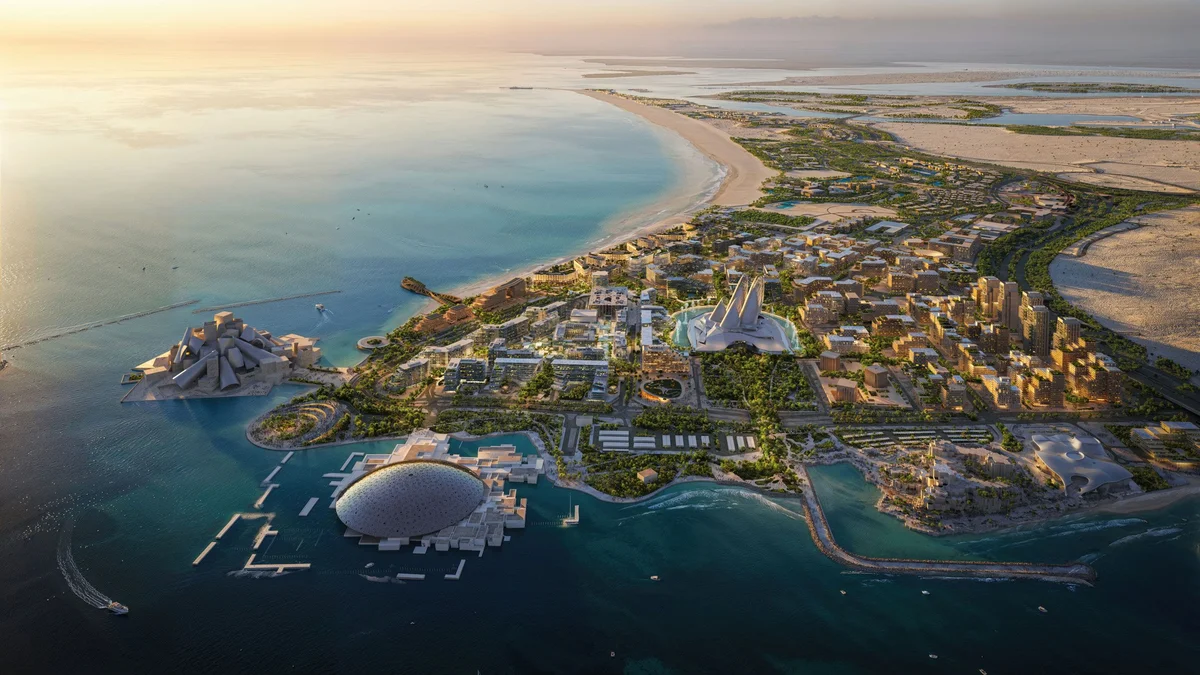
Abu Dhabi rental yields hit 6-7% in 2026, with Al Reem Island and Saadiyat leading the market. Meanwhile, Aldar Properties reports 88% of their sales go to expat buyers, well above the UAE average.
Abu Dhabi rental yields in 2026 typically land at 6-7% gross in prime freehold districts such as Al Reem Island, Saadiyat Island, and Yas Island, while emerging mainland communities can print 7-9% where entry prices are lower and tenant demand is still forming. Aldar Properties reports that 88% of its sales go to expat buyers, a share that Invest Gulf reads as residency-plus-income demand rather than purely local end-user turnover. Golden Visa planning from AED 2 million registered property value, government and energy-sector employment, and lower transfer fees near 2% versus Dubai 4% all support that international flow. Net yield still depends on municipality service charges, agency fees, and vacancy, so foreign buyers should underwrite building-level nets rather than emirate headlines alone. Compare stock against Al Raha Beach and Khalifa City before assuming island premiums will clear on rent.
Investor selection in Abu Dhabi through late 2026 typically favours towers with multi-year occupancy histories over brand-new phases on Yas and Saadiyat where several handovers can arrive in the same calendar year. Yield compression of 0.5-1.5 percentage points can appear quickly when competing inventory lists at once, even if the citywide rent index still quotes 6-7% on prime stock. Foreign buyers using Invest Gulf underwriting check service-charge schedules, employer-linked tenant demand, and resale comps before paying island premiums for lifestyle addresses that behave like consumption assets. Aldar 88% expat sales confirm international liquidity exists, but liquidity is not uniform across every community. Keep Golden Visa tickets at or above AED 2 million registered value only when the net yield math still clears after fees.
Insider tip: When Aldar or peer launches stack on Yas in the same year, price the unit to day-one market rent rather than underwriting aggressive 6-7% index yields that assume zero vacancy during handover season.
What do Abu Dhabi rent index readings show for 2026?
Abu Dhabi rent-index readings for 2026 typically place prime island stock on Al Reem, Saadiyat, and Yas in a 6-7% gross yield band. Mature mainland communities such as Khalifa City and Al Raha Beach often print slightly higher yields on older apartments where entry prices are lower.
We read the index as a screening band, then underwrites building-level nets after service charges.
| Area Category | Typical Yield Range | Tenant Profile |
|---|---|---|
| Premium (Al Reem, Saadiyat, Yas) | 6-7% | Government, oil sector, executives |
| Established (Khalifa City, Marina) | 6-8% | Mixed professionals, families |
| Emerging communities | 7-9% | Cost-conscious professionals |
Underwrite net yield after Abu Dhabi Municipality service charges, agency fees, and vacancy. Gross index headlines rarely match building-level net once those lines are deducted.
Why are expat buyers dominating Aldar sales?
Aldar Properties reporting an 88% expat sales share means international buyers now dominate that developer pipeline in Abu Dhabi, far above a local-only end-user market. Golden Visa eligibility from AED 2 million property value, ADNOC-linked employment, and capital infrastructure spending typically anchor that demand.
We treat the 88% figure as a liquidity signal, not proof that every island tower will clear at asking rent.
The UAE Golden Visa program plays a crucial role in this dynamic. Properties valued at AED 2 million or more provide 10-year residency eligibility, making Abu Dhabi real estate attractive to investors seeking Gulf region residency benefits. Our Abu Dhabi Golden Visa property guide explains eligibility requirements and optimal investment strategies.
Abu Dhabi’s status as the UAE capital creates unique investment drivers. Government employment, sovereign wealth fund presence, and the emirate’s role in UAE’s oil economy attract international professionals seeking long-term regional exposure.
How do Abu Dhabi landlord costs differ from Dubai?
Abu Dhabi landlord acquisition costs typically run near 2% on residential transfers plus registration under municipal and ADRE rulesets, versus Dubai Land Department fees commonly cited at 4% on comparable tickets. Foreign buyers should still verify current official schedules, because a thinner rental pool can erase the headline fee advantage on exit timing.
Invest Gulf acquisition stacks always model emirate fees and resale depth together, not transfer cost alone.
Rent increase caps and lease registration requirements are emirate-specific. Price units to market on day one rather than assuming aggressive uplifts later. See Abu Dhabi property investment guide for the full buy-to-let workflow.
What should investors watch through late 2026?
Late-2026 Abu Dhabi watchpoints typically include Yas and Saadiyat handover waves that can compress yields by 0.5-1.5 percentage points when multiple towers deliver in the same year. Foreign buyers should prioritise buildings with proven occupancy, transparent service-charge schedules, and tenant demand tied to employers with multi-year Abu Dhabi presence.
Invest Gulf watchlists flag handover-year listing pressure before treating rent-index headlines as achievable nets.
- Confirm service-charge schedules before SPA
- Stress-test vacancy for the first 12 months after nearby handovers
- Prefer employer-anchored tenant demand over tourism-only assumptions
For freehold eligibility by district, see Abu Dhabi freehold areas and Al Reef Abu Dhabi property investment.
Tracking Abu Dhabi rental yields?
Get a shortlist of freehold communities with yield and service charge data.
Frequently Asked Questions
Abu Dhabi rental yields range from 6-7% annually in prime areas during 2026, according to market data. Areas like Al Reem Island, Saadiyat Island, and Yas Island command premium rents, while emerging communities may offer higher yields of 7-9% with appropriate tenant demand.
Aldar Properties reports that 88% of their property sales go to expat buyers rather than UAE nationals. This indicates strong international demand for Abu Dhabi real estate, likely driven by Golden Visa eligibility, business opportunities, and Abu Dhabi's growing status as a regional hub.
Abu Dhabi's 6-7% rental yields are competitive with Dubai's typical 6-8% range. Abu Dhabi may offer better value for money in certain areas, while Dubai has larger rental pools. Both emirates benefit from no capital gains tax for individuals and Golden Visa accessibility.
Prime areas like Al Reem Island, Saadiyat Island, and Yas Island typically yield 6-7% annually. Newer developments in Al Raha Beach, Khalifa City, and Mohammed Bin Zayed City may offer higher yields of 7-9% as these areas establish rental markets and attract tenant demand.
Key factors include: UAE Golden Visa accessibility for AED 2 million+ property investments, Abu Dhabi's status as the UAE capital with government and oil sector employment, no capital gains tax for individuals, strong infrastructure development, and cultural attractions like Louvre Abu Dhabi and future Guggenheim.
Related reading: Abu Dhabi Property Investment Guide · Abu Dhabi vs Dubai for Families · Abu Dhabi Freehold Areas 2026 · Al Reef Abu Dhabi Property Investment.
Get a Gulf property shortlist
Tell us your budget and target market. Independent research first; enquiries are matched with licensed local partners. We reply within one business day.