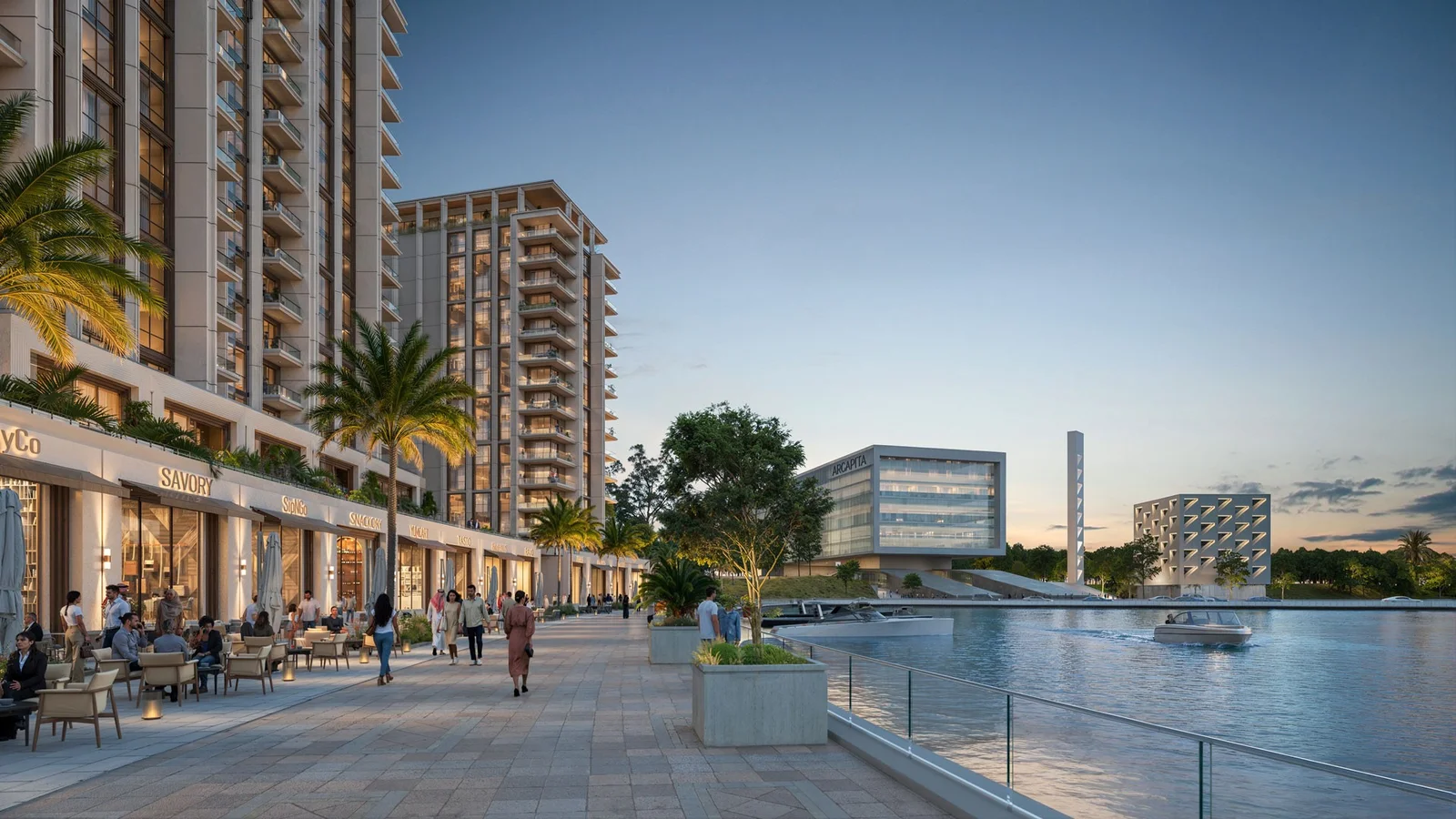
Bahrain is the Gulf’s compact finance hub. Smaller than Dubai, cheaper than Abu Dhabi premium, and connected to Saudi Arabia via the King Fahd Causeway. For property investors, Bahrain offers something specific: gross yields of 6% to 8% in designated freehold zones, lower entry tickets than UAE premium districts, and a Golden Residence pathway commonly cited at BHD 200,000.
The trade-off is liquidity. Bahrain’s secondary market is thin. Transactions are measured in hundreds per year, not hundreds of thousands. Buyers who accept a longer hold period and model net yield carefully can find genuine value.
This guide covers Bahrain’s investment case in 2026: freehold zones, yields, costs, Golden Residence, and red flags.
Bahrain market snapshot: entry price, yield, and operating costs?
Bahrain typically offers lower entry tickets than Dubai for many freehold apartments, while gross yields in Amwaj and Seef are commonly marketed around 6% to 8%, and Invest Gulf compares three recent rental listings plus tower operating-cost schedules before trusting developer yield estimates. Confirm current official rules before you commit cash.
| Metric | Figure | What it signals |
|---|---|---|
| Gross yield range | 6% to 8% | Competitive with UAE mid-market |
| Foreign ownership | Designated zones only | 8+ named zones |
| Golden Residence | ~BHD 200K (confirm current official rules) | Separate from title deed |
| Entry price (1-bed Amwaj) | BHD 60K to 90K | Below Dubai equivalent |
| Personal income tax | 0% | GCC-standard |
| Secondary liquidity | Thin | 90 to 180 day exits typical |
| Causeway access | 25 min to Dammam | Weekend Saudi cross-border |
Which freehold zones can foreign buyers use in Bahrain?
Foreign ownership is limited to designated freehold zones, so each building must be verified on the foreign ownership register before deposit, and we treat brochure zone maps as marketing rather than title proof across a 90 to 180 day exit plan. Confirm current official rules before you commit cash.
- Confirm the unit on the foreign ownership register before any deposit
- See Bahrain Property for Foreigners for legal detail
- Model net yield after service charges, not brochure gross figures
Bahrain freehold underwriting for a one-bedroom Amwaj or Juffair purchase should start with register confirmation, not Instagram inventory. Invest Gulf research treats 6% to 8% gross as a marketing band that often compresses to 4% to 6% net after service charges, management, and 90 to 180 day vacancy buffers. Buyers who accept thin secondary liquidity and a longer hold typically find entry tickets below Dubai premium districts, with one-bedrooms often quoted from BHD 60,000 to 90,000. Request a three-year service charge history and reserve fund status before you negotiate, because older towers can levy one-time assessments that erase a full year of yield. Confirm current official rules on Golden Residence capital thresholds before you assume title equals residency. Marketing periods in Bahrain run longer than Dubai equivalents, so treat a three-year horizon as the shortest realistic plan and price the exit before the entry.
What should you budget for purchase costs?
Purchase costs typically add about 3% to 5% above headline price for registration, legal, and transfer lines on Bahrain freehold stock, and our analysts model that cash stack separately from the BHD 200,000 Golden Residence track. Confirm current official rules before you commit cash.
- Property title alone does not grant Golden Residence
- Separate NPRA application is required; see Bahrain Golden Residence
- Keep legal fees and registration in the same cash plan as the deposit
How does Bahrain compare with Dubai for investors?
Bahrain typically wins on entry price and acquisition costs, while Dubai wins on liquidity, residency programme depth, and market data transparency across 205,000+ annual UAE transactions, and we match buyers to hold period before picking either market. Confirm current official rules before you commit cash. Confirm current official rules before you commit cash. Plan a 12 month.
- Bahrain suits yield seekers who accept thinner resale
- Dubai suits buyers needing faster exits and deeper mortgage menus
- See Dubai Property Investment Guide for the UAE side
Is off-plan or ready stock safer in Bahrain?
Amwaj and Juffair ready stock is typically the safer yield play for the first 12 months of ownership, while Diyar Al Muharraq and Bilaj Al Jazayer off-plan offers lower entry but need developer completion and EWA checks on we shortlist. Confirm current official rules before you commit cash.
- Prefer ready stock with established service charge history
- Delay new-zone off-plan until one phase has rental comparables
- Confirm EWA activation timelines before handover rent starts
Where does Bahrain tenant demand actually come from?
Tenant demand typically comes from cross-border workers, finance-sector assignees, and expat families, with King Fahd Causeway access to Dammam in about 25 minutes shaping weekend patterns, and we model Saudi-linked employment compliance for both jurisdictions. Confirm current official rules before you commit cash. Plan a 12 month hold with 90 to 180 day exit.
- Finance-sector leases often run 1 to 2 years with high renewal rates
- Schools: see Bahrain International Schools
- Cost of living: Manama Cost of Living, often 25% to 35% below Dubai mid-tier
How do school calendars and tenant mix move rents?
Western expat families typically drive about 70% of Amwaj and Seef demand, so lease negotiations peak in August to September, and we see units listed May to July face 10% to 15% rental discounts versus September peak. Confirm current official rules before you commit cash. Confirm current official rules before you commit cash.
- Juffair benefits from US Navy Fifth Fleet demand with shorter lease cycles
- Units near naval support can command 8% to 12% rental premiums
- Southern zones see weekend patterns and higher Ramadan vacancy risk
Service Charge Variations by Zone
Service charges directly impact net yields. Bahrain charges are generally transparent but vary significantly by tower age and amenity level.
| Zone | Low-end (BHD/sqm/year) | High-end (BHD/sqm/year) | Typical inclusions |
|---|---|---|---|
| Amwaj Islands | 2.0 | 4.5 | Pool, gym, marina maintenance |
| Juffair | 1.5 | 3.0 | Basic gym, security only |
| Seef | 3.0 | 5.5 | Premium gym, business center |
| Durrat Al Bahrain | 4.0 | 7.0 | Golf course access, beach club |
| Reef Island | 3.5 | 6.0 | Concierge, premium facilities |
| Diyar Al Muharraq | 2.5 | 4.0 | New amenities, lower baseline |
Service charge escalation: Older towers (10+ years) in Amwaj and Juffair experience 8% to 15% annual service charge increases as deferred maintenance accumulates. Factor 12% annual increases into 5-year net yield projections.
Reserve fund assessments: Towers approaching major facade or mechanical system renewal may levy one-time assessments of BHD 2,000 to 8,000 per unit. Request reserve fund status before purchase.
Where is Bahrain liquidity strongest by zone?
Zone-level turnover typically shows Amwaj, Juffair, and Seef as the most active freehold resale pools, while Durrat and new masterplans can sit 120 to 250 days on market, and we price exits with 5% to 15% below-asking buffers. Confirm current official rules before you commit cash.
Transaction Volume by Zone (2024-2025)
| Zone | Units sold/year (est.) | Average days on market | Price movement 2024-2025 |
|---|---|---|---|
| Amwaj Islands | 150-200 | 45-90 days | +2% to +5% |
| Seef | 80-120 | 60-120 days | +1% to +3% |
| Juffair | 100-150 | 30-75 days | +3% to +6% |
| Durrat Al Bahrain | 20-40 | 120-250 days | -1% to +2% |
| Reef Island | 30-50 | 90-180 days | +1% to +4% |
| Diyar Al Muharraq | 40-80 (new) | 60-150 days | Launch pricing |
| Bilaj Al Jazayer | 15-30 (new) | 90-200 days | Launch pricing |
Liquidity reality: Unlike Dubai’s 205,000+ annual transactions, Bahrain processes approximately 500-800 freehold zone sales per year across all zones. This creates:
- Pricing inefficiency: Identical units may vary 8% to 15% based on seller urgency
- Seasonal gaps: May to July sees 40% fewer transactions than September to November peak
- Broker concentration: Top 5 agents handle 60%+ of zone transactions
Cash Flow Timing Considerations
| Phase | Timeline | Cash requirement | Risk factors |
|---|---|---|---|
| Purchase negotiation | 2-4 weeks | 10% deposit | Price discovery in thin market |
| Legal due diligence | 3-6 weeks | Legal fees (BHD 500-2K) | Foreign ownership verification |
| Transfer completion | 4-8 weeks | Balance + 3-5% costs | Registration delays |
| Handover to tenant | 2-8 weeks | Minor repairs/staging | Seasonal demand gaps |
| First rental receipt | 8-20 weeks total | Full investment + staging | Multiple vacancy risk periods |
Cash deployment reality: Plan 4-6 months from initial deposit to first rental income. Unlike Dubai’s 30-45 day ready-to-rent cycle, Bahrain’s bureaucracy and thin tenant market extend cash deployment timelines.
Amwaj is the default investor zone where yield, liquidity, and tenant demand converge. Juffair suits budget-conscious yield buyers. Seef suits finance professionals buying to live with moderate yield.
Employment stability: Bahrain’s finance sector offers multi-year contracts with predictable housing allowances. Unlike project-based employment in UAE construction/tourism, Bahrain tenants typically sign 1-2 year leases with high renewal rates.
Regulatory anchors: Bahrain Monetary Agency licensing requirements create barriers to entry, stabilizing employment in core institutions. Major bank relocations are rare, supporting long-term rental demand in established zones.
Causeway Economic Impact
The King Fahd Causeway processes approximately 15-20 million crossings annually, creating specific housing demand patterns.
| Crossing purpose | Annual travelers | Housing preference | Rental budget impact |
|---|---|---|---|
| Business commuters | 2M+ crossings | Weekday Bahrain, weekend Saudi | Premium for efficiency |
| Shopping/leisure (Saudi residents) | 8M+ crossings | Short-term/hotel preference | Limited rental market impact |
| Cross-border employment | 500K+ crossings | Long-term Bahrain residence | Standard market rates |
| Medical tourism | 1M+ crossings | Short-term furnished/serviced | Niche furnished rental demand |
Commuter premium: Properties within 15 minutes of causeway toll plaza command 5% to 10% rental premiums from Saudi-employed professionals living in Bahrain. This particularly benefits Seef and northern Amwaj towers.
Golden Residence interaction: NPRA/LMRA guidelines suggest individual or Bahrain company ownership may qualify toward BHD 200,000 investment threshold (confirm current official rules). Offshore company ownership may not qualify, confirm with NPRA before structuring.
Financing Strategy Matrix
| Investor profile | Optimal structure | Financing approach | Expected IRR |
|---|---|---|---|
| GCC resident, local income | Bahraini bank mortgage (70-80% LTV) | Local employment verification | 12% to 18% IRR |
| Non-resident cash buyer | Direct ownership, cash purchase | No financing | 6% to 8% cash-on-cash |
| Non-resident with UAE income | UAE bank certification + Bahrain mortgage | Cross-border income verification | 10% to 15% IRR |
| Investment company structure | Multiple properties, cash or seller finance | Scale advantages, negotiation power | 8% to 12% blended |
Leverage impact: Bahrain mortgage rates range from 3.5% to 5.5% for residents with established income. On 7% gross yield properties, 70% LTV financing can generate 15% to 20% cash-on-cash returns after service charges, but requires residency and local employment verification.
How should investors manage Bahrain liquidity and building risk?
Liquidity planning typically means modelling exit scenarios with 90 to 180 day minimum timelines and 5% to 15% below-market pricing for assured sales, and our research treats forced sales in this thin market as costlier than Dubai or Abu Dhabi exits for foreign buyers. Confirm current official rules before you commit cash.
Regulatory and Political Risks
| Risk area | Current stability | Trend direction | Investor impact |
|---|---|---|---|
| Foreign ownership zones | Stable since 2006 | Expansion likely | Positive, more opportunities |
| Golden Residence program | Active, requirements evolving | Threshold adjustments possible | Monitor BHD 200K threshold (confirm current official rules) |
| Banking sector regulation | Stable, BMA oversight | Enhanced fintech integration | Positive for finance-sector employment |
| Regional geopolitical tensions | Managed through GCC cooperation | Bahrain-Saudi integration deepening | Positive for causeway demand |
| Currency peg (BHD-USD) | Stable since 1980 | Maintained by government commitment | Low risk, stable returns |
Political risk premium: Bahrain’s smaller size creates perceived political risk among some investors. However, the Kingdom’s financial sector anchoring and Saudi integration provide stability comparable to larger GCC markets, while offering yield premiums.
Property-Specific Risk Factors
| Building age | Common issues | Inspection priorities | Reserve requirements |
|---|---|---|---|
| Under 5 years | Construction defects, warranty claims | Facade sealing, elevator function | BHD 1,000-2,000 per unit |
| 5-10 years | Normal wear, first major maintenance cycle | HVAC systems, pool equipment | BHD 2,000-4,000 per unit |
| Over 10 years | Structural maintenance, system replacement | Facade integrity, mechanical systems | BHD 4,000-8,000 per unit |
| Over 15 years | Major renovation requirements | Full building envelope, elevator modernization | BHD 8,000-15,000 per unit |
Due diligence depth: Request 3-year service charge history, reserve fund statements, and pending major maintenance assessments. Older Amwaj towers may face BHD 5,000 to 12,000 per unit facade renovations, factor into purchase price negotiations.
How should investors choose between Bahrain and Dubai?
Bahrain typically wins on entry price and acquisition costs while Dubai wins on liquidity and residency programme depth, and our research treats a 12 month rent-first period in Amwaj or Seef as the practical entry strategy. Confirm current official rules before you commit cash.
- Ready one-bedrooms with service charge history beat new-zone off-plan for first buys
- Avoid Bilaj Al Jazayer and Diyar off-plan until one phase has rental comparables
- Request last year’s service charge statement before buying towers over five years old
Insider tip: Spikes above 15% year-on-year in service charges usually signal deferred maintenance or reserve fund shortfalls; negotiate price before you accept the brochure yield.
Amwaj ready stock with professional management typically delivers the best risk-adjusted net yield in the Kingdom, often 5% to 6.5% net after charges on well-selected units when we underwrite vacancy and reserve assessments across a 5 year hold. Track EWA account setup timelines on off-plan handovers, because delayed utility activation is a common cause of post-handover vacancy in new Bahrain towers. Buyers who rent locally for 12 months before purchase usually avoid school-district and commute mistakes that trap capital in the wrong tower. Service charges on Amwaj waterfront stock commonly run BHD 0.30 to 0.60 per square foot per year, and the gap between a well-run building and a neglected one is wide enough to move net yield by a full percentage point. Ask for two years of audited owners-association accounts before treating any quoted figure as the basis for a model, because the launch estimate and the live budget rarely match once the amenity set is actually running.
Confirm current official Golden Residence rules separately from title transfer, and keep a 90 to 180 day exit buffer in every cash-flow model Model net yield after a 12 month service charge cycle before you wire the deposit Model net yield after a 12 month service charge cycle before you wire the deposit. Bahrain rewards patience more than timing, and the exit is the line that decides it. Marketing periods run longer than Dubai equivalents, so a three-year horizon is usually the shortest realistic plan.
Which Bahrain property investment claims deserve a second look?
Red flags that should pause a Bahrain purchase typically include unverified foreign ownership status, missing service charge history, and off-plan handovers without EWA confirmation inside the first 90 days, and Invest Gulf walks away when register checks fail. Confirm current official rules before you commit cash.
- No foreign ownership register confirmation before deposit
- Seller refuses three-year service charge history
- Off-plan phase lacks completed rental comparables
Where al Barari Dubai matters to your case, Al Barari Dubai 2026 has the detail.
Need a Bahrain freehold shortlist matched to your hold period?
Compare Amwaj, Seef, and Juffair options with ownership checks, operating costs, and realistic liquidity assumptions.
Frequently Asked Questions
Yes, in designated freehold zones including Amwaj Islands, Seef, Juffair, Durrat Al Bahrain, Diyar Al Muharraq, Reef Island, Riffa Views, and Bilaj Al Jazayer. Non-GCC foreigners cannot buy anywhere in the Kingdom, verify each unit on the foreign ownership register before deposit.
Gross yields range from 6% to 8% on mid-market apartments in Amwaj and Juffair, with premium Seef and Reef Island stock at 5% to 6.5% gross. Net yield after service charges and management is typically 4% to 6%. Bahrain offers competitive yields for a compact GCC market.
Golden Residence is a separate NPRA/LMRA track commonly cited at BHD 200,000 (~USD 530,000) (confirm current official rules). Property purchase in a freehold zone may form part of the qualifying investment but does not automatically grant residency.
Entry prices are generally lower than Dubai premium districts. A one-bedroom in Amwaj may start from BHD 60,000 to 90,000 versus AED 700,000+ in comparable Dubai communities. Resale liquidity is thinner, plan longer hold periods.
Amwaj Islands offers the best balance of yield (6% to 8% gross), expat tenant demand, and established resale activity. Seef suits finance-sector professionals. Juffair provides affordable entry. Durrat and Reef Island are premium plays with lower yields.
Thin secondary market (90 to 180 day exit timelines), zone-by-zone verification requirements, service charge variability, and confusion between Golden Residence and property title. Off-plan in Diyar Al Muharraq and Bilaj Al Jazayer requires developer completion verification.
The two locations this market is most often bought in are covered separately: Manama for city stock and Amwaj Islands for the island alternative.
Get a Gulf property shortlist
Tell us your budget and target market. Independent research first; enquiries are matched with licensed local partners. We reply within one business day.