Disclaimer: Rental figures are June 2026 market rates and vary by specific building, floor, view, and lease terms. Verify current pricing on Bayut/Property Finder before relocating. Social scene recommendations based on general area character, individual preferences vary.
Related guides: Dubai relocation guide · Cost of living · First 30 days · Rent vs buy decisions
How should singles choose a Dubai neighbourhood in 2026?
Choosing a Dubai singles neighbourhood in 2026 typically means weighing metro access, nightlife, and annual studio rent bands before school zones or villa space. Marina and DIFC lifestyles often require AED 12,000 to 18,000 per month all-in, while JLT or Al Barsha plans near AED 10,000 to 14,000 remain viable when dining and taxi spend stay disciplined. Invest Gulf maps these trade-offs against June 2026 listing ranges so foreign buyers relocating solo pick a district before signing a 12-month Ejari lease.
| District | Studio rent (AED/year) | Indicative monthly all-in |
|---|---|---|
| Dubai Marina | 45,000-65,000 | 12,000-18,000 |
| JLT | 40,000-55,000 | 10,000-14,000 |
| Business Bay | 48,000-70,000 | 11,000-16,000 |
| DIFC | 55,000-80,000 | 13,000-18,000 |
Citable rent benchmark note: Studio asking rents on Bayut-style listings in June 2026 commonly cluster at AED 45,000 to 65,000 per year in Dubai Marina, AED 40,000 to 55,000 in Jumeirah Lakes Towers, AED 48,000 to 70,000 in Business Bay, and AED 55,000 to 80,000 in DIFC, with Al Barsha 1 often starting near AED 35,000. Singles comparing Marina against JLT should model both the annual contract and monthly DEWA lines, because a AED 5,000 yearly saving on rent can disappear if chiller and parking add AED 300 to 500 each month. Shared two-bedroom splits in Marina or JLT frequently land at AED 2,500 to 4,500 per person monthly versus AED 4,000 to 6,500 for a private studio. Treat every figure as a viewing benchmark, not a signed offer, and confirm the exact tower, floor, and furnishing package before you pay a five percent security deposit plus agency fee.
Singles usually prioritise metro access, social life, and studio value over school catchments. Budget AED 12,000-18,000/month all-in for Marina or DIFC; AED 10,000-14,000 often works in JLT or Al Barsha with tighter dining spend.
The singles criteria difference: We prioritize metro accessibility over driving distances, nightlife over school zones, studio/1BR value over villa space, and walkable amenities over residential privacy. Career networking opportunities and after-work social scenes matter more than weekend family activities.
Your choice framework: Pick your primary lifestyle driver first, beach access (Marina), budget optimization (JLT/Al Barsha), career networking (DIFC/Business Bay), or social scene variety (City Walk). Then layer your transport preference (metro vs car vs Uber-heavy) and rental budget comfort zone.
Two singles with the same AED 18K monthly budget can land very different lifestyles: Marina beach club regular vs JLT metro commuter with higher discretionary spending. Model your priorities before viewing apartments.
Best for: Beach lovers, nightlife enthusiasts, weekend social butterflies, expats wanting the “classic Dubai experience”
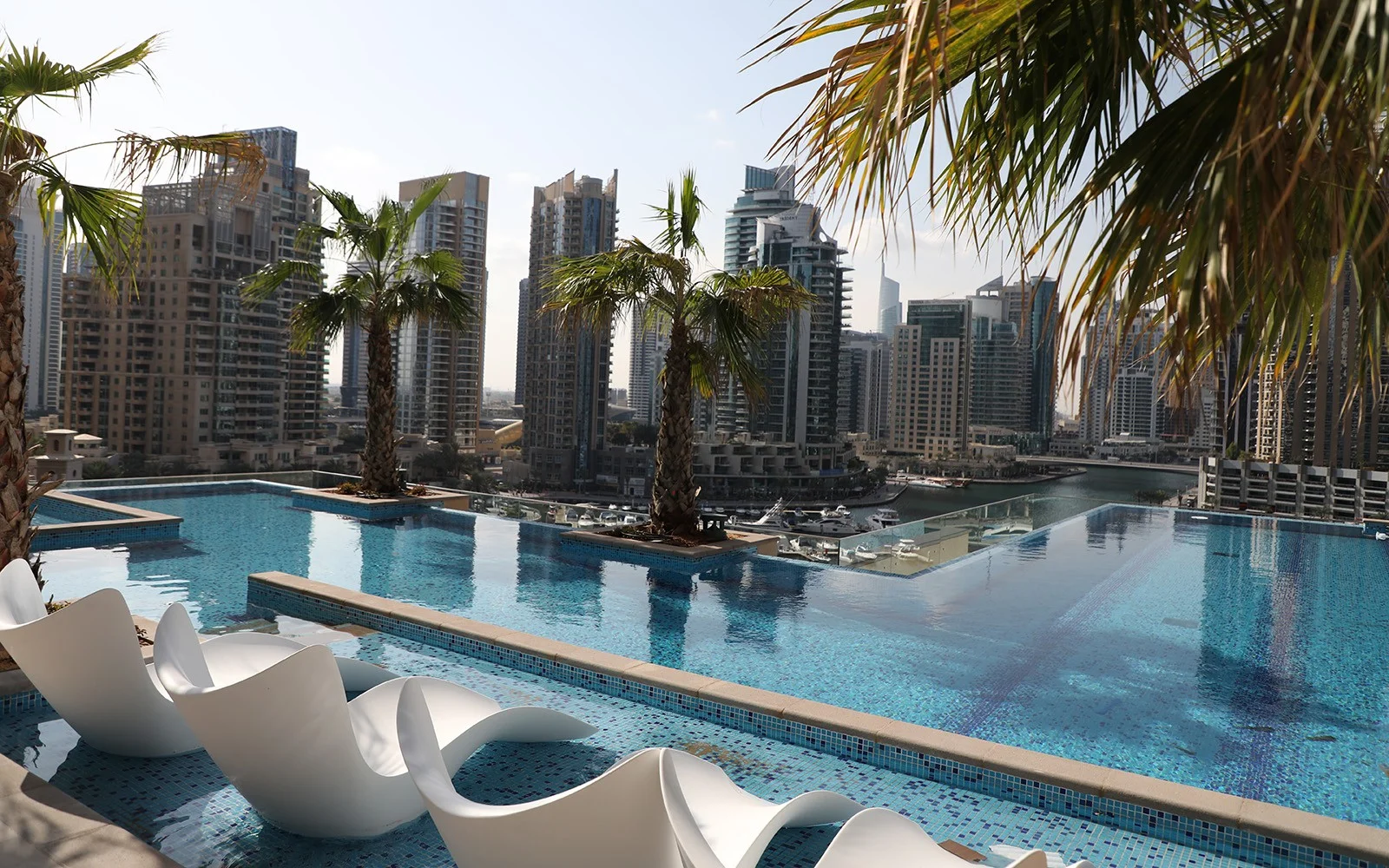
Dubai Marina remains the undisputed singles capital, beachfront high-rises, The Walk restaurant strip, yacht clubs, and the densest concentration of young professionals in the UAE. You’re paying for location, energy, and the full Dubai Marina lifestyle.
Rental costs (2026):
- Studios: AED 45,000-65,000 annually
- 1BR: AED 60,000-85,000 annually
- Shared 2BR: AED 35,000-45,000 per person annually
Transport connectivity:
- DMCC Metro Station (Red Line), direct to DIFC/Downtown
- UAE Exchange Metro Station, closer to Marina Walk
- 15-20 minutes to DIFC by metro
- Tram system connects Marina Walk to JBR and Bluewaters
Social scene strengths:
- Beach clubs: Zero Gravity, Barasti, Drift Beach, weekend social hub
- The Walk: Outdoor dining strip with 100+ restaurants and bars
- Marina Walk: Waterfront promenade, perfect for evening runs and casual dining
- Rooftop bars: Skybar, 40 Kong, Warehouse, Friday night finance crowd
- JBR proximity: Beach access, more bars, Ain Dubai attraction
Lifestyle reality check: Marina combines the highest rental costs with tourist crowds, especially weekends and winter months. Parking costs extra (AED 100-300/month). Summer heat makes waterfront walks less appealing June-September. Great for social maximalists; overwhelming for homebodies.
Who thrives here: Sales professionals, hospitality workers, social media specialists, anyone whose Dubai experience centers on beach culture and active nightlife.
2. Jumeirah Lakes Towers (JLT): Metro convenience champion
Best for: Metro commuters, budget-conscious professionals, calm lifestyle with Marina access, first-time Dubai residents
JLT delivers 90% of Marina’s amenities at 80% of the cost, with superior metro connectivity and a more residential (less tourist-heavy) vibe. The smart singles choice for value optimization without lifestyle sacrifice.
Rental costs (2026):
- Studios: AED 40,000-55,000 annually
- 1BR: AED 55,000-75,000 annually
- Shared 2BR: AED 30,000-40,000 per person annually
Transport connectivity:
- JLT Metro Station (Red Line), central to entire district
- 25 minutes to Downtown/Burj Khalifa by metro
- 12 minutes to DIFC
- 10-minute walk to Marina Walk and beach access
Social scene strengths:
- Lower-key bar scene: Less crowded than Marina, better for conversation
- Lake views: Jogging tracks around artificial lakes, outdoor gym equipment
- Food truck areas: Budget dining options, community feel
- Marina proximity: Walk to Marina Walk/JBR when you want the beach scene
- Networking events: Several business centers host after-work mixers
Lifestyle advantages: JLT combines rental savings with location benefits, you get Marina access without paying Marina rents. Less tourist saturation means more authentic resident community. Multiple shopping/dining clusters within walking distance.
The hidden costs savings: Lower taxi frequency (better metro), reduced impulse spending (fewer premium venues), shared amenities with Marina (walk to beach clubs) but residential pricing on groceries and services.
Who thrives here: Consultants, tech workers, finance professionals who prioritize savings over status, expats building Dubai emergency funds before upgrading areas.
3. Business Bay: Central luxury living
Best for: Corporate professionals, luxury lifestyle seekers, central Dubai preference, high-rise apartment enthusiasts
Business Bay offers downtown proximity, luxury towers, and a growing canal-side dining scene, but with less organic social community than Marina/JLT. Best for professionals who want prestigious addresses and central location.
Rental costs (2026):
- Studios: AED 48,000-70,000 annually
- 1BR: AED 65,000-95,000 annually
- Shared 2BR: AED 35,000-50,000 per person annually
Transport connectivity:
- Business Bay Metro Station (Red Line)
- Burj Khalifa/Dubai Mall Metro, walking distance
- 8 minutes to Downtown by metro
- 15 minutes to DIFC
- Central location for taxi access citywide
Social scene strengths:
- Canal Walk: Waterfront dining, less crowded than Marina Walk
- Rooftop venues: 40 Kong, Ce La Vie, high-end cocktail scene
- Downtown proximity: Walking distance to Dubai Mall, Burj Khalifa area
- Corporate networking: Many multinationals headquartered here
- Luxury hotel bars: Four Seasons, JW Marriott venue access
Lifestyle trade-offs: Business Bay skews more expensive and corporate-focused. Less organic expat community compared to Marina. Dining/entertainment options growing but still developing compared to established Marina scene. Better for structured social life (corporate events, hotel venues) than spontaneous community.
Who thrives here: Investment bankers, corporate lawyers, luxury brand professionals, expats who prioritize downtown proximity and prestigious business address over beach culture.
4. DIFC (Dubai International Financial Centre): Finance district walkability
Best for: Finance professionals, car-free lifestyle, premium area preference, walkable work-life integration
DIFC offers the UAE’s only truly walkable neighborhood for finance workers, live, work, dine within the same district. Premium pricing but unique lifestyle for the right professional profile.
Rental costs (2026):
- Studios: AED 55,000-80,000 annually
- 1BR: AED 75,000-110,000 annually
- Limited shared options (district focuses on 1BR+ units)
Transport connectivity:
- Emirates Towers Metro Station, district border
- Financial Centre Metro Station (under construction)
- Walking distance to most DIFC offices
- 10 minutes to Downtown by metro
- Central for taxi access, but many DIFC residents walk to work
Social scene strengths:
- Gate District: Curated dining and bar selection, after-work finance crowd
- Art events: DIFC Art Nights, gallery openings, cultural scene
- Corporate networking: Daily interaction with UAE finance community
- Premium venues: Exclusive members clubs, high-end restaurant access
- Sculpture park: Outdoor space for morning runs, weekend relaxation
Lifestyle reality: DIFC works best for finance professionals who can walk to work and value work-life integration. Limited late-night options compared to Marina. More expensive than other areas. Car-free lifestyle possible but requires adjustment for beach/mall access.
Who thrives here: Investment managers, private bankers, asset management professionals, legal counsel for financial sector, anyone earning DIFC-level salaries who values premium lifestyle and work proximity.
5. City Walk: Trendy lifestyle district
Best for: Creative professionals, premium lifestyle preference, outdoor activity enthusiasts, central location with style
City Walk appeals to fashion-conscious singles who want curated lifestyle experiences, outdoor cinema events, and Instagram-worthy surroundings. Growing expat community but higher costs than JLT/Marina alternatives.
Rental costs (2026):
- Studios: AED 50,000-75,000 annually
- 1BR: AED 70,000-100,000 annually
- Shared 2BR: AED 40,000-55,000 per person annually
Transport connectivity:
- No direct metro, relies on taxi/car access
- 15-20 minutes to DIFC by taxi
- 20-25 minutes to Marina by taxi
- Central location for citywide access
Social scene strengths:
- Outdoor cinema: Regular movie nights, community events
- Curated dining: Higher-end restaurant selection, fewer chain options
- Fitness culture: Outdoor gym, running tracks, wellness-focused community
- Creative networking: Design studios, advertising agencies nearby
- Premium shopping: Boutique retail, less mall-heavy than other districts
Lifestyle considerations: City Walk requires taxi dependency for metro access. Limited late-night options compared to Marina. Appeals to lifestyle-conscious professionals who value experience curation over cost optimization.
Who thrives here: Marketing executives, creative industry workers, luxury retail professionals, social media influencers, expats who prioritize lifestyle aesthetics and wellness culture.
6. Al Barsha 1 & Barsha Heights: Budget-friendly with mall access
Best for: Budget-conscious singles, mall proximity preference, car owners, gradual Dubai lifestyle building
Al Barsha offers the most affordable studio options while maintaining access to Dubai’s amenities. Less social scene but significant cost savings for singles prioritizing financial goals over premium addresses.
Rental costs (2026):
- Studios: AED 35,000-50,000 annually
- 1BR: AED 45,000-65,000 annually
- Shared 2BR: AED 25,000-35,000 per person annually
Transport connectivity:
- Mall of the Emirates Metro Station (Red Line)
- Sharaf DG Metro Station
- 20 minutes to Marina by metro
- 15 minutes to Downtown
- Requires metro for social activities in other districts
Social scene reality: Limited local nightlife, residents travel to Marina/Downtown for evening entertainment. Mall of the Emirates provides dining/cinema options. More family-oriented area but growing singles population due to rental affordability.
Financial advantages: Al Barsha enables aggressive savings while maintaining Dubai lifestyle access. Use rental savings for travel, emergency funds, or investment goals. Metro connectivity preserves social options without daily premium area costs.
Who thrives here: New graduates, career changers, expats building UAE emergency funds, remote workers who don’t need daily office proximity, anyone prioritizing financial goals over address prestige.
What monthly budget should singles plan in JLT for 2026?
A value-focused JLT monthly budget for a single professional typically ranges from AED 11,000 to 13,500 after rent, DEWA, metro fares, and social spend, which sits roughly AED 1,500 below comparable Marina towers on the same Red Line. Studios near JLT Metro often lease at AED 40,000 to 55,000 per year, so rent alone translates to about AED 3,300 to 4,600 monthly before the 5 percent deposit and agency fee due at signing.
Invest Gulf relocation checklists use the table below as a baseline before you add travel or visa costs from our first 30 days guide.
| Category | AED/month | Notes |
|---|---|---|
| Studio rent | 4,200 | JLT average |
| DEWA + chiller | 350 | Efficient building systems |
| Groceries | 1,300 | Local supermarkets, meal planning |
| Transport | 600 | Primarily metro |
| Dining/social | 2,200 | Mix local/Marina venues |
| Gym/activities | 400 | Community gym or budget membership |
| Mobile/internet | 400 | Standard package |
| Health insurance top-up | 300 | Employer supplement |
| Personal/miscellaneous | 3,750 | Higher discretionary spending |
| Total | 13,500 | Value-optimized lifestyle |
Al Barsha budget lifestyle (AED 11,000/month)
| Category | AED/month | Notes |
|---|---|---|
| Studio rent | 3,200 | Al Barsha 1 average |
| DEWA + chiller | 300 | Older, efficient buildings |
| Groceries | 1,200 | Cost-conscious shopping |
| Transport | 700 | Metro + occasional taxi |
| Dining/social | 1,800 | Mall dining, weekend Marina trips |
| Gym/activities | 300 | Community facilities |
| Mobile/internet | 400 | Basic package |
| Health insurance top-up | 200 | Minimal top-up |
| Personal/miscellaneous | 2,900 | Emergency fund building |
| Total | 11,000 | Savings-focused lifestyle |
Citable monthly lifestyle note: Single expats anchoring in JLT or Al Barsha in 2026 often keep total monthly outflows between AED 11,000 and 18,000 depending on whether they own a studio or share a two-bedroom. Rent remains the largest line: AED 3,200 to 4,200 for many JLT studios versus AED 3,750 to 5,400 in Marina after annual AED 40,000 to 65,000 contracts are divided by twelve. Transport without a car typically costs AED 600 to 1,200 when the Red Line covers commutes and taxis cover late nights, against AED 1,500 to 2,500 for car ownership once parking, Salik, and insurance are included. Groceries near AED 1,200 to 1,800, dining and social near AED 1,800 to 4,000, and summer DEWA uplifts of AED 200 to 400 should sit in the same spreadsheet before you accept a job offer priced only in gross salary.
Can singles keep Dubai transport below AED 1,200 without a car?
Metro-first Dubai living for singles without cars typically costs AED 800 to 1,200 per month when Red Line stations at JLT, Business Bay, or DMCC cover weekday commutes and ride-hail covers nights out. That hybrid model often saves AED 700 to 1,300 monthly versus owning a car once AED 1,500 to 2,500 payments, Salik, fuel, and AED 100 to 300 parking are stacked together.
We compare three transport modes for the same commute:
- Red Line metro: AED 600 to 900 monthly with Nol Silver passes on daily JLT to DIFC routes
- Ride-hail evenings: AED 200 to 400 monthly when you limit trips to 8 to 12 rides
- Full car ownership: AED 1,500 to 2,500 monthly once finance, insurance, Salik, and parking are included
The hybrid approach: Metro for work commutes, Uber for evenings/weekends. Total transport cost AED 800-1,200/month vs AED 1,500-2,500 for car ownership.
Car ownership (recommended for City Walk, outer areas)
Best areas: City Walk, Al Barsha, Barsha Heights, areas without metro proximity Monthly cost: AED 1,500-2,500 (payment, insurance, fuel, parking, Salik) Lifestyle fit: Higher earners, frequent travelers, weekend explorers, shopping enthusiasts
Dubai car ownership reality:
- Parking costs: AED 100-300/month in most buildings, premium areas higher
- Salik tolls: AED 4 per gate crossing, adds AED 200-600/month depending on route
- Summer necessity: Air conditioning essential May-October
- Weekend freedom: Beach access, mall variety, UAE exploration trips
Uber-heavy lifestyle (works for Marina, DIFC)
Best areas: Marina, DIFC, central Business Bay Monthly cost: AED 1,000-1,800 depending on frequency Lifestyle fit: High earners who value convenience, frequent business travelers, car-averse expats
When Uber makes sense:
- Daily commute under AED 30 round-trip
- Limited weekend car needs
- Premium area living with walkable amenities
- Frequent business travel (reduced car utilization)
The break-even calculation: Uber becomes expensive beyond 40-50 rides/month. Factor convenience value vs total transport costs.
How should singles structure roommate rules and rent splits?
Shared Dubai accommodation for singles works best when rent splits, DEWA responsibility, and guest rules are written before the first AED 2,500 to 4,500 monthly roommate payment clears. Marina and JLT two-bedroom shares often beat solo studios by AED 1,000 to 2,000 per month, but Ejari and landlord policies vary, so confirm whether both names may appear on the lease before you transfer a 5 percent deposit.
Invest Gulf recommends documenting these roommate checkpoints in writing:
- Rent split: AED 2,500 to 4,500 per person on typical 2BR Marina or JLT contracts
- DEWA account: one named tenant responsible for AED 300 to 500 monthly bills
- Exit notice: 30 to 60 days aligned with the master lease to avoid forfeited deposits
Roommate screening best practices
Financial verification:
- Emirates ID and salary certificate sharing
- First/last month rent upfront capability
- Stable employment verification
Lifestyle compatibility:
- Work schedules (shift workers vs 9-5)
- Social habits (frequent entertaining vs quiet lifestyle)
- Cleanliness standards and chore sharing
- Guest policies and partner sleepover rules
Legal considerations:
- DEWA account responsibility
- Lease agreement inclusion (some landlords allow, others restrict)
- Ejari registration complications with multiple occupants
- Exit strategy if roommate relationship fails
Best neighbourhoods for roommate culture
Marina/JLT: Largest pool of singles seeking shared arrangements. High turnover provides frequent opportunities but also instability.
Business Bay: Professional crowd, higher income roommates, more stable arrangements but fewer options.
DIFC area: Limited shared options due to 1BR focus, but when available, typically high-quality professional arrangements.
Al Barsha: Cost-conscious sharing, larger apartments available, family area transitioning to more singles/couples.
How do Marina, JLT, and DIFC social scenes differ for singles?
Each major singles district in Dubai carries a distinct social and networking profile: Marina skews hospitality and lifestyle sales with higher AED 200 to 400 dinner tabs, JLT blends residential lake groups with ten-minute Marina access, and DIFC concentrates finance after-work crowds spending AED 300 to 600 on Gate District meals. Picking an area means matching your industry cluster to the venues you will visit twice weekly, not only the bedroom view.
We map typical weekly social spend at AED 400 to 1,200 in Marina, AED 250 to 800 in JLT, and AED 500 to 1,500 in DIFC when two to four paid outings are included.
Industry concentrations: Marina attracts hospitality, sales, real estate, and lifestyle business professionals. High energy, relationship-building focused networking.
DIFC after-work scene
Finance networking:
- Gate District venues: Daily after-work finance crowd
- Members clubs: Exclusive networking for senior professionals
- Art events: DIFC Art Nights combine culture with business networking
Professional development:
- DIFC Authority events: Regulatory and policy networking
- Financial services conferences: Regular industry events
- Regional headquarters: Access to senior finance professionals
DIFC networking skews senior, formal, and finance-focused. Quality over quantity approach to professional relationship building.
JLT community integration
Residential networking:
- Lake jogging groups: Community fitness culture
- Tower social events: Building-specific gatherings
- Food truck gatherings: Casual community interaction
Professional diversity: JLT residents represent diverse industries, tech, consulting, logistics, healthcare. Less concentrated than DIFC but broader professional network potential.
Business Bay corporate connections
Multinational presence:
- Corporate events: Regular company social events
- Hotel venue networking: Four Seasons, JW Marriott host business mixers
- Canal Walk professional meetups: Growing startup and tech scene
Industry mix: Business Bay combines established corporates with growing startup ecosystem. Professional networking opportunities across multiple industries.
What move-in costs should Dubai singles budget beyond rent?
Move-in budgeting for Dubai singles typically starts at AED 8,000 to 15,000 beyond the first month rent because Ejari registration, DEWA deposits, and basic furniture land in the same two-week window. Expect five percent of annual rent as a security deposit plus one month rent and five percent agency fee on many Marina and JLT contracts, then reserve AED 300 to 600 monthly in buildings where gym access replaces a standalone membership.
First month essentials budget: AED 8,000-15,000 for furniture basics, kitchen setup, initial groceries, and utility deposits.
Building amenities that matter for singles
Essential amenities:
- Gym facilities: Saves AED 300-600/month membership fees
- Swimming pool: Year-round exercise option, social space
- Concierge services: Package handling for frequent online shopping
- Parking included: Saves AED 100-300/month
Nice-to-have amenities:
- Rooftop terrace: Social space for entertaining
- Business center: Occasional remote work needs
- Steam/sauna: Wellness amenities
- Multiple elevators: Important in high-rise living
Seasonal lifestyle adjustments
Summer months (June-September):
- Higher DEWA bills: AC costs peak, budget extra AED 200-400/month
- Indoor socializing: Mall and hotel venue preference over outdoor dining
- Beach club timing: Early morning or evening only
- Reduced walking: Factor taxi costs for short distances
Winter season (November-March):
- Tourist influx: Marina and beach areas more crowded, higher venue prices
- Outdoor activity peak: Beach clubs, Marina Walk, outdoor dining optimal
- Event season: Higher social calendar, budget for event tickets
- Traffic increases: Account for congestion in popular areas
Ramadan considerations:
- Daytime dining restrictions: Limited public eating/drinking
- Altered nightlife: Later opening hours for bars and clubs
- Cultural awareness: Respectful behavior in public spaces
- Reduced business hours: Some services operate shorter hours
Dating pool characteristics: Marina attracts international professionals from hospitality, real estate, and sales, creating a diverse but transient dating scene. High turnover means constant new arrivals, but also challenges building long-term relationships.
Best venues for meeting people:
- Zero Gravity beach club: Weekend social hub, mixed nationalities, beach volleyball courts
- The Walk restaurants: Casual dinner dates, outdoor seating, people-watching opportunities
- Barasti beach bar: Thursday expat nights, Friday after-work crowds, relaxed atmosphere
- Marina Walk promenade: Evening jogging groups, weekend farmers markets, dog-walking social opportunities
Dating costs reality: Marina dating runs expensive, expect AED 200-400 per dinner date, AED 150-300 for cocktails, AED 500+ for beach club day passes. Budget accordingly for active dating lifestyle.
JLT relationship building
Community approach: JLT fosters deeper connections through residential community activities, building social events, lake jogging groups, and shared amenities create natural meeting opportunities beyond bar scenes.
Lower-pressure environment: Less tourist-heavy atmosphere allows for authentic relationship development. Residents tend toward longer Dubai stays, supporting more stable relationship patterns.
Cost-effective dating: JLT offers budget-friendly date options, lake walks, community events, nearby Marina access without daily premium pricing. Better for building relationships through shared activities vs expensive venue hopping.
DIFC professional networking romance
Finance sector dynamics: DIFC concentrates high-earning professionals with demanding schedules, relationships often develop through work functions, industry events, and after-work networking rather than traditional dating apps.
Sophisticated venue options: Gate District restaurants, members clubs, and art events provide upscale dating venues that align with professional image requirements. Expect AED 300-600 per dinner date.
Work-life balance considerations: DIFC professionals often prioritize career advancement, relationships need flexibility around long work hours, business travel, and industry networking obligations.
Insider tip: Before you tour Marina or JLT studios, filter Property Finder and Bayut by building age and chiller type, because identical floor plans can differ by AED 400 to 800 monthly once district cooling and parking are included in the advertised rent.
Where do singles find gyms and beach fitness in Dubai?
Beach and gym access for Dubai singles typically means choosing between AED 400 to 800 monthly club memberships in Marina or free tower gyms in JLT that save AED 300 to 600 when pools and weights are already in the service charge bundle. Marina runners often cover a 6 km Marina Walk to JBR route, while JLT residents use 3 km lake loops without paying separate studio fees.
Invest Gulf advises confirming gym inclusion before signing because a missing facility adds AED 400 to 800 monthly to an otherwise cheaper tower.
Beach-focused activities:
- JBR beach volleyball: Regular tournaments, mixed-skill pickup games
- Beachside running: 6km Marina Walk to JBR route, sunrise/sunset timing
- Paddle boarding: Equipment rental available, social group activities
- Beach yoga: Multiple operators, sunrise classes popular with expat community
Premium gym access: Marina houses several high-end fitness facilities, Fitness First, GymNation, and boutique studios. Monthly costs AED 400-800 depending on amenities and class access.
Social fitness networking: Marina’s fitness culture creates natural networking opportunities. Running groups, beach sports, and group fitness classes connect like-minded professionals outside work environments.
JLT community fitness
Residents’ amenities: Most JLT towers include gym facilities, swimming pools, and rooftop exercise areas, eliminating monthly membership costs while providing social interaction with neighbors.
Lake circuit activities: Artificial lakes offer 3km jogging circuits with outdoor gym equipment stations. Popular evening activity connecting residents across different towers.
Budget-friendly options: JLT residents access Marina fitness facilities while maintaining lower-cost base options. Flexibility between community facilities and premium club memberships.
Business Bay corporate wellness
Corporate gym memberships: Many Business Bay employers provide gym membership allowances or corporate rates with premium facilities. Check employment package details before arranging independent memberships.
Hotel facility access: Luxury hotels offer day-pass gym access, swimming pools, and spa facilities. More expensive but convenient for varying workout schedules.
Canal-side activities: Growing outdoor exercise options along Dubai Canal, cycling paths, outdoor fitness stations, and weekend community events.
What should singles budget for dining and groceries?
Grocery and dining spend for Dubai singles typically ranges from AED 3,000 to 5,800 monthly when Marina baskets cost 15 to 20 percent more than JLT equivalents on the same metro line. Most residents split AED 1,200 to 1,800 on groceries and AED 1,800 to 4,000 on restaurants while staying inside a AED 12,000 to 18,000 total lifestyle envelope.
Invest Gulf cost models assume Spinneys or Carrefour Marina baskets run roughly AED 200 to 350 higher per month than equivalent JLT shops on the same Red Line.
| Spend line | AED/month | Notes |
|---|---|---|
| Groceries | 1,200-1,800 | Marina premium vs JLT supermarkets |
| Dining out | 1,800-4,000 | Two to four paid outings weekly |
| Coffee and delivery | 300-600 | App fees add up in Marina towers |
| Total food | 3,300-5,800 | Before gym or transport lines |
Grocery shopping reality: Marina grocery costs run 15-20% higher than other areas due to premium location. Spinneys and Carrefour available but limited parking increases shopping complexity.
JLT dining diversity
Hidden gems advantage: JLT hosts numerous family-run restaurants and food trucks offering authentic cuisines at reasonable prices. Less tourist markup compared to Marina equivalents.
Community dining culture: Regular food festivals, night markets, and community events create social dining opportunities. Resident-focused rather than tourist-oriented pricing and atmosphere.
Smart grocery strategy: Multiple supermarket options within walking distance. Competitive pricing and resident-friendly shopping hours. Many singles share bulk purchases with neighbors.
DIFC upscale food scene
Gate District premium dining: Curated restaurant selection focusing on business dining and sophisticated casual options. Expect AED 200-400 per person for dinner with wine.
Lunch networking culture: DIFC’s walkable layout supports regular business lunch meetings. Many restaurants offer express lunch menus for time-conscious professionals.
Weekend dining challenges: Limited weekend dining options within DIFC itself, residents typically travel to Marina, Downtown, or City Walk for casual weekend meals.
Nationality mix: Heavy representation from UK, Russia, India, Philippines, and Eastern Europe. Tourism influence creates temporary visitor population alongside permanent residents.
Language advantages: English-dominant environment with Russian and Arabic commonly heard. International business atmosphere accommodates various accents and cultural backgrounds.
Cultural events: Regular national day celebrations, cultural festivals, and international networking events. Marina’s tourism focus creates constant cultural exchange opportunities.
JLT residential community
Stable expat population: Longer-term residents create established communities with regular social events, cultural celebrations, and mutual support networks for newcomers.
Family-friendly transition: While singles-focused, JLT also accommodates young couples and small families, creating diverse social opportunities and relationship development paths.
Cultural diversity benefits: Authentic international food options, cultural exchange through building communities, and reduced tourist influence allow deeper cultural integration.
DIFC professional integration
Finance sector networking: Access to UAE’s financial services community provides professional development opportunities and industry-specific cultural learning.
Business culture immersion: Daily interaction with Emirati business culture, Islamic banking principles, and regional investment patterns. Valuable for career development in Middle East markets.
Limited cultural breadth: DIFC’s finance focus can create insular professional environment. Residents often seek broader cultural experiences in other neighborhoods.
The detail lives in Shipping Household Goods to Dubai.
Looking for the right Gulf property?
Get a free analysis matched to your budget and target market.
See also: Dubai Marina property
Frequently Asked Questions
Dubai Marina leads for nightlife and beach access with studios from AED 45K-65K annually. JLT offers metro convenience and lower costs (AED 40K-55K studios). Business Bay provides central location and high-rise living. DIFC suits finance professionals with walkable lifestyle but higher rents (AED 55K-80K studios).
Marina studios: AED 45K-65K annually. JLT: AED 40K-55K. Business Bay: AED 48K-70K. DIFC: AED 55K-80K. City Walk: AED 50K-75K. Al Barsha 1: AED 35K-50K. Costs vary by building age, amenities, and exact tower location within each district.
Possible in Marina/JLT (metro + taxis), DIFC (walkable to offices), and City Walk (central location). Budget AED 800-1,200/month for Uber/taxi combo vs AED 1,500-2,500/month for car ownership. Dubai Metro covers Sheikh Zayed Road corridor well for daily commutes.
Marina: beach clubs, rooftop bars, The Walk restaurants. JLT: lower-key bars, close to Marina scene. Business Bay: upscale lounges, Canal Walk dining. DIFC: after-work finance crowd, Gate District restaurants. City Walk: trendy cafes, young professional crowd, outdoor cinema events.
Total monthly budget AED 12,000-18,000: studio rent (AED 3,500-6,500), utilities (AED 300-500), groceries (AED 1,200-1,800), transport (AED 800-2,500), dining/social (AED 2,000-4,000), gym/hobbies (AED 500-800). Higher end for Marina/DIFC lifestyle.
Yes, especially in Marina, JLT, and Business Bay. Facebook groups like 'Dubai Flatmates' and 'Expat Room Rentals Dubai' are active. Shared 2BR costs AED 2,500-4,500/month per person vs AED 4,000-6,500 for own studio. Popular for new arrivals and cost-conscious professionals.
JLT (JLT Metro Station), Business Bay (Business Bay + Burj Khalifa/Dubai Mall stations), and Marina (DMCC + UAE Exchange stations) offer best metro access. Red Line covers Sheikh Zayed Road corridor to Downtown/DIFC. Green Line serves Dubai Healthcare City and older central areas.
Marina: more expensive, beach access, better nightlife, tourist crowds, AED 45K+ studios. JLT: quieter, more affordable, better value, metro-central, AED 40K+ studios, 10-minute walk to Marina scene. Both share similar amenities but JLT offers better bang-for-buck for daily living.
Get a Gulf property shortlist
Tell us your budget and target market. Independent research first; enquiries are matched with licensed local partners. We reply within one business day.