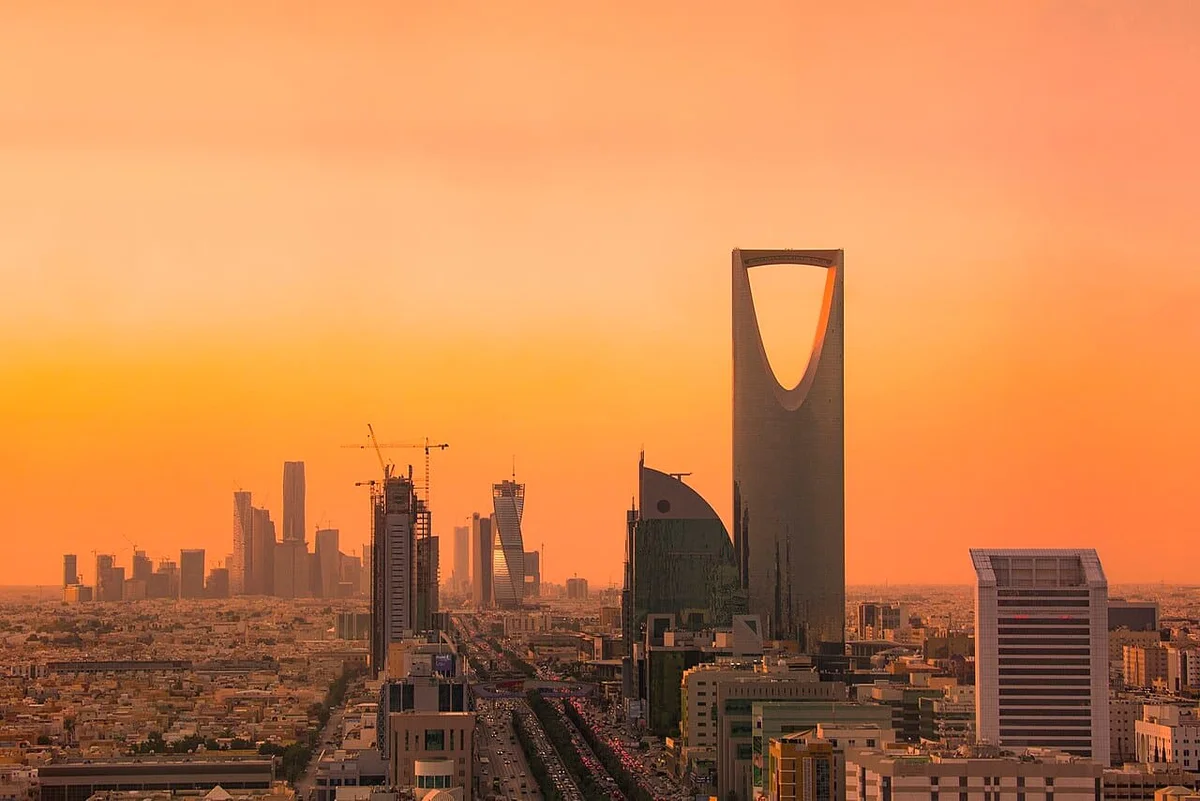
Riyadh is Saudi Arabia’s capital and Vision 2030 command centre, absorbing PIF-backed development, ROSHN mass housing, Diriyah Gate luxury, and Qiddiya entertainment corridor investment. For foreign property investors, Riyadh is accessible only through REGA designated zones under Law M/14, not through general residential purchases in the city.
See Saudi designated zones and Saudi property foreigners.
REGA / Law M/14 Disclaimer: Verify zone designation, developer registration, and deed type on rega.gov.sa before deposit. Not legal or investment advice.
What is the Riyadh 2026 investment snapshot for foreign buyers?
Riyadh foreign sales typically sit inside REGA-designated projects only, with indicative gross yields near 4 to 6% and acquisition loads of about 7 to 10% before a 5 to 10 year hold. Invest Gulf treats the area as a Vision 2030 urban bet, not a Dubai liquidity or peak-yield substitute.
| Metric | Riyadh designated | Jeddah designated | Dubai (comparison) | | | | | | | Foreign ownership | Zone-limited (confirm current official rules) | Zone-limited (confirm current official rules) | 60+ freehold zones | | Est. gross yield | 4-6% (confirm current official rules) | 4-5.5% (confirm current official rules) | 6-9% | | Market maturity | Months (Law M/14) | Months | 20+ years | | Growth driver | Vision 2030 capital | Red Sea coast | Established hub | | Liquidity | Thin | Thin | Deep | | Acquisition costs | 7-10% (confirm current official rules) | 7-10% (confirm current official rules) | 6-9% |
Which key designated projects can foreigners buy in Riyadh?
Key Riyadh designated projects typically include select ROSHN communities from about SAR 500K to 1.5M, Diriyah Gate luxury from SAR 2M to 8M+, and phased urban or Qiddiya-adjacent stock under REGA rules. Our underwriting requires per-project REGA registration in the area even when the ROSHN brand is familiar.
| Project | Profile | Foreign sales | Price range (confirm current official rules) | | | | | | | ROSHN communities | PIF mass residential | Select projects | SAR 500K-1.5M | | Diriyah Gate | Heritage luxury | Designated (confirm current official rules) | SAR 2M-8M+ | | Qiddiya | Entertainment-residential | Designated (confirm current official rules) | TBD | | Riyadh urban phases | CBD-adjacent | Phased (confirm current official rules) | TBD |
ROSHN is the highest-volume foreign-accessible pipeline, but per-project REGA registration is mandatory.
What rental demand drivers support Riyadh designated zones?
Riyadh rental demand is typically employment-driven by government ministries, PIF and giga-project hiring, financial sector executives, and Vision 2030 consulting rotations on 12 to 24 month leases. Invest Gulf models the area without tourism STR assumptions that belong in Red Sea or Dubai holiday stock on 12 to 24 month leases.
| Sector | Impact | | | | | Government ministries | Stable long-term demand | | PIF / giga-project employment | Growing professional class | | Saudi National Bank / financial sector | Executive housing | | Vision 2030 consulting | Expat rotation contracts | | ROSHN community population | Mass-market tenancy base |
Riyadh tenancy is employment-driven, not tourism. Model 12-24 month leases.
What does the Riyadh acquisition cost stack look like?
Riyadh acquisition costs typically total about 7 to 10% including roughly 5% transfer tax, 2 to 2.5% brokerage, and legal review of SAR 10,000 to 30,000 under current official rules. Our underwriting refuses deposits until that 7 to 10% stack sits beside the unit price in the area file.
| Item | Estimate | | | | | Transfer tax | ~5% (confirm current official rules) | | REGA registration | (confirm current official rules) | | Broker | 2-2.5% | | Legal review | SAR 10,000-30,000 | | Total | 7-10% |
How does a SAR 900,000 ROSHN two-bedroom yield model work?
A SAR 900,000 ROSHN two-bedroom with about SAR 3,500 monthly rent typically means roughly 4.67% gross and near 3.33% net after about SAR 12,000 of charges and vacancy. Our research treats all Riyadh yields as estimates until denser transacted indices exist.
| Item | Amount | | | | | Purchase | SAR 900,000 | | Annual rent (SAR 3,500/month) [est.] | SAR 42,000 | | Gross yield | 4.67% | | Service charges + vacancy | SAR 12,000 | | Net income | SAR 30,000 | | Net yield | 3.33% |
Treat all Riyadh yield figures as estimates until transacted indices exist.
How does Riyadh compare with Dubai for foreign property buyers?
Riyadh typically offers Vision 2030 growth optionality with estimated 4 to 6% yields and thin liquidity, while Dubai offers 6 to 9% yields, deeper resale, and mature RERA/DLD processes. Our underwriting picks Riyadh for Saudi urban exposure over a 5 to 10 year hold, not for Dubai-style exit speed.
| Factor | Riyadh | Dubai | | | | | | Growth optionality | Vision 2030 frontier | Established | | Yield | 4-6% est. | 6-9% | | Liquidity | Thin | Deep | | Regulatory clarity | Evolving (REGA) | Mature (RERA/DLD) | | Residency | SAR 4M Premium (confirm current official rules) | AED 2M Golden Visa |
What red flags should Riyadh property buyers avoid?
Riyadh red flags typically include buying outside REGA zones, relying on ROSHN branding without project registration, assuming Premium Residency on the SPA, and underwriting yields above 6% without local rent data. We also reject 2-year flip plans in the area because secondary liquidity remains thin versus Dubai depth.
- Purchase outside REGA designated zone
- ROSHN brand without project-level REGA registration
- Premium Residency promised on SPA
- Yield above 6% without local rental data
- Off-plan without escrow verification (confirm current official rules)
- 2-year flip expectation
Who should invest in Riyadh designated zones?
Riyadh designated zones typically suit Vision 2030 believers with a 5 to 10 year horizon, Premium Residency diligencers under current official rules, and Gulf diversifiers adding Saudi urban exposure. We do not fit the area to yield maximisers or buyers who need Dubai-level liquidity within 24 months.
- Vision 2030 believers with 5-10 year horizon
- Premium Residency diligencers (confirm current official rules)
- Gulf portfolio diversifiers adding Saudi urban exposure
- ROSHN early entrants with REGA-verified projects
- Buyers who complete independent Saudi legal review
Not suited to: yield maximisers, liquidity-dependent buyers, unverified zone purchases.
Which related guides complete a Riyadh diligence cluster?
A Riyadh diligence cluster typically links designated-zone rules, Premium Residency near SAR 4M, Jeddah and Dammam alternatives, and the Gulf comparison pillar before any SPA. Our underwriting keeps those URLs in the same folder as REGA screenshots for the area across a planned 5 to 10 year hold period.
| Topic | Link | | | | | All zones | Saudi designated zones explained | | Premium Residency | Saudi Premium Residency property | | Jeddah | Jeddah property investment | | Eastern Province | Dammam Khobar property investment | | Gulf comparison | Gulf property investment comparison 2026 |
Why does Vision 2030 capital flow make Riyadh matter?
Riyadh typically absorbs the majority of PIF domestic deployment across ROSHN housing, Diriyah Gate, Qiddiya, Season infrastructure, and metro expansion, even while foreign zone access remains early. We treat the area as a bet that capital deployment becomes population and employment, not as proven foreign-buyer rental indices yet.
| PIF / government project | Riyadh impact | | | | | ROSHN 400K homes target | Mass housing supply | | Diriyah Gate | Luxury tourism-residential | | Qiddiya | Entertainment corridor | | Riyadh Metro | Connectivity premium | | King Salman Park | Green space amenity |
Property investment is a bet on capital deployment translating to population and employment, not yet proven in foreign-buyer rental indices.
What ROSHN buyer workflow should foreigners follow?
A ROSHN buyer workflow typically requires REGA list confirmation, SPA legal review costing SAR 10,000 to 30,000, developer registration checks, rental demand modelling, and a 5-year hold without resale dependency. We still mandate independent Saudi counsel in the area even when sales centres look polished and payment plans look simple.
- Confirm specific ROSHN community on REGA designated list
- Review unit type, price, and payment plan
- Independent Saudi legal review of SPA
- Verify REGA developer registration for that community
- Model rental demand from ROSHN end-user population
- Plan 5-year hold without resale dependency
- Wire funds per escrow rules (confirm current official rules)
ROSHN sales centres are professional, but legal review is still mandatory.
What does Diriyah Gate mean for luxury-tier foreign buyers?
Diriyah Gate typically means ultra-premium heritage-adjacent luxury from about SAR 2M to 8M+, with estimated 3 to 5% yields and very thin liquidity under current official rules. Our underwriting treats the area as capital storage and lifestyle at SAR 2M to 8M+, not a yield farm.
Foreign buyer profile:
| Factor | Implication | | | | | Price point | Capital preservation, not yield | | Tenant | Ultra-high-net-worth, diplomatic | | Yield | 3-5% estimated (confirm current official rules) | | Liquidity | Very thin | | Residency | May exceed Premium Residency threshold alone (confirm current official rules) |
Diriyah is not a yield play, it is a Saudi luxury lifestyle and capital storage product.
How does the Riyadh tenancy calendar affect vacancy?
The Riyadh tenancy calendar typically peaks around Q2 relocations and Q4 government contract activity, with slower Q3 summers that support a 7% average vacancy assumption until building data exists. We consistently model 12 to 24 month leases, not tourism turnover, with about 7% vacancy.
| Quarter | Demand pattern | | | | | Q1 | Corporate lease renewals post-budget | | Q2 | Relocation peak | | Q3 | Summer slower, moderate vacancy | | Q4 | Government year-end contract activity |
Model 7% average vacancy until building-specific data exists.
Can foreigners get a Saudi mortgage in designated zones?
Saudi mortgages for foreigners in designated zones are typically still evolving under Law M/14 implementing regulations, with LTV and bank appetite confirmed only in writing. Our underwriting does not assume Dubai-style 80% LTV for Riyadh files in the area without a written bank offer.
Mortgage status checks:
| Question | Status (confirm current official rules) | | | | | Do Saudi banks lend to foreigners in zones? | Emerging, verify per bank | | LTV ratios | TBD | | Impact on Premium Residency | (confirm current official rules) | | Rate environment | SAR-pegged |
Do not assume Dubai-style 80% LTV until bank confirms in writing.
What tax and repatriation rules apply to Riyadh landlords?
Riyadh landlord tax and repatriation rules typically require confirmation of rental income treatment, sale-proceeds repatriation, CRS reporting via Saudi banks, and Saudi succession planning under current official rules. We keep home-country tax advice separate from the area SPA file and from the 7 to 10% acquisition stack.
| Item | Rule | | | | | Saudi income tax (personal) | 0% for employment (confirm current official rules) | | Rental income | (confirm current official rules) | | Repatriation of sale proceeds | (confirm current official rules) | | Home-country tax | CRS reporting via Saudi banks | | Inheritance | Saudi succession rules, plan with lawyer |
How should buyers time Riyadh investment phases?
Riyadh investment phases typically run from 2024 to 2026 infrastructure completion, 2027 to 2029 market maturation, and 2030+ portfolio scaling, with early-entry total return estimates higher and risk elevated. Our underwriting matches hold horizon to each phase rather than forcing a 24-month flip.
Phase 1: Infrastructure completion (2024-2026)
- Metro lines operational
- Qiddiya Phase 1 entertainment venues
- ROSHN mass housing handovers
- Diriyah Gate luxury completions
Phase 2: Market maturation (2027-2029)
- Rental indices stabilisation
- Secondary market establishment
- Mortgage product development for foreigners
- Premium Residency process standardisation
Phase 3: Portfolio scaling (2030+)
- Additional zone designations
- Mature yield compression in prime areas
- Regional liquidity development
- Exit opportunity optimisation
| Investment window | Risk level | Expected returns | Strategy | | | | | | | Early entry (2024-2026) | High | 8-12% total | Off-plan ROSHN | | Maturation (2027-2029) | Medium-high | 6-10% total | Ready stock focus | | Established (2030+) | Medium | 4-8% total | Yield optimisation |
ROSHN community analysis by delivery phase
| Community | Handover timeline | Foreign allocation | Expected yield | | | | | | | Sedra | Q2-Q4 2026 | 25% (confirm current official rules) | 5.0-6.5% | | Warefa | Q1-Q3 2027 | 30% (confirm current official rules) | 4.5-6.0% | | Jaryd | Q2-Q4 2027 | 20% (confirm current official rules) | 5.5-7.0% | | Tulaymah | Q1-Q2 2028 | 35% (confirm current official rules) | 4.0-5.5% |
Source: ROSHN sales data, REGA designations Q1 2026.
Later phases typically offer better pricing but reduced first-mover advantages in established communities.
How does the Saudi developer landscape affect Riyadh zone risk?
The Saudi developer landscape in designated zones typically centres on ROSHN for about 60 to 70% of foreign-accessible residential supply, with Diriyah Company on heritage luxury and others on phased entertainment or coastal stock. We score REGA registration and foreign-sale experience before branding narratives.
| Developer | Project focus | REGA status | Foreign experience | | | | | | | ROSHN | Mass residential | Full registration | Moderate | | Diriyah Company | Heritage luxury | Designated zones | High | | Red Sea Global | Tourism residential | Coast focus | High | | NEOM | Future city | Pre-operational | Very high | | Qiddiya Company | Entertainment residential | Phased delivery | Moderate | | Saudi Real Estate Company | Mixed development | Select zones | Low-moderate |
ROSHN: the volume play
ROSHN represents 60-70% of foreign-accessible residential supply in Riyadh designated zones:
Strengths:
- PIF backing provides completion assurance
- Mass-market pricing accessibility
- Standardised community amenities
- Clear REGA zone compliance
Weaknesses:
- Cookie-cutter architecture
- Limited customisation options
- High-volume may compress appreciation
- Newer management track record
Diriyah Gate: the luxury alternative
Diriyah Company focuses on heritage tourism luxury:
Strengths:
- Unique UNESCO World Heritage adjacent location
- Ultra-luxury positioning
- Limited supply exclusivity
- Cultural tourism rental demand
Weaknesses:
- Very high entry costs (SAR 2M+)
- Thin liquidity markets
- Tourism dependency risk
- Limited comparables for valuation
How does economic diversification affect Riyadh property demand?
Saudi economic diversification away from oil typically lifts financial services, technology, tourism, and entertainment employment targets through 2030, supporting broader rental demand beyond government roles. Our underwriting still requires building-level rent proof in the area rather than FDI headline totals alone for 2030 targets.
Non-oil sector employment growth
| Sector | Employment growth 2024-2030 | Riyadh impact | Housing demand | | | | | | | Financial services | +35% | Major banks HQ | Executive housing | | Technology | +120% | NEOM office, startups | Young professionals | | Tourism | +180% | Diriyah, heritage sites | Short-term rentals | | Entertainment | +200% | Qiddiya, venues | Lifestyle communities | | Manufacturing | +80% | Industrial cities | Worker accommodation | | Logistics | +65% | Regional hub | Transit housing |
Source: Vision 2030 targets, Saudi employment statistics.
This diversification supports broad-based rental demand beyond traditional government employment.
Foreign direct investment correlation
Property demand correlates with FDI flows into Saudi Arabia:
- 2022: USD 20B FDI → rental market expansion
- 2023: USD 25B FDI → ROSHN sales acceleration
- 2024: USD 30B+ target → zone designation expansion
- 2025-2030: USD 150B+ cumulative target → residential market maturation
Foreign executives require quality housing, creating upward pressure on rents in designated zones accessible to international buyers.
Should a first Saudi purchase be Riyadh or NEOM?
A first Saudi purchase should typically be Riyadh designated zones before NEOM when any income or urban infrastructure is required, because NEOM remains pre-operational with 0% current rent yield. Our underwriting treats NEOM as frontier risk and Riyadh as the medium-high urban path with about 4 to 6% estimated gross.
| Factor | Riyadh designated | NEOM | | | | | | Infrastructure today | Existing city | Pre-operational | | Rental income | Possible (confirm current official rules) | Zero | | Employment base | Immediate | Future | | Liquidity | Thin | None | | Risk profile | Medium-high | Very high |
First Saudi purchase: Riyadh designated zones before NEOM for any income or urban infrastructure requirement.
How does Saudi population growth affect Riyadh housing demand?
Saudi population above 36 million and Vision 2030 urbanisation targets typically support long-term Riyadh residential demand, but foreign buyers access only designated zone supply, a fraction of the total market. Our underwriting separates macro tailwinds from foreign-buyer execution risk inside designated zones.
| Macro factor | Riyadh implication | | | | | Youth population | Rental demand growth | | Saudization | Expat employment mix shifting | | PIF employment | Professional housing demand | | ROSHN supply | Mass-market absorption | | Foreign ownership (new) | Incremental demand from abroad |
Macro tailwind is real, foreign buyer execution risk is also real.
What should Saudi lawyers check in a Riyadh SPA?
Saudi lawyers typically check payment schedules, completion penalties, exit restrictions, service charge caps, dispute venues, and warranty periods, with legal budgets of SAR 10,000 to 30,000 treated as non-negotiable. We will not clear a Riyadh file in the area without that SAR 10,000 to 30,000 legal memo.
| SPA clause | Risk if ignored | | | | | Payment schedule | Front-loaded developer risk | | Completion date | No penalty = timeline risk | | Exit restrictions | Locked capital | | Service charge cap | Uncapped = yield destruction | | Dispute resolution | Saudi courts, plan accordingly | | Warranty period | Post-handover defect exposure |
Budget SAR 10,000-30,000 for legal review, non-negotiable.
Verify current official rules with the relevant government authority before relying on residency, tax, or foreign-ownership assumptions.
What transaction checklist should Riyadh buyers complete?
Riyadh buyers typically require escrow verification on off-plan, a full 7 to 10% acquisition stack, real service charge filings, and independent Saudi legal SPA review before any substantial deposit. We also separate Premium Residency rules near SAR 4M from zone property ownership, because the tracks are not automatic.
Checklist:
- Verify escrow on the regulator portal for Riyadh off-plan; never wire to personal accounts
- Stack agency, transfer, trustee, and NOC fees on resale stock
- Underwrite buy-to-let with real service charges and about 7% vacancy
- Book legal review on SPA default clauses before large deposits
- Confirm Premium Residency rules separately from title (confirm current official rules)
How should Invest Gulf underwrite Riyadh designated zones?
Riyadh designated zones typically mean REGA-limited foreign access with estimated 4 to 6% gross yields and thin secondary liquidity versus Dubai’s deeper market. Our underwriting uses a 5 to 10 year hold, SAR 500K to 1.5M ROSHN mass-market bands, and mandatory portal checks on rega.gov.sa before any deposit.
Riyadh foreign buyers under Law M/14 should model a SAR 900,000 ROSHN two-bedroom at about SAR 3,500 per month rent as roughly 4.67% gross and near 3.33% net after about SAR 12,000 of charges and vacancy, not as a Dubai-style 6 to 9% income product. Acquisition cash of 7 to 10% including roughly 5% transfer and legal review of SAR 10,000 to 30,000 belongs in the same file as REGA project registration. Diriyah Gate luxury from SAR 2M to 8M+ is capital storage with estimated 3 to 5% yields and very thin exits. Vision 2030 employment supports demand, but foreign rental indices remain immature. Plan 5 to 10 years and reject any SPA that promises Premium Residency on purchase alone.
Insider tip: confirm the specific ROSHN community on the REGA designated list and the developer registration number before you treat any 5%+ yield slide as investable, because brand names alone do not prove foreign-sale eligibility.
Saudi capital underwriting for Riyadh also needs a vacancy assumption near 7% until building-specific data exists, plus a clear split between Premium Residency near SAR 4M and zone deeds that may or may not count under current official rules. Mortgage LTV for foreigners remains bank-specific and should not be modelled at Dubai-style 80% without a written offer. Early ROSHN phases such as Sedra with 2026 handovers can price differently from 2027 to 2028 communities, so compare delivery year and foreign allocation percentages in writing. Keep SPA clauses on completion penalties, service charge caps, and dispute resolution in Saudi courts inside the legal memo. If the file only works on Vision 2030 narrative without REGA screenshots and a 5 to 10 year hold plan, walk away from the area.
| Gate | Pass rule | | | | | REGA zone + developer | Portal confirmation on file | | Gross yield estimate | About 4 to 6% with local rent proof | | Hold horizon | 5 to 10 years |
Ready to start your Gulf property search?
Get a personalised shortlist matched to your investment goals.
Frequently Asked Questions
Only in REGA-designated zones under Law M/14, not general Riyadh residential. Select ROSHN communities, Diriyah Gate, Qiddiya-adjacent, and phased urban districts (confirm current official rules). General central Riyadh apartments remain restricted.
Riyadh suits Vision 2030 urban growth thesis with 4-6% estimated gross yields (confirm current official rules). Thin secondary liquidity and evolving REGA regulations are the trade-offs. Plan 5-10 year hold. Not a yield or liquidity market like Dubai.
Estimated 4-6% gross on apartments in approved projects (confirm current official rules). Net 2-4% after charges. Rental demand driven by government, PIF ecosystem, and Vision 2030 employment growth.
Apartments from approximately SAR 500K-1.5M in ROSHN mass-market (confirm current official rules). Diriyah Gate luxury SAR 2M-8M+ (confirm current official rules). Pricing varies widely by project and REGA registration status.
Premium Residency (~SAR 4M (confirm current official rules)) and zone property ownership are separate tracks. Zone property may form qualifying investment only if Premium Residency Center rules include it (confirm current official rules). Not automatic.
Riyadh = government, PIF, Vision 2030 capital deployment. Jeddah = Red Sea coast, tourism, logistics. Riyadh has more designated zone activity in 2026. Jeddah suits coastal lifestyle thesis.
Confirm zone designation on REGA portal, developer REGA registration, deed type (confirm current official rules), escrow on off-plan (confirm current official rules), and independent Saudi legal SPA review.
Buying outside designated zones, ROSHN branding without REGA project registration, yield projections without rental index, Premium Residency assumed on purchase, and no 5-year hold plan.
Get a Gulf property shortlist
Tell us your budget and target market. Independent research first; enquiries are matched with licensed local partners. We reply within one business day.