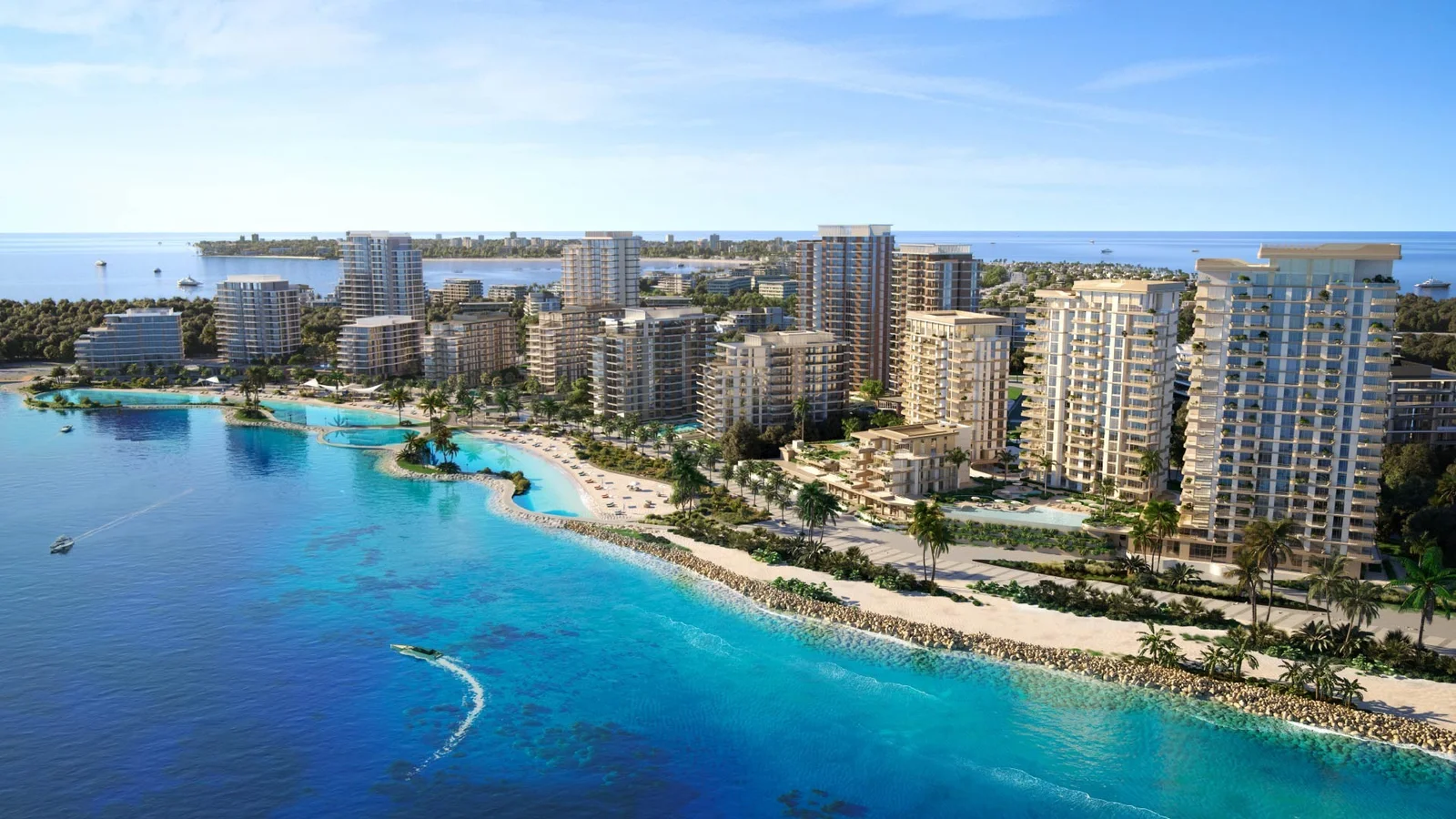
The Eastern Province (Dammam, Khobar, Dhahran, and the Saudi Aramco corridor) is Saudi Arabia’s energy employment heartland. For foreign property investors, access is REGA designated zone only under Law M/14, with earlier-stage designation than Riyadh in 2026 (confirm current official rules on rega.gov.sa).
Hub links: Saudi designated zones explained · Riyadh property investment · Saudi Arabia property for foreigners.
REGA / Law M/14 disclaimer: Verify Eastern Province zone status on rega.gov.sa. Not legal or investment advice.
Dammam and Khobar property investment for foreigners typically means REGA designated zones only under Law M/14, with Eastern Province designation earlier-stage than Riyadh in 2026 and thinner foreign-buyer inventory across the area. Invest Gulf research anchors the rental thesis on Saudi Aramco, petrochemical employment, King Fahd Industrial Port, and expat contract rotations of 2 to 3 years rather than tourism churn. Indicative gross yields of 4 to 5.5% on designated apartments often compress to net 2 to 3.5% after management fees of 8 to 12%, void, and HOA charges over 12 months. Premium Residency near SAR 4 million remains a separate track that rarely qualifies on EP stock alone. Confirm current rega.gov.sa listings for the exact plot before any reservation fee. Verify both gates on the REGA register yourself rather than accepting a developer summary of its own status, because zone eligibility and project registration are separate.
Sizing Eastern Province inside a Gulf portfolio typically means a hold of 5 to 10 years and a maximum of 5 to 10% of Saudi property exposure until three or more REGA projects show verified foreign sales in the area market. Invest Gulf buyer desks compare Bahrain freehold liquidity on the King Fahd Causeway, including Amwaj, before EP is chosen for commute convenience alone, and stress-test void at 10% in year one of new towers even when Aramco names appear in marketing decks. Agency near 2% plus VAT and unclear escrow are hard stops on any buyer checklist. Pair this area brief with Saudi designated zones guidance and Riyadh comparables, then verify current official Law M/14 and Premium Residency rules near SAR 4 million with Saudi counsel before SPA. Zone eligibility and project registration are separate gates, and only the second one completes a sale. Verify both on the REGA register yourself rather than accepting a developer’s summary of its own status.
Insider tip: Ask a local broker how many foreign-held units traded in the last 12 months in the same community before you price an exit; thin comps mean longer resale waits even when rent is solid.
What is the Eastern Province investment snapshot in 2026?
Eastern Province investment in 2026 typically means thinner REGA foreign-buyer stock than Riyadh, an Aramco and petrochemical employment anchor, and indicative gross yields of 4 to 5.5% on designated apartments with lower resale liquidity. Hold periods of 5 to 10 years are the planning default. Invest Gulf sizes EP as a niche Saudi sleeve, not core Gulf liquidity.
| Factor | Eastern Province | Riyadh (compare) |
|---|---|---|
| REGA foreign-buyer stock | Thinner, evolving | Deeper pipeline |
| Employment anchor | Aramco / petrochemical | Government + Vision 2030 HQ |
| Indicative gross yield | 4-5.5% designated apt | 4-6% zone dependent |
| Resale liquidity | Lower | Higher |
| Hold period | 5-10 years typical | 5-10 years |
Can foreigners buy property in Dammam or Khobar?
Foreign buyers can purchase in Dammam or Khobar only inside REGA-listed designated zones under Law M/14; general residential stock in the area remains restricted for non-GCC nationals. Eastern Province designation matured later than Riyadh, so eligible inventory stays thin across 5 to 10 years. We require a zone certificate checklist for the exact plot before any reservation fee clears.
| Check | Why it matters |
|---|---|
| REGA zone letter | Confirms Law M/14 access |
| Developer registration | Avoids non-eligible launches |
| Counsel SPA review | Protects deposit within 30 days |
Mandatory checks:
- Project appears on current REGA foreign-ownership list
- Developer holds valid REGA registration
- Deed type matches marketing language
- Independent Saudi lawyer reviews SPA before deposit
Never assume causeway-adjacent marketing equals eligible foreign freehold.
What drives rental demand in the Aramco corridor?
Rental demand in the Aramco corridor typically means employment-contract tenancy from Saudi Aramco, petrochemical clusters, King Fahd Industrial Port, and the Dammam-Khobar-Dhahran expat base on rotations of 2 to 3 years. Vacancy patterns resemble Qatar energy corridors more than Dubai tourism markets. We model building-level employer mix, not generic Aramco brochure premiums.
| Demand driver | Investor note |
|---|---|
| Aramco / energy payroll | Long-let stability if employer mix fits building |
| Port and industrial services | Mid-market apartment demand |
| Expat family rotation | Turnover on 2-3 year contracts |
| Bahrain weekend traffic | Lifestyle, not daily rental thesis |
Model project-specific employer mix, not generic “Aramco premium” brochures.
How does Eastern Province compare to Riyadh for investors?
Eastern Province compared with Riyadh typically offers employment stability with fewer foreign-accessible REGA units in 2026, while Riyadh captures Vision 2030 capital flows and a deeper designated-zone pipeline. Choose Riyadh for Premium Residency stock search near SAR 4 million thresholds. We require a hold mindset of 7 years or more before any EP SPA.
- Riyadh for designation depth
- EP for employment stability
- SAR 4 million PR usually Riyadh
Choose Riyadh for designation depth and Premium Residency stock search. Choose Eastern Province only with confirmed REGA eligibility and a 7+ year hold mindset.
Compare: Jeddah property investment.
How does Bahrain proximity affect the thesis?
Bahrain proximity typically affects the thesis because some Aramco-corridor professionals live in Bahrain freehold and commute via King Fahd Causeway, using mature foreign ownership and pockets of liquidity such as Amwaj over 5 to 10 years. Eastern Province REGA zones remain lower-liquidity Saudi sleeves. We compare Bahrain lifestyle entry before EP is chosen for convenience alone.
- Bahrain freehold liquidity check
- Causeway commute reality
- EP as niche Saudi sleeve
| Location | Foreign ownership | Liquidity | Typical role |
|---|---|---|---|
| EP REGA zone | Zone-only | Lower | Niche Saudi sleeve |
| Bahrain freehold | Established | Medium | Causeway lifestyle + rent |
| Riyadh REGA | Growing | Medium-high | Vision 2030 core |
See Amwaj Islands property before you choose EP for convenience alone.
What cost stack should you underwrite?
Cost stacks typically include zone purchase premiums, REGA registration fees, agency often near 2% plus VAT, property management at 8 to 12%, void allowance, and HOA charges with a history request covering 3 years. Indicative gross yields of 4 to 5.5% often compress to net 2 to 3.5% after fees. Invest Gulf rebuilds net before any Aramco tenancy pitch is accepted.
| Cost line | Planning note |
|---|---|
| Purchase price | Zone premium vs general EP stock |
| REGA / registration | Confirm current fee schedule with lawyer |
| Agency | Often 2% + VAT negotiable |
| Property management | 8-12% in newer markets |
| Void allowance | Higher in new districts until tenant base matures |
| Service / HOA | Request 3-year history |
Indicative gross 4-5.5% on designated apartments; net 2-3.5% after management, maintenance, and vacancy (confirm current official rules).
Who should invest in Eastern Province?
Eastern Province typically fits patient holders with Saudi allocation already in Riyadh or Jeddah and yield seekers accepting illiquidity for Aramco-corridor tenancy over 5 to 10 years. Poor fit includes flips inside 36 months and Premium Residency seekers without Riyadh stock near SAR 4 million. We cap EP until three-plus verified foreign projects exist.
-
5 to 10 years patience
-
No 36 months flip
-
SAR 4 million usually Riyadh
-
Existing Riyadh or Jeddah sleeve
-
5 to 10 years patience
-
No 36 months flip plan
Poor fit: 36-month flip plans; buyers needing Premium Residency qualification without Riyadh stock; investors assuming all Khobar corniche towers are foreign-eligible.
What are pros and cons for Gulf investors?
Pros for Gulf investors typically include an energy employment anchor, lower headline pricing versus Riyadh premiums, and USD-pegged SAR, while cons include thin foreign-buyer resale, an evolving REGA list, Bahrain causeway competition, and limited foreign mortgages over 5 to 10 years. Long-let corporate tenants are possible when employer mix fits the area. We weight liquidity risk above brochure yield of 4 to 5.5%.
- Energy employment anchor
- Thin foreign resale
- Gross 4 to 5.5% before fees
| Pros | Cons |
|---|---|
| Energy employment anchor | Thin foreign-buyer resale |
| Lower headline vs Riyadh premium | REGA list still evolving |
| USD-pegged SAR | Causeway/Bahrain competition |
| Long-let corporate tenants possible | Limited mortgage for foreigners |
What red flags should pause an Eastern Province purchase?
Red flags typically include a broker without a REGA zone certificate for this plot, 100% foreign ownership claims without Law M/14, Aramco tenancy models without building employer data for 12 months, and Premium Residency promises without SAR 4 million proof. Invest Gulf walks away on unclear escrow using this red flag checklist.
-
No plot REGA certificate
-
M/14 missing in marketing
-
PR promise without SAR 4 million
-
No plot-level REGA certificate
-
100% ownership claim without M/14
-
PR promise without SAR 4 million
-
Broker cannot show REGA zone certificate for this plot
-
Marketing uses “100% foreign ownership” without Law M/14 reference
-
Yield model assumes Aramco tenancy without building-level employer data
-
Premium Residency promised from EP deed without threshold proof
-
Inventory is off-plan with unclear escrow
What investment scenarios are realistic?
Realistic scenarios typically include a buy-to-let hold of 7 years targeting net 2.5 to 3.5% with corporate void under 8%, a Gulf satellite capped at 5% of total Gulf property exposure, and Premium Residency searches prioritising Riyadh near SAR 4 million. EP rarely offers qualifying premium stock. We write the scenario checklist before SPA.
- 7 years hold case
- 5% Gulf exposure cap
- SAR 4 million PR path
Scenario B (Gulf portfolio satellite): Max 5% of total Gulf property exposure until REGA adds three or more EP projects with confirmed foreign sales.
Scenario C (Premium Residency): Prioritise Riyadh inventory near SAR 4M threshold; EP rarely offers qualifying premium stock (verify Premium Residency Center).
Portfolio context: Best Gulf country property investment.
What checklist should you run before offer?
A pre-offer checklist typically requires a REGA zone confirmation letter, developer registration validation, title deed type versus SPA language, rental comps within 2 km, a written management quote, and a bank repatriation documentation plan across 30 days. Skipping any line raises Law M/14 and exit risk. Invest Gulf refuses reservation fees until all six steps are dated.
- REGA letter on file
- Comps within 2 km
- Management quote in writing
| Step | Action |
|---|---|
| 1 | REGA zone confirmation letter |
| 2 | Developer registration validation |
| 3 | Title deed type vs SPA |
| 4 | Rental comps within 2 km |
| 5 | Management quote in writing |
| 6 | Repatriation documentation plan with bank |
What is the 2026 investor summary?
The 2026 investor summary typically means mandatory REGA verification, a hold of 5 to 10 years, and Eastern Province sized at 5 to 10% of Saudi exposure maximum until a deeper foreign-sale pipeline appears. Many causeway investors still default to Bahrain freehold for liquidity in the market. We monitor ROSHN EP announcements as signals, not buy tickets.
- REGA verification mandatory
- 5 to 10% of Saudi sleeve
- Bahrain liquidity alternative
Until REGA publishes a deeper EP pipeline, many causeway investors default to Bahrain freehold for liquidity and compare EP as optional satellite exposure.
How do Dammam, Khobar, and Dhahran differ for landlords?
Dammam, Khobar, and Dhahran typically differ by character: Khobar skews corniche lifestyle apartments, Dammam mixes administrative and port tenants, and Dhahran sits closest to Aramco campus corporate-lease demand over 2 to 3 years. Sea views never replace REGA zone confirmation. Invest Gulf validates Dhahran premiums against actual tenant demand, not map proximity alone.
- Khobar lifestyle rentals
- Dammam mixed tenants
- Dhahran corporate-lease tilt
| City | Character | Rental note |
|---|---|---|
| Khobar | Corniche lifestyle, retail | Expat-facing apartments |
| Dammam | Administrative port hub | Mixed local tenant base |
| Dhahran | Aramco campus proximity | Corporate-lease demand |
Khobar corniche marketing attracts end-users; investment math still requires REGA zone confirmation, not sea view alone.
What infrastructure projects matter for 2026-2028 holds?
Infrastructure for holds across 3 years typically includes airport upgrades and causeway improvements that help weekend Bahrain traffic but have limited direct cap-rate impact on a single tower. Rail links to Riyadh remain long-dated. We underwrite cash flow with a no-rail checklist beside the building.
-
3 years hold window
-
Causeway is weekend only
-
No rail in underwriting
-
Airport upgrades not a cap-rate driver
-
Causeway helps weekends only
-
No rail assumption in underwriting
Rail links between Eastern Province and Riyadh remain long-dated for most investors. Underwrite cash flow without assuming commuter rail near your tower.
How should Aramco-corridor buyers size a position?
Aramco-corridor buyers should typically cap Eastern Province at 5 to 10% of Saudi property exposure until three or more REGA projects show verified foreign sales, and stress-test void at 10% in year one of a new tower. CRS reporting may still apply at home over 12 months. Invest Gulf documents repatriation compliance from day one with a sizing checklist.
- 5 to 10% Saudi cap
- 10% year-one void test
- Repatriation docs day one
Foreign landlords should document rental income repatriation with bank compliance from day one. CRS reporting may apply to home-country tax filings even when Saudi rental tax treatment is neutral for many non-residents (confirm with adviser).
Petrochemical corridor employment can shift with project cycles; stress-test void at 10% in year one of a new tower even if Aramco names appear in marketing. Ask for tenant employer mix in the building, not only in the wider city.
When comparing EP to Jeddah property investment, remember Red Sea roles skew tourism and logistics while Eastern Province skews energy. Portfolio diversification is real, but liquidity rules differ.
ROSHN and other master developers may announce Eastern Province phases that are not yet on REGA foreign lists; treat press releases as pipeline signals, not buy tickets. Your lawyer should confirm the exact phase and plot, not only the master brand name.
Weekend Bahrain traffic on the causeway does not convert into weekday rental demand for Khobar towers; underwrite on Sunday-Thursday employment patterns instead.
Insurance for offshore-adjacent assets should include business interruption clauses if your tenant employer is contract-heavy; standard residential policies may exclude certain commercial subleases common in energy corridors.
Use Saudi property designated zones explained to cross-check whether a marketed Khobar tower sits inside the foreign list before you pay a reservation fee.
Eastern Province investors should rehearse exit with a local broker before purchase: ask how many foreign-held units traded in the last 12 months in the same community. Thin comps mean you price rent correctly but still wait longer at resale.
Dhahran-adjacent units sometimes trade at a premium to Dammam stock; validate that premium against actual Aramco tenant demand rather than map proximity alone.
Verify with REGA (rega.gov.sa). Not investment advice.
Confirm current official rules on fees, title, and visa links before deposit. Keep written quotes and peak-hour notes with the SPA or lease file. Use the linked guides above, then request a shortlist when constraints are stable.
Ready to start your Gulf property search?
Get a personalised shortlist matched to your investment goals.
Frequently Asked Questions
Only in REGA-designated zones under Law M/14 (confirm current official rules). General Dammam/Khobar residential remains restricted. Eastern Province designation is earlier-stage than Riyadh in 2026.
Aramco-corridor employment supports long-term rental thesis. Estimated 4-5.5% gross yields (confirm current official rules). Limited foreign-buyer inventory and evolving REGA designation are constraints. Niche allocation within Saudi exposure.
Saudi Aramco and petrochemical sector employment, King Fahd Industrial Port, Dammam-Khobar-Dhahran metropolitan expat community, and proximity to Bahrain causeway for weekend traffic.
Riyadh has more designated zone activity and Vision 2030 capital focus. Eastern Province has Aramco employment stability but fewer foreign-accessible projects in 2026 (confirm current official rules).
4-5.5% gross on designated zone apartments (confirm current official rules). Net 2-3.5%. Aramco-contract tenancy provides lower vacancy than tourism markets.
Separate tracks (confirm current official rules). Zone ownership does not auto-grant Premium Residency at SAR 4M (confirm current official rules).
Eastern Province zone designation (confirm current official rules), developer REGA registration, deed type, independent Saudi legal review.
Assuming all Eastern Province is open to foreigners, Aramco tenancy projections without project-specific demand, buying outside designated zones, and ignoring thinner inventory than Riyadh.
Get a Gulf property shortlist
Tell us your budget and target market. Independent research first; enquiries are matched with licensed local partners. We reply within one business day.