
Al Raha Beach is a single-developer waterfront, which is the fact everybody quotes as a strength and almost nobody follows to its conclusion. Consistent architecture, one master plan, one point of accountability: all true.
The conclusion is that the party managing the community, the party performing the facilities work, and the party letting the retail below the residential can all sit inside one corporate group. When they do, the service charge budget stops being a set of market prices and becomes a set of intra-group prices. That is not a scandal and it is not disclosed either, and it changes what an owner should be looking at.
What is actually being paid for in a service charge here?
A bundle of contracts, not a rate. The figure an agent quotes per square foot is the arithmetic result of a budget, and the budget is a list of agreements with named suppliers for named scopes over named terms.
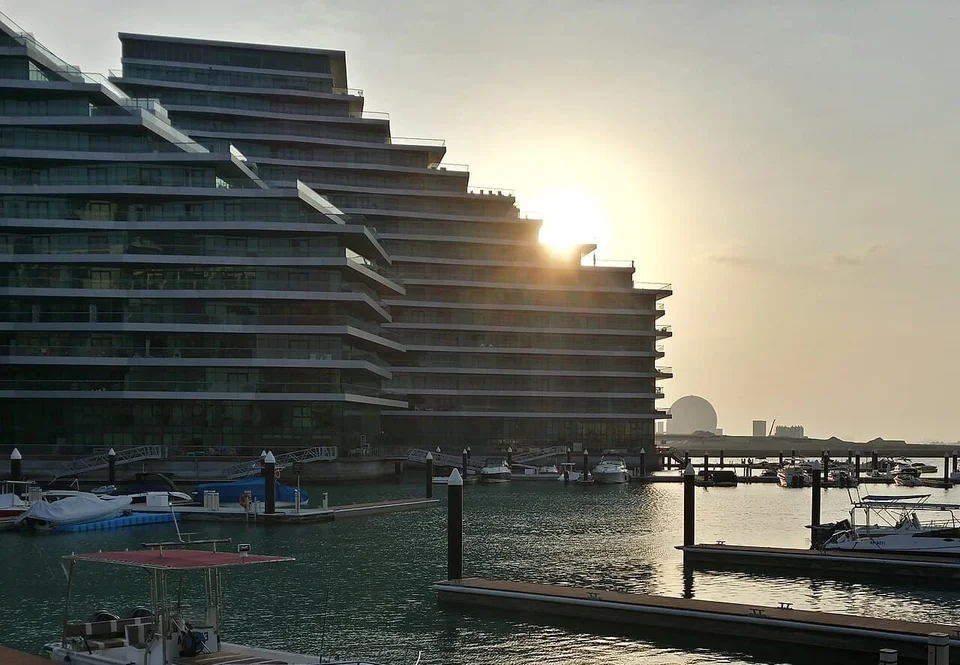
Once you see it that way, the standard due diligence question stops making sense. Asking whether a rate is high is asking whether the output of a process you have not examined is reasonable, and the honest answer is that nobody can tell from the number. Two communities charging the same rate can be running entirely different procurement, and two charging different rates can be delivering entirely different scopes. The rate is real and it is not evidence. The contracts are evidence, and on a single-group waterfront they are the only evidence available, because the competitive tender that would otherwise price the work for you has not necessarily happened.
Why does single-group supply change the question?
Because it removes the structural alignment that makes an ordinary association’s price discipline automatic. In a normal arrangement a manager procures from a market of contractors, and the manager’s reputation depends on getting a decent price from that market.
| Line in the budget | What you want to know | Where the answer is |
|---|---|---|
| Facilities management | Who holds it, who owns them | Contract and trade licence |
| Cleaning and landscaping | Term length and renewal mechanism | The contract, not the budget |
| Chiller or cooling capacity | Supplier identity and whether it bills through voids | Utility agreement |
| Security | Whether scope changed when the price did | Prior year budget alongside this one |
| Management fee | How it is calculated and against what base | Association management agreement |
Where the manager and the contractor share an owner, that alignment is a choice the group makes rather than a consequence of the structure. Many groups make it. The point for a buyer is that you cannot tell from outside which kind of group you have bought into, and the rate will not tell you, so the contract chain is where the answer lives. The equivalent Dubai machinery, where a published index and a regulator sit behind the same question, is described on the service charge index page, and the contrast is instructive rather than transferable.
Buying on Al Raha and want the budget read properly?
Send us the association budget and the tower. We will tell you which lines to trace and what to ask for in writing before exchange.
What should a buyer request, and from whom?
Five documents, all ordinary, all obtainable before exchange. The current association budget with its largest lines itemised. The identity of the supplier behind each of those lines. The ownership of each supplier. The term and renewal mechanism of each contract. The minutes of the meeting at which the budget was adopted.
The reason to ask for all five rather than the first one is that each answers a question the previous one raises. A budget shows the money. A supplier name shows who receives it. Ownership shows whether the recipient is at arm’s length. The term shows how long the arrangement is locked. The minutes show whether anybody asked. A buyer who obtains all five knows more about the running cost of the asset than most owners who have held it for years, and the request costs nothing except the willingness to make it and to notice what is not answered.
What does this do to the yield model?
It inverts which input needs stressing. Most models treat rent as the uncertain variable and the service charge as a known deduction, because rent moves with a market and a charge feels administrative.

On an established waterfront that has it backwards. Rent here is evidenced by a deep set of comparable lettings and it moves in increments the market can see coming. The service charge is set inside a budget process, and where that process is intra-group it can move by decision in a single cycle. So the sensible stress test is on the charge: take the current figure, ask what the return looks like if it rises materially at the next adoption, and decide whether the purchase still works. A buyer who has run that test is buying with the risk priced. One who has modelled a fixed deduction against a variable rent has stressed the wrong side of the equation. Where the emirate’s rent evidence is assembled and how to read it sits on the Abu Dhabi rental yield guide.
Does the same structure exist elsewhere in Abu Dhabi?
On any single-developer district, in some form. What varies is how much of the chain sits inside the group and how visible it is made.
That variation is the real comparison to draw when weighing Al Raha against other addresses, and it is a different comparison from the one usually drawn. The standard exercise ranks districts by price, yield and prestige. The exercise that matters for a long hold ranks them by how much of the running cost is exposed to a market and how much is set internally, because the first is bounded by competition and the second is bounded by governance. Neighbouring island districts, each with their own structure and their own answer, are covered on the Yas Island page and the Al Reem page, and the emirate-wide framing is on the freehold areas guide.
What does a well-run related-party structure look like?
Visible tendering, published scopes and short contract terms. Those three together are what turns a single-group arrangement from an unpriced arrangement into a priced one.
A group that puts its own facilities arm through a tender it can lose has restored the price discovery its structure removed. A group that publishes the scope behind each budget line has made a rate comparable to something. A group that renews annually rather than on a long term has kept the association’s option to change supplier alive. None of these is legally required and all three are observable, which makes them a fair test to apply before buying. Where they are present, the single-group structure delivers its genuine advantages of consistency and accountability with the pricing problem solved. Where they are absent, an owner is paying a price nobody discovered and holding no lever to change it.
Who should buy on Al Raha Beach?
An owner who intends to hold, will read a budget, and values a coherent waterfront over a cheaper running cost. That is a real profile and this district serves it well.
The buyer it serves badly is the one underwriting a thin net yield on a fixed charge assumption, because that buyer has no room for the one variable this location can move. The margin between a comfortable hold and an uncomfortable one here is the service charge, and the charge is the line the buyer has least visibility over at the point of purchase and least influence over afterwards. Buying with that visibility obtained, or buying with enough margin that it does not matter, are both sound. Buying with neither is the position that goes wrong, and it goes wrong quietly, one budget cycle at a time. The broader emirate context sits on the Abu Dhabi investment guide.
Frequently Asked Questions
A cost the association pays to a company under the same ownership as the party that set the budget. It is not improper on its own and it is extremely common on single-developer waterfronts, where the master developer supplies community management, facilities services and sometimes the retail tenancy alongside the residential title. What it removes is the arm's length assumption that makes a competitive rate meaningful.
The rate is the wrong object to interrogate, which is the point of this page. A per square foot figure carries no information about whether the work behind it was competitively priced, and comparing it against another community's figure compares two numbers produced by two processes you have not seen. The checkable object is the contract chain: who holds each contract, for how long, on what renewal terms, and whether anyone outside the group ever bid for it.
The association budget with its largest lines broken out, the identity of the supplier behind each of those lines, the ownership of each supplier, the contract term and renewal mechanism, and the minutes of the meeting at which the budget was adopted. Every one of these is an ordinary request that an association can answer, and a seller or agent who cannot produce them has told you something useful about how the community is run.
No, and treating it as a scandal misreads the structure. Single-group supply produces genuine consistency and a single accountable party, which is worth something on a waterfront with shared infrastructure. It also removes the price discovery that an owner would otherwise get for free from competitive tendering, so the owner has to do that discovery themselves or accept the price without it.
In an ordinary association the manager procures from a market and the owners' interest and the manager's interest point roughly the same way on price. Where the manager, the contractor and the developer share ownership, that alignment is a matter of policy rather than of structure. The governance question moves from whether the manager negotiated well to whether the group chose to, which is a different question and not one a rate discloses.
It makes the service charge a less predictable input than the rent, which inverts how most models are built. Rent on an established waterfront is evidenced by comparable lettings and moves slowly. A budget line set inside one group can move with a decision rather than with a market, so the sensible model stresses the charge rather than the rent, and asks what a material increase would do to the return before committing.
Attend, read and ask on the record. An association budget adopted in a meeting nobody attended is adopted differently from one adopted in a meeting where an owner asked which supplier holds the facilities contract and when it was last tendered. Individual owners rarely change an outcome alone, and a question minuted at one meeting is the thing that makes the same question answerable at the next.
What is the search demand telling you about this district?
Al Raha Beach draws about 70 property searches a month, led by al raha beach apartments at 40, with four impressions in our own Search Console data. The investment phrasing measured zero, as it did in every district the study covered.
Seventy searches is a modest figure for a waterfront district, and the reason is worth understanding rather than explaining away. Abu Dhabi’s property demand is smaller and more concentrated than Dubai’s at every level, and within it the audience distributes across a handful of broad phrases rather than across community names. A buyer arriving at a district like this one has usually come through the emirate, through a developer, or through an agent, and the page’s job is to answer well at that point rather than to compete for a search that few people run.
For an owner the more useful number is what the district does once a property is let. Waterfront apartment stock in an established Abu Dhabi district serves a professional tenant base anchored to nearby employment, and that population moves on a slower cycle than the short-let demand a tourist-facing waterfront attracts. The running costs follow the same logic: a seafront building carries a heavier maintenance burden on its envelope than an inland one, and that belongs in the service charge assumption rather than being discovered at the first budget.
One further consequence of a small measured audience is that the resale timeline should be planned rather than assumed. Where few buyers are actively searching a district by name, a sale is found through agents, through the emirate-level audience and through buyers already living nearby, and each of those routes runs on its own pace. That is not a weakness of the asset, it is a fact about how the market is reached, and a seller who understands it prices and markets accordingly instead of waiting for traffic that the search data says was never there.
The practical sequence follows from all of the above: establish the building, obtain its service charge per square foot and reserve fund position in writing, price the unit against transactions in that same building rather than against a district average, and only then model the return against the capital actually committed at transfer rather than against the headline price. Each of those steps is available before an offer, and none of them depends on the size of the search audience.
None of that requires a large audience to be worth doing, and all of it is available to any buyer prepared to ask before making an offer rather than after.
Get a Gulf property shortlist
Tell us your budget and target market. Independent research first; enquiries are matched with licensed local partners. We reply within one business day.