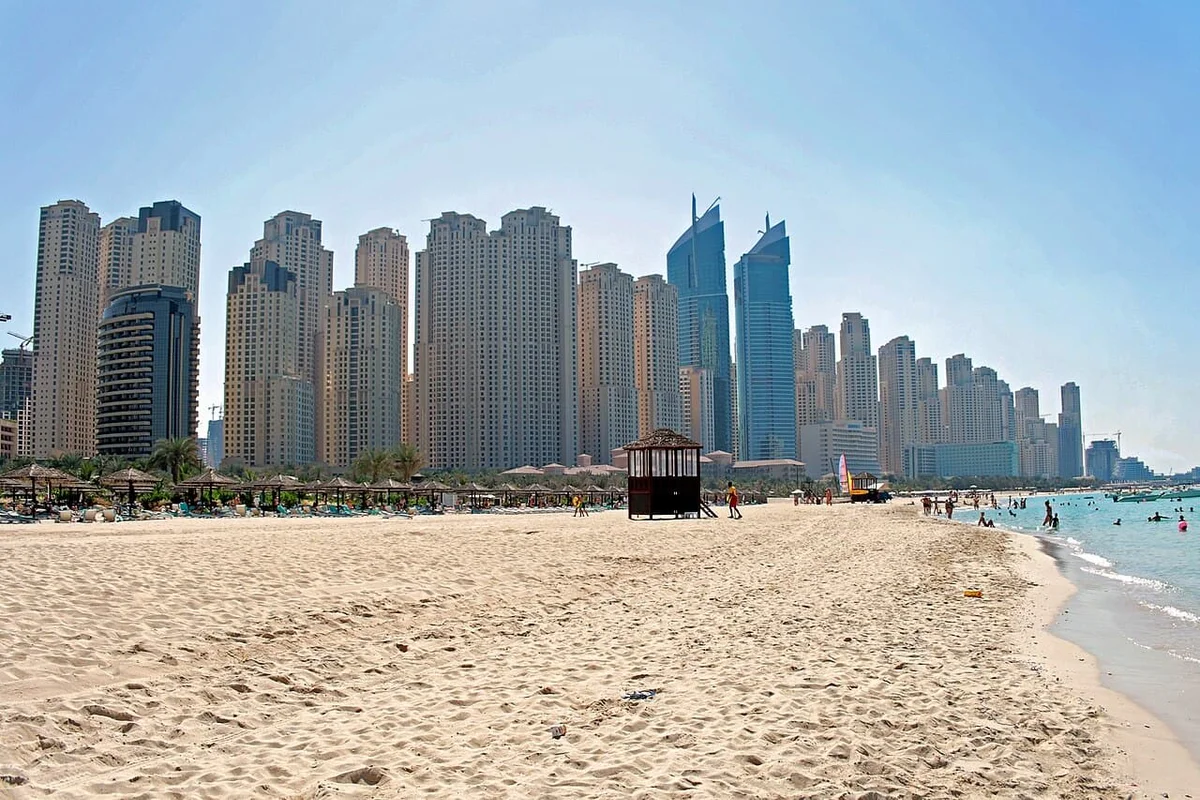
JLT is normally described as the more affordable neighbour of the marina across the road: similar towers, similar transport, lower prices, lakes instead of a waterfront. Accurate, and it describes the view rather than the district.
The district is land inside a free zone. Its administration, its tenancy processes and, for the businesses in it, the licence permitting them to be there run through the zone’s own authority.
What does the free-zone framework actually change?
Who you deal with, and who can deal in the district at all. An investor elsewhere in Dubai transacts with a familiar set of city-wide bodies; here a zone authority sits in the middle of the same processes.
That is an ordinary arrangement rather than an exotic one, and it has two practical consequences worth knowing before buying. The processes for registration and tenancy have their own shape, which means the professionals you use should be familiar with them rather than with the general Dubai process alone. And for commercial space the framework reaches further than administration: an occupier needs to be able to hold the appropriate licence, which is a condition on who your tenant can be rather than a preference about who you would like.
How does that define the tenant pool?
By eligibility for commercial space and by employment for residential. The two work differently and both trace back to the same source.
| Commercial units | Residential units | |
|---|---|---|
| Who can occupy | Businesses able to hold the licence | Ordinary residential tenants |
| Where the constraint bites | Directly, on eligibility | Indirectly, through who works nearby |
| Size of the pool | Narrower than a mainland equivalent | Broad, and shaped by the towers around it |
| What drives demand | The zone’s attractiveness to firms | The employment those firms create |
| What to watch | Licence activity and firm formation | The same, one step removed |
The narrower commercial pool is usually presented as a drawback and it is closer to a filter. The businesses that qualify are frequently the ones for whom this location and this structure genuinely work, so a landlord is fishing in a smaller pond containing better-matched fish. What it does mean is that the district’s commercial fortunes track the zone’s continued attractiveness to firms, which is a specific and monitorable dependency.
Buying in JLT?
Send us the cluster and the tower. We will tell you what differs at cluster level and what the free-zone framework means for your likely tenant.
Why is the cluster the real unit?
Because the district is lived at cluster level and reported at district level. Each cluster has its own towers, its own management, its own access and its own ground-floor life.
That produces variance the district average cannot express. One cluster has a short flat walk to the metro; another has a longer one that nobody enjoys in August. One has functioning ground-floor retail and food and beverage that make the towers pleasant to live in; another has a parade of empty units and a taxi rank. Parking, which is a serious daily matter here, differs cluster by cluster and building by building. A tenant choosing between two apartments at the same rent is choosing between those realities, and they will pay a different amount for each despite the district statistic covering both.
What should a buyer actually inspect?
Five things at cluster level, none of which appears in a listing or a market report. The walk to transport, timed rather than described. The parking position for the specific tower.
The state of the ground-floor retail, which is the difference between a tower people want to live in and one they tolerate. What the surrounding towers contain, since a cluster dominated by offices behaves differently in the evening from one dominated by homes. And the identity and record of the building management, which decides everything about the experience of the next decade. Half an hour on site answers all five, and the answers vary more within this district than they do between it and its neighbours. Where the city-wide yield evidence sits, for calibration, is on the Dubai rental yield guide.
Is the zone dependency a risk?
A specific one rather than a large one, and naming it is more useful than weighing it. The district’s demand is tied to the free zone’s continued success in attracting and retaining firms.
That is a genuine dependency and it is a considerably more diversified one than a district serving a single industry, because a commercial free zone of this kind hosts firms across many sectors: trading, professional services, technology, commodities, consultancy. So a downturn in any one of them affects the district at the margin rather than at the core. The useful comparison is with a residential district built beside a narrow licensed activity, where the same structure produces a much more concentrated exposure. That contrast is on the Dubai Production City page, and it is the reason two zone-adjacent districts can look identical from outside and carry quite different risk.
What does a mixed tower do to a residential owner?
It gives you neighbours with a different schedule, which is a real feature of living here and it cuts both ways.
A tower containing offices as well as apartments is busy at nine and quiet at eight, has lift traffic that peaks when residents are leaving, and produces wear on shared areas at a rate a purely residential building does not. Against that, ground-floor retail and food and beverage in a mixed cluster survive on weekday trade that residents alone would not support, which is what makes the district usable rather than a dormitory. So the mix is neither a defect nor a bonus; it is a characteristic that some tenants actively want and others will not tolerate, and a landlord should know which kind of tower they own before writing a listing. Establishing the mix in the specific building, and in the two or three nearest to it, is part of the same half hour on site as everything else on this page.
How does it compare with its neighbours?
At a lower price point with a similar transport position and a different administrative structure, which is the honest summary and not the usual one. The comparison normally made is about lakes against a marina.
That aesthetic framing misses what an investor is actually choosing between. Across the road the tenant is drawn by an address and a waterfront and the framework is the ordinary Dubai one. Here the tenant is more often drawn by working in or near the towers, and the framework is a zone’s. Those produce different tenant behaviour, different retention, different sensitivity to the commercial cycle and a different resale audience. Both are sound districts and they are not interchangeable at a discount, which is how the cheaper one is usually presented. The neighbouring waterfront is on the Dubai Marina page, the central business alternative on the Business Bay page, and the mid-market comparison on the JVC page.
Frequently Asked Questions
That the administration of the district runs through the free zone authority rather than only through the city-wide bodies an investor elsewhere in Dubai deals with. Registration, tenancy processes and, for commercial occupiers, the licence that permits them to be there at all are handled inside that framework. It is an ordinary arrangement and it changes who your counterparties are.
For commercial space it defines it, because an occupier needs to be able to hold the relevant licence. That narrows the field to businesses for whom the free zone's structure works, which is a real constraint and also a filter: the tenants who qualify are frequently the ones for whom the location makes the most sense, so the pool is smaller and better matched.
Less directly, and the district's character still flows from it. Residential demand here is shaped heavily by people working in the towers around them or in the businesses the zone attracts, so the licence framework reaches the residential market through the employment it creates rather than through a rule about who may rent a flat.
Because the district is administered and experienced cluster by cluster. Each has its own towers, its own building management, its own parking and access situation, its own retail at ground level and its own walk to transport. A figure quoted for the district as a whole averages across all of that, and the differences between clusters are large enough to matter more than the average.
Which towers surround it and what they contain, the parking position, the walk to the metro, the state of the ground-floor retail and food and beverage, and the identity and competence of the building management. Every one of those varies within the district and every one of them shows up in a rent, and none of them appears in a district-level statistic.
Mostly a feature, and it is a dependency worth naming. A district administered by a single authority with a coherent framework is more predictable than one governed by a patchwork, and businesses value the structure. What it means is that the district's fortunes are tied to the free zone's continued attractiveness, which is a specific dependency rather than a general market exposure.
It sits at a lower price point with a similar transport position and a very different administrative structure, which is the honest summary. The comparison usually made is about lakes against a marina and about prestige, and the more useful one is about who the tenant is and what framework brings them there.
What is the search demand telling you about JLT?
JLT draws about 310 property searches a month, led by jlt apartments at 170, and returns no impressions in our own Search Console data. The investment phrasing measured zero, as it did across every district in the study.
Zero impressions against 310 searches is a visibility gap rather than a demand gap. The district has a real and specific audience, and the page was written for a phrase that audience does not use.
The more useful observation is what the demand figure hides, which is the same point this page makes about clusters. A district-level search volume describes a district that does not trade as one. JLT’s clusters differ in tower age, in specification, in service charge, in view and in what a tenant will pay, and a figure averaged across all of them is not a description of any building a buyer can actually purchase.
That has three consequences for a purchase, and each of them narrows the analysis rather than widening it.
Comparables belong inside the cluster and preferably inside the tower. A price per square foot taken across JLT blends buildings that compete for different tenants at different rents, and the resulting number will misprice both ends of the range. Where a specific tower has too few recent transactions to price against, widen to directly comparable towers in adjacent clusters rather than to the district figure.
The service charge is the decisive running cost and it varies between towers rather than tracking a district norm. Obtain it per square foot in writing from the owners association, along with the reserve fund position, because on stock of this age the difference between a well-provisioned building and a thinly provisioned one is the difference between planned maintenance and a special assessment.
The tenant pool follows the cluster too. Position relative to the metro, to the lakes and to the through roads changes who applies and what they will pay, and two towers a few minutes apart can have materially different letting profiles. A rent assumption borrowed from the district rather than from the specific building is the most common way a JLT model overstates its own income.
Who rents in JLT, and how should a hold be modelled?
Two groups, and the cluster a unit sits in largely determines which one it reaches.
Professional households working in the immediate cluster of free zones and offices are the core. Their reason for being here is the commute, which is structural rather than seasonal, and it holds as long as the employment does. That produces reliable renewals and a letting market that refills quickly when a unit does come free.
Households choosing JLT as a cheaper alternative to Dubai Marina form the second group. They are more price-sensitive by definition, since the saving is the reason they crossed the road, and they behave accordingly at renewal. For an owner that argues for modest, defensible increases rather than for testing the ceiling, because the alternative they are weighing is a short distance away and highly visible.
Both groups sit closer to the Dubai apartment average of 14 to 20 months than to any villa cycle, so the vacancy assumption should reflect a re-letting every second year rather than every fifth. Each turnover costs a void plus a commission near 5 percent of annual rent, and a model that omits both will overstate the net by more than the difference between a good tower and an average one.
The last point is the one this page keeps returning to. All of the above varies by cluster, and a rent assumption taken from the district rather than from the specific building is the most reliable way to be wrong about a JLT purchase.
The practical version of that warning is a single request. Ask for the achieved rents on comparable units in the same tower over the last twelve months rather than the asking rents currently advertised across the district, because the first is evidence about the building being bought and the second is a marketing position about a place.
Get a Gulf property shortlist
Tell us your budget and target market. Independent research first; enquiries are matched with licensed local partners. We reply within one business day.