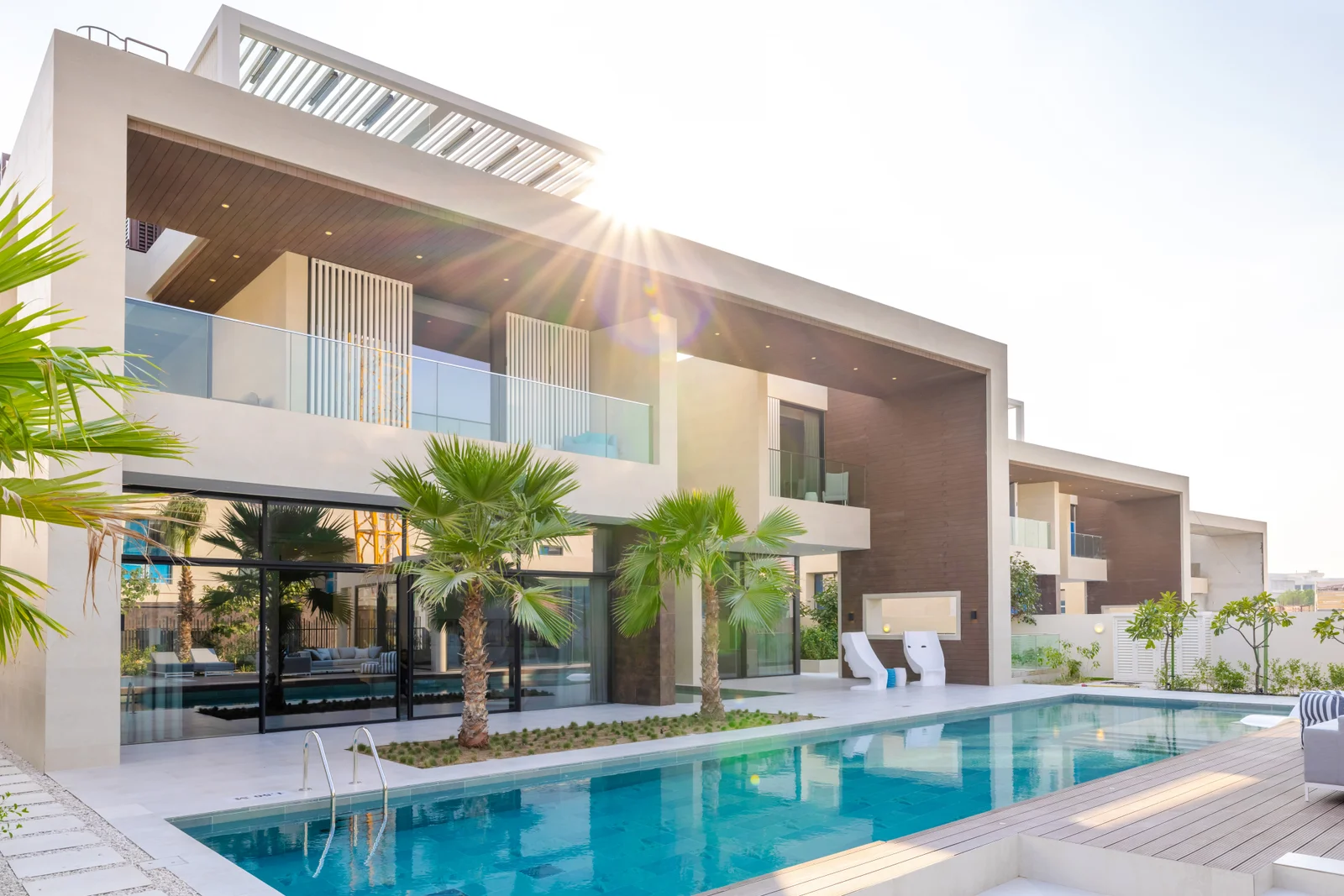
Arabian Ranches is Emaar’s original suburban villa community: three phases of detached villas, townhouses, and polo-field views that defined Dubai family living for a generation. For investors, it is the reference point against which every newer villa community (Dubai Hills, Damac Hills, Tilal Al Ghaf) is measured.
Invest Gulf desk research places gross villa yields in the same 4.0-5.5% band as Dubai Hills, with community service charges that run higher per square foot than many apartment towers. The investment thesis is not yield maximisation. It is long-tenancy family rental with Emaar’s strong delivery track record and a tenant pool that renews for school years, not 12-month lease cycles.
Compare with Dubai Hills Estate Property Investment and the Best Areas to Buy Property in Dubai hub.
Also see Dubai Property Investment Guide for the wider freehold framework.
Why does Arabian Ranches favour family tenancy over headline yield?
Arabian Ranches is a family-villa allocation that typically delivers 4.0% to 5.5% gross, not a JVC-style 7% to 9% yield chase. Foreign buyers accept lower percentage income for 3 to 5 year Ejari terms and Emaar freehold depth across Ranches I to III. We underwrite the community as tenancy stability first.
| Factor | Arabian Ranches (typical) | Dubai Hills (typical) |
|---|---|---|
| Four-bed villa gross yield | 4.0-5.5% | 4.0-5.5% |
| Tenant profile | School-linked families | School-linked families |
| Appreciation 2020-2025 | ~30-40% on Ranches I | ~40-55% on comparable stock |
| Commute to DIFC | 35-50 minutes peak | 25-40 minutes peak |
| Resale comparables | Deep in Ranches I-II | Strong, newer towers and villas |
Which Ranches phase fits investors best?
Ranches phase fit typically starts at Ranches I for deepest resale comps near JESS at AED 3.5M to 6M+, or Ranches II townhouses at AED 2.5M to 4.5M for yield-family balance. Ranches III suits appreciation theses with thinner day-one Ejari history unless launch pricing sits 20%+ below handed-over II comps.
| Phase | Entry (indicative) | Liquidity | Best for |
|---|---|---|---|
| Ranches I | AED 3.5M-6M+ villas | Highest | End-user + investor resale |
| Ranches II | AED 2.5M-4.5M townhouses/villas | Strong | Yield-family balance |
| Ranches III | Off-plan and newer handovers | Growing | Appreciation, not day-one net |
Our analysis ranks Ranches II townhouses first when the mandate needs income within 12 months of handover.
What gross and net yields should you model on Ranches villas?
Gross villa yields in the area typically sit at 4.0% to 5.5%, while net after service charges, management, void, and garden costs often lands near 2.7% to 3.8%. A four-bed Ranches I example at AED 4.2M with AED 180,000 rent prints about 4.3% gross before AED 18 to 25 per sq ft charges and 5% management.
| Line item | AED (illustrative 4-bed) |
|---|---|
| Purchase price | 4,200,000 |
| Annual rent | 180,000 |
| Service charges | 28,000 |
| Management (5%) | 9,000 |
| Vacancy (1 month) | 15,000 |
| Maintenance / pool | 15,000 |
| Net income | ~113,000 |
| Net yield | ~2.7% |
Yield underwriting snapshot: Arabian Ranches villa income should be modelled from Ejari-backed rent, not portal asks. On the AED 4.2M four-bed case used in this guide, AED 180,000 annual rent equals about 4.3% gross before costs. After AED 28,000 service charges, AED 9,000 management at 5%, AED 15,000 for a one-month void, and AED 15,000 garden and pool upkeep, net income falls near AED 113,000, or about 2.7% net. That looks modest beside a Marina studio quoting 7% gross with annual turnover, but the product difference is a multi-year family lease rather than 12-month churn. Our research treats 3.0% to 4.5% net as the planning band when service charges stay inside AED 18 to 25 per sq ft and voids stay under eight weeks.
Why do family tenants stay longer in Ranches?
Family tenants stay longer in the area because school catchments and compound lifestyle typically anchor leases for 3 to 5 years, not single-year apartment cycles. Void periods of 4 to 8 weeks are common versus 8 to 14 weeks in many towers, and a 24-month Ejari should follow confirmed school admission.
What this means for your P&L:
- Lower DEWA reconnection and re-letting agent fees between tenants
- Garden and pool maintenance sometimes tenant-responsibility under Ejari terms
- Two-car households are normal; parking and garage space affects rentability
- Screen tenants for school admission status before signing 24-month Ejari
Invest Gulf prefers school-tied families when underwriting the 4.0% to 5.5% gross band.
What schools and commute patterns drive tenant demand?
School demand in the area is anchored by JESS Arabian Ranches plus nearby GEMS and Repton options that typically support 3 to 5 year family stays. Families who miss wait lists sometimes relocate within 12 months, and peak drives to DIFC often run 35 to 50 minutes.
- Confirm JESS, GEMS, or Repton status before underwriting top-quartile rent
- Market garage and two-car parking as rentability features
- Avoid CBD-commuter tenants if the villa sits 45+ minutes from DIFC at peak
Our research ties rent premiums to enrolment certainty more than to plot size alone.
What does a Dubai villa purchase cost at transfer?
Arabian Ranches transfer costs typically start at a 4% DLD fee plus about 2% agency. Trustee and admin often add AED 4,000 to 8,000, and Emaar resale NOC is commonly around AED 1,050 before mortgage registration if financed.
| Cost line | Typical range |
|---|---|
| DLD transfer | 4% of transaction value |
| Agency | ~2% (negotiable) |
| Trustee / admin | AED 4,000-8,000 |
| Emaar NOC (resale) | ~AED 1,050 |
See Cost of Buying Property in Dubai for the full stack. Our underwriting treats transfer friction as purchase-process math, not a yield shortcut. For villa stock outside Ranches, compare Damac Hills property investment on service charges and tenant mix.
Who should buy in Arabian Ranches versus skip it?
Arabian Ranches is a strong fit for family landlords seeking 3+ year leases and Golden Visa buyers at AED 2M+ registered value, including many EU foreign buyers. Yield maximisers needing 7%+ net and flippers needing a 60-day exit are a weak fit. Appreciation from 2020 to 2025 ran about 30% to 40% on four-bed Ranches I stock.
| Profile | Fit | Weak fit |
|---|---|---|
| Family landlord seeking 3+ year leases | Strong | |
| Yield maximiser needing 7%+ net | Weak (use JVC / Sports City) | |
| Golden Visa buyer at AED 2M+ registered value | Strong | |
| Flipper needing 60-day exit | Weak (plan 6+ months) | |
| German / EU buyer seeking villa freehold | Strong |
Forward assumptions of 3% to 5% annual on established phases are planning bands, not guarantees. Our underwriting keeps Arabian Ranches as a stability sleeve beside higher-yield towers.
What red flags should pause a Ranches purchase?
Purchase red flags in the area are a missing current-year service-charge budget, deferred pool maintenance without seller credit, and Ranches III asks above handed-over Ranches II comps without build proof. Portal rent quotes without Ejari backup should also pause AED 2M+ Golden Visa files.
- Service charge budget missing for the current community year
- Pool green or deferred maintenance with no seller credit
- Off-plan Ranches III pricing above handed-over Ranches II comps without build-quality proof
- Seller quoting Bayut ask as achieved rent without Ejari transacted backup
- Golden Visa eligibility assumed without confirming registered price and mortgage NOC rules with GDRFA
Updated 2026 Golden Visa note: registered price counts with UAE mortgage NOC; confirm current ICA guidance at purchase. See UAE Golden Visa Property. We will not underwrite portal asks as rent evidence.
How long does resale take by phase?
Resale in the area typically needs 90 to 180 days, so investors should budget about 6 months rather than the 60 to 90 days common in apartment markets. Price against Ejari-backed multiples, often 18 to 22x gross rent, and expect listing asks to run 8% to 12% above closed deals.
| Phase | Typical exit timeline | Price discovery | Buyer pool |
|---|---|---|---|
| Ranches I | 90-150 days | Excellent comparables | End-users + investors |
| Ranches II | 90-180 days | Strong | Family end-users |
| Ranches III | 120-210 days | Growing | End-users, thinner investor pool |
List August to October for school-year relocations. Our analysis favours Ranches I when a 120-day exit window is part of the mandate.
How do Palmera and Saheel differ for investors?
Palmera and Saheel inside Ranches I are micro-locations that typically trade on plot size, golf views, and polo-field proximity. Palmera often commands end-user premiums, Saheel offers slightly better yield entry, and pool maintenance commonly runs AED 12,000 to 18,000 per year.
- Palmera: end-user premiums, golf and lifestyle positioning
- Saheel: often better yield entry on similar bedroom counts
- Pool budget: AED 12,000 to 18,000 per year in planning models
Our research treats micro-location as a rentability filter after phase selection.
Off-plan in Ranches III
Off-plan Ranches III typically costs a 15% to 30% premium over ready Ranches II stock and should be justified by build quality, not day-one yield. Model payment-plan cash flow separately from net rent after handover, and compare handed-over Ejari rents in the area before signing a launch SPA.
Phase and exit checklist (citable): Arabian Ranches investment selection in 2026 starts with phase fit, then net yield, then exit timing. Ranches I villas at AED 3.5M to 6M+ offer the deepest resale comps; Ranches II townhouses at AED 2.5M to 4.5M often balance the 4.0% to 5.5% gross band with family demand; Ranches III suits buyers who accept thinner Ejari history for newer stock. Transfer costs add about 4% DLD plus roughly 2% agency, while resale planning should assume 90 to 180 days rather than a 60-day apartment flip. Invest Gulf’s working rule is to reject any file that lacks a current service-charge budget, Ejari rent evidence, and a six-month exit buffer, even when the gross yield quote looks competitive with Dubai Hills.
Insider tip: Before you reserve a Ranches III off-plan villa, pull three handed-over Ranches II Ejari comps on the same bedroom count; if the launch ask sits more than 20% above those ready prices, the day-one net rarely recovers inside the first 24 months.
Planning note: Figures for Arabian Ranches (Dubai) reflect June 2026 desk research. Confirm current official rates with regulators, developers, and licensed advisors before you sign contracts or transfer funds.
Ready to start your Gulf property search?
Get a personalised shortlist matched to your investment goals.
Frequently Asked Questions
Arabian Ranches villas deliver gross yields of 4.0-5.5% depending on phase and bedroom count. Three-bedroom villas at AED 3.2M-5M generate AED 140,000-200,000 annual rent. Net yield after community service charges (AED 18-25 per sq ft), DEWA, garden maintenance, and management typically lands at 3.0-4.5%. Villas are a tenancy-stability play, not a yield maximisation play.
Yes. Arabian Ranches I, II, and III are DLD-designated freehold zones. Foreign nationals can purchase villas and townhouses with full title deed ownership. German buyers (2-3% of foreign transactions, AED 2.8-3.0M average) favour master-planned villa communities including Arabian Ranches and Dubai Hills for tax efficiency and Golden Visa qualification.
Arabian Ranches offers larger plots, quieter suburban environment, and 15+ years of family occupancy track record. Dubai Hills provides newer stock, Dubai Hills Mall, and better Al Khail Road connectivity. Dubai Hills has shown stronger appreciation since 2021 (40-55% on four-bedroom villas) versus Arabian Ranches (30-40%). Both attract school-tied family tenants with 3-5 year lease terms.
Arabian Ranches I has the deepest resale comparables and established rental demand, highest liquidity. Ranches II offers newer stock at moderate premiums. Ranches III (Bliss, Raya, Sun) has the newest villas with growing but thinner rental history. For investors, Ranches I and II townhouses at AED 2.5M-4M balance entry price, tenant demand, and exit liquidity.
Risks include lower percentage yields than apartment markets, garden and pool maintenance costs not captured in headline yield, longer resale timelines (90-180 days for villas), and competition from Dubai Hills and Damac Hills for the same family tenant pool. Community service charges vary by phase, verify current year budget before purchase. Villa buyers must budget two cars for most tenant families.
What is on the market in Arabian Ranches?
Arabian Ranches is Dubai’s benchmark established villa community, with three and four-bedroom villas from around AED 3.8 million at AED 1,400 to 1,900 per square foot. The community spans three generations of development, and the phase decides the plot, the landscaping maturity and the price far more than the internal specification does.
| Phase | Typical product | Entry price | Price per sq ft | Gross yield |
|---|---|---|---|---|
| Ranches I, original phases | 3 to 5 bed villas, mature landscaping | AED 3.8M | AED 1,400 to 1,700 | 4.2% to 5.5% |
| Ranches II | 3 to 6 bed villas, larger plots | AED 5.2M | AED 1,500 to 1,850 | 4.0% to 5.2% |
| Ranches III | 3 to 5 bed villas and townhouses, newest | AED 3.2M | AED 1,600 to 1,900 | 4.5% to 5.5% |
The plot rather than the built area is the component that holds value here, and two villas with identical internal layouts and a 1,500 square foot plot difference are not comparable assets. Price the plot separately before negotiating, because it cannot be added later at any price and it is what carries a long hold.
An insider tip on Arabian Ranches running costs
Insider tip: the two contracts that transfer with an Arabian Ranches villa and are almost never renegotiated are pool maintenance at AED 6,000 to 12,000 a year and landscaping at AED 5,000 to 15,000 depending on plot. Both are frequently legacy arrangements at above-market rates, and retendering them at the point of purchase, when the buyer has leverage and no incumbent relationship, routinely saves AED 4,000 to 8,000 a year against a gross yield already sitting at 4.2% to 5.5%. Across a ten-year hold that is a five-figure sum on a line nobody negotiates. The same request surfaces something more useful than price: a landscaping contract that has not been serviced properly shows in the garden, and a pool contract with no equipment replacement schedule tells you the pump and filtration are about to become the new owner’s problem.
What does an Arabian Ranches villa cost to run?
The community charge is the smallest of the recurring lines, which is the opposite of the apartment position and the reason villa models built on apartment assumptions understate the cost.
| Line | Typical annual cost, four-bedroom, 3,400 sq ft |
|---|---|
| Community service charge | AED 14,000 to 20,000 |
| Pool maintenance | AED 6,000 to 12,000 |
| Landscaping | AED 5,000 to 15,000 |
| Air conditioning servicing | AED 3,000 to 6,000 |
| External maintenance provision | AED 5,000 to 10,000 |
| Property management, if let | 5% to 8% of rent |
That is AED 33,000 to 63,000 before management, against a gross rent of AED 250,000 to 300,000. It is why the Ranches net yield sits a full percentage point or more below the gross figure, and why the running cost belongs in the offer calculation rather than in the first year’s surprises.
Why do Arabian Ranches tenancies run so long?
Because the community answers a family requirement completely rather than partially, and families who find that combination stop looking.
Schools sit inside or immediately adjacent to the master plan, the landscaping is mature rather than scheduled, the retail and community centre are operating rather than planned, and the plot sizes support the kind of household that signs a three-year lease. The measurable consequence is a vacancy assumption of 4% rather than the 6% to 7% an apartment district warrants, and a tenancy that runs two to three years against 14 to 20 months in the mid-market belt.
Across a five-year hold that difference is worth more than the yield gap suggests. An apartment turning over three times in five years costs three vacant periods and three re-letting commissions at roughly 5% of annual rent each; a Ranches villa turning over once costs one of each. On a AED 260,000 rent that saving is close to AED 40,000 over the period, which is most of the way to closing the gap against a mid-market apartment yielding two points more on paper.
Who should not buy in Arabian Ranches?
Three buyer scenarios, and the yield table shows none of them.
The income-first buyer. At 4.2% to 5.5% gross and 3.0% to 4.2% net, Ranches is a weak income asset relative to price, and Dubai apartments do that job at 5.4% to 7.1% net.
The buyer with a horizon under three years. Closing costs of roughly 6.3% on a AED 4.2 million villa are AED 264,000, resale runs slower than an apartment and the family buying season is concentrated around the school year. Those three together make a short hold structurally difficult.
The buyer who has not priced the running cost. AED 33,000 to 63,000 a year before management does not fall when the villa is empty, and it turns an apparently acceptable gross yield into a low single-digit net one.
A worked Arabian Ranches purchase
This worked example takes a four-bedroom villa in Arabian Ranches at AED 4.2 million, 3,400 square feet built on a 5,200 square foot plot, bought for cash and let to a family on a two-year contract. The purpose is to show how far the running cost moves the net figure on a villa.
Acquisition. The transfer fee at 4% is AED 168,000. Agency commission at 2% plus VAT is AED 88,200. The trustee fee is about AED 5,250 and the developer no-objection certificate around AED 3,000. Closing costs total roughly AED 264,450, a premium of 6.3%, taking the all-in figure to AED 4,464,450.
Income. A villa of that size lets in the AED 260,000 range, which is 6.2% gross on the purchase price.
Deductions. The community charge at AED 5 per square foot is AED 17,000. Pool maintenance is AED 9,000, landscaping AED 10,000, air conditioning servicing AED 4,500 and an external maintenance provision AED 8,000. Management at 6% of rent is AED 15,600. A vacancy allowance at 4%, reflecting the longer family tenancy, is AED 10,400. Total deductions are AED 74,500.
Net rent is about AED 185,500, which is 4.4% on the purchase price and 4.2% on the all-in figure. The gap between gross and net is 1.8 percentage points, narrower in percentage terms than an apartment and much larger in absolute money at AED 74,500 a year.
Where should an Arabian Ranches buyer go next?
Price the plot separately from the built area before negotiating, because it is the component that holds value and it varies by 1,500 square feet or more between villas with identical internal layouts. Then request the pool and landscaping contracts before completion, since retendering them at purchase saves AED 4,000 to 8,000 a year on a yield already sitting at 4.2% to 5.5% gross.
If income rather than family use is the objective, the honest answer is that a townhouse in an outer community yields a full percentage point more on half the capital, and Dubai apartments more again. Those comparisons sit on villas for sale in Dubai and apartments for sale in Dubai.
How does financing work on a Ranches villa?
Central bank ceilings apply: up to 80% for a UAE national and 75% for an expatriate resident on a first property under AED 5 million, stepping down above that value, with non-residents at 50% to 65%. On a AED 4.2 million villa a non-resident funds AED 1.47 million to AED 2.1 million in cash before AED 264,000 of closing costs.
Three things lengthen a villa approval relative to an apartment. Valuations are more conservative because villa comparables are sparser and less standardised, and a 5% shortfall on AED 4.2 million is AED 210,000 payable in cash at completion. Approval above roughly AED 5 million attracts additional review and sometimes a second valuation. And the developer no-objection certificate runs slower on a villa resale, because community charges, landscaping arrears and any unapproved external modification must be cleared before it is issued.
Obtain an indicative valuation before agreeing a price rather than after, and ask on day one whether the seller carries a mortgage, because discharge on a villa of this size adds three to four weeks. The ceilings sit in UAE central bank mortgage rules and the lenders in the UAE mortgage bank list.
What are the risks specific to Arabian Ranches?
Three, and none of them is a market view.
Running cost drift. The AED 33,000 to 63,000 annual stack before management does not fall when the villa is empty, and two of its largest components, pool and landscaping, transfer with the property at whatever rate the previous owner accepted. A buyer who does not renegotiate them at purchase carries that rate for the length of the hold.
Plot variance. Two villas with the same internal layout can differ by 1,500 square feet or more of plot, which is the component that holds value through a soft market. Pricing on built area alone, which is how most listings are framed, systematically overpays for the smaller plot and underpays for the larger one.
Resale seasonality. The buyer pool is families who intend to occupy, and family buying concentrates around the school year rather than spreading evenly. A villa listed in the wrong quarter sits for reasons that have nothing to do with its price, which is why a fixed exit date and this community are a poor combination.
Our underwriting treats an Arabian Ranches purchase as a five to ten year family asset with an acceptable income attached, rather than as an income asset with a family use attached. Buyers who invert those two consistently find the numbers disappointing.
Which Ranches phase suits which buyer?
The three generations of the community answer different requirements, and the price per square foot spread between them is narrower than the plot and landscaping difference implies.
- Ranches I at AED 1,400 to 1,700 per square foot: the most mature landscaping, the most established school and retail access, the deepest resale comparables, and the oldest building systems
- Ranches II at AED 1,500 to 1,850: larger plots on average, a decade of growth behind the planting, and a mid-point on building age
- Ranches III at AED 1,600 to 1,900: newest construction and lowest maintenance risk, with landscaping still establishing and a resale market with fewer comparables
A buyer optimising for immediate rental appeal should take Ranches I or II, where the community a tenant sees on a viewing already exists. A buyer optimising for the lowest maintenance surprise over ten years should take Ranches III and accept that the garden and the streetscape need several more years.
Get a Gulf property shortlist
Tell us your budget and target market. Independent research first; enquiries are matched with licensed local partners. We reply within one business day.