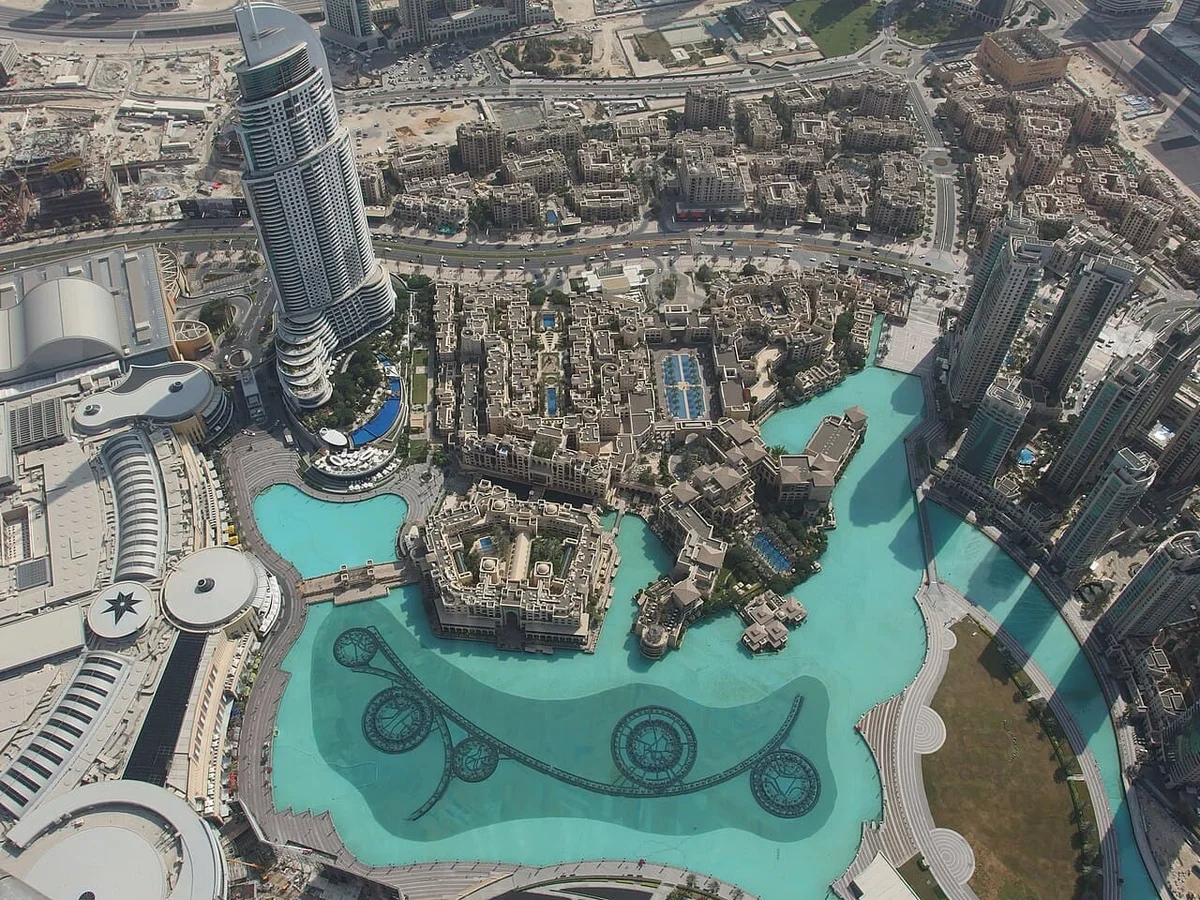
Two apartments in Downtown Dubai, same floor area, same building quality, same service charge. One faces the tower. The other does not. The gap between their prices is the largest single line item in Downtown pricing, and it is the one thing in the transaction that does not appear on the title deed.
A view is not an interest in land. Freehold conveys the unit. It does not convey a right that the ground between your window and the skyline stays as it is.
What is the premium actually buying?
The view premium buys a present condition, priced as though it were a permanent one, and it runs 15% to 30% on a Downtown unit. That is the whole of the argument, and everything else on this page follows from it: nothing in a Dubai title deed protects a sightline over land somebody else can develop.
There is nothing improper about the pricing. A view is a genuine amenity: tenants pay more for it, occupiers enjoy it, and while it exists it earns the premium every month of the hold. The difficulty is only that buyers and valuers treat it as a permanent characteristic of the unit, in the same category as the floor plate or the ceiling height, when it is in fact a characteristic of the neighbourhood. Floor plates do not change. Neighbourhoods do, and in a district still being completed they change according to a plan that was drawn before your building existed and that made no undertaking to leave your window alone.
Who is able to close it?
Whoever owns the plot in between, which in a master-planned district is often the party that sold you the tower. This is worth stating without accusation, because it sounds like a scandal and it is simply how master planning works.
| What sits between you and the view | What it is | Risk |
|---|---|---|
| A completed building of similar height | Already priced in | Low, and stable |
| A wide road or a public park | Reserved land | Low, while the reservation stands |
| Water with no reclamation planned | Open, subject to the master plan | Low to moderate |
| A low structure or car park | A future plot | High |
| An empty plot | A building that has not started | Highest |
A developer delivering a master plan over twenty years sells the early towers on the outlook the site has at the time and builds the later ones where the plan always said they would go. Both statements are true simultaneously. The buyer’s job is not to detect bad faith but to read the plan, because the plan is the thing that tells you which row of that table you are in.
Paying a view premium in Downtown?
Send us the unit and the floor. We will tell you what sits between it and the sightline, what that ground is, and what the premium is exposed to.
How do you check before you pay?
By turning an impression into three documents. Stand at the window, identify what is between you and the object, then find out what that ground is: what the master plan designates it for, what height envelope applies, and whether a project is currently registered on it.
That sequence takes an afternoon and it is almost never run, because the view sells itself the moment a buyer walks into the room and nobody wants to interrogate the thing they have just fallen for. The result is a market where the largest premium in Dubai residential pricing is routinely paid on an unexamined assumption. A buyer who runs the check either finds the outlook is structurally protected, in which case they pay the premium with confidence, or finds it is not, in which case they can negotiate, look at a different floor, or accept the risk deliberately. All three of those are better positions than the one nearly everybody occupies. The wider framing on how to weigh a Dubai district against its rivals sits on the best areas guide.
What happens if the view goes?
The comparable set changes, and the premium goes with it. Nothing about the apartment itself is different the day after, which is precisely why the loss feels arbitrary to the owner and looks obvious to the valuer.
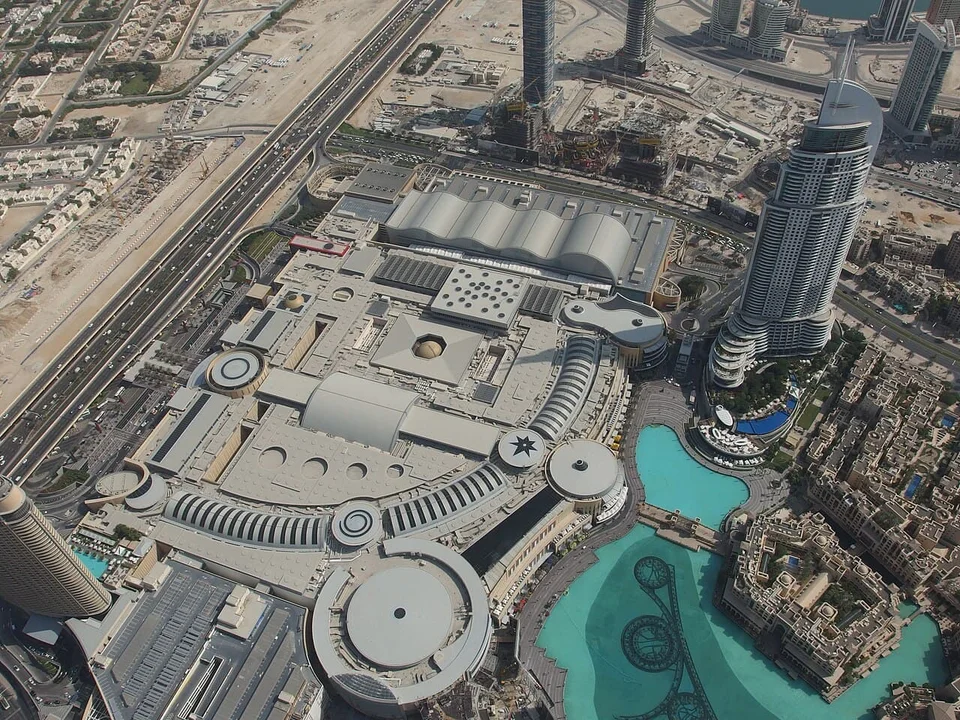
Pricing works by comparison. While the outlook exists, your unit is compared against other units with the outlook, and the whole set trades above the district’s ordinary stock. Once it is built out, your unit joins the ordinary stock and is compared against it. The premium was the entire distance between those two sets, so the entire distance is what is at risk. That is a harder statement than the one usually made, which is that a lost view “affects value”, and it is the accurate one. It also cuts the other way and should be said in the same breath: an owner whose outlook is structurally protected holds an asset with a durable scarcity, and that scarcity is why Downtown supports the pricing it does at all.
Is there any way to protect it?
Only by geometry, and never by contract. There is no instrument available to a residential purchaser that binds a neighbouring landowner to leave a plot empty, so the protection has to come from the physical facts.
Distance is the most reliable of them: an obstruction close to the window blocks far more of the outlook than the same building further away, so a long sightline is more robust than a short one. Looking over land that cannot be built on, such as a completed public space or a wide road reservation, is safer than looking over an open plot. A view already partly interrupted by a finished building has had its risk realised and priced, which makes it more stable than an uninterrupted one. None of this is protection in the legal sense and none of it should be described that way to a buyer. It is a ranking of exposures, and a ranking is enough to make a decision with. The neighbouring districts where the same premium exists against different geometry are on the Business Bay page, the Creek Harbour page and the MBR City page.
Who should buy in Downtown?
Downtown suits a buyer who wants the address, has checked what sits between the unit and the view, and has priced the 15% to 30% premium as something that can end rather than as something that came with the deed. On yield alone the district loses to almost every mid-market alternative in Dubai.
That buyer gets a district with genuine scarcity, a tenant base that renews, and the strongest brand in Dubai residential property. The buyer who struggles is the one whose entire case is the view, who has not looked at what stands between the window and the tower, and who is relying on a permanence nobody ever offered. Downtown rewards specificity more than almost any Dubai district, because the difference between two units in the same building is larger here than the difference between two districts elsewhere. The general risk framing for buying into a master plan still being delivered is on the off-plan property guide.
Frequently Asked Questions
You own the unit. A view is a condition of the surroundings rather than an interest in land, and Dubai freehold does not convey a right to light or prospect over someone else's plot. So a premium paid for a sightline is money paid for a state of the world that persists at the discretion of whoever owns the ground between your window and the thing you are looking at.
Whoever owns and can develop the intervening plot, which in a master-planned district is frequently the same developer who marketed the view when the tower was sold. That is not bad faith. It is the ordinary consequence of a master plan being delivered over decades, where later plots are built to a plan that existed before your building did and that never promised to leave your outlook open.
Look at what sits between the unit and the object of the view, then find out what that ground is. An open plot, a low structure or a car park is a future building until something says otherwise. The master plan, the height envelope for the intervening plots and any current project registrations are the documents that turn an impression into a finding, and all of them are obtainable before exchange.
The unit stops being compared against view stock and starts being compared against the units around it without one. That reversion is the loss, and it is concentrated because the premium was concentrated: a premium is by definition the part of the price that the ordinary comparables do not support. Nothing else about the apartment changes, which is exactly why the value change surprises owners.
Partially, and by geometry rather than by contract. Distance helps, because a nearer obstruction blocks more. An outlook over something that cannot be built on, such as a completed park, a wide road reservation or water with no reclamation planned, is safer than one over an open plot. A view already interrupted by a finished building has priced its risk in. None of these is a legal protection, and treating them as one is the error.
No, and that conclusion overcorrects. A view is a real amenity that real tenants and buyers pay for, and while it exists it earns its premium every month. The point is to pay for it with the risk understood, to look at what stands between you and the sightline, and to keep enough margin that the unit still works if the outlook changes. A view bought deliberately is an asset; one assumed to be permanent is an unpriced option.
It applies wherever a premium attaches to an outlook, which is most of waterfront and skyline Dubai. Downtown is the sharpest case because the premium is largest, the object of the view is singular, and the district is dense enough that intervening plots are close. The same analysis belongs in any purchase where the price would fall if the window looked somewhere else.
What is on the market in Downtown Dubai?
Downtown Dubai is the city’s prime central address, with one-bedrooms from around AED 1.3 million and two-bedrooms from around AED 2.2 million at AED 2,200 to 3,200 per square foot. The stock is almost entirely apartments in Emaar towers handed over between 2008 and 2020, with a small volume of branded and serviced product above that band.
| Unit type | Typical size | Entry price | Typical rent | Gross yield |
|---|---|---|---|---|
| Studio | 480 to 600 sq ft | AED 1,100,000 | AED 70,000 to 85,000 | 6.0% to 7.0% |
| One-bedroom | 750 to 950 sq ft | AED 1,750,000 | AED 95,000 to 120,000 | 5.2% to 6.2% |
| Two-bedroom | 1,200 to 1,500 sq ft | AED 2,700,000 | AED 145,000 to 185,000 | 4.8% to 5.8% |
| Three-bedroom | 1,800 to 2,400 sq ft | AED 4,500,000 | AED 240,000 to 300,000 | 4.5% to 5.5% |
| Branded and penthouse | 2,500 sq ft and up | AED 9,000,000 | AED 450,000 and up | 3.5% to 4.5% |
Downtown carries the highest service charges of any mainstream Dubai district at AED 20 to 28 per square foot, and the arithmetic that follows is the single most important thing to understand about the address: a 5.5% gross yield on a two-bedroom becomes roughly 3.9% net once the charge, management, vacancy and a maintenance provision are deducted.
An insider tip on the Downtown view premium
Insider tip: the Burj Khalifa or fountain view on a Downtown unit is worth 15% to 30% on price and it is not a right that attaches to the title. Nothing in a Dubai sale contract protects a sightline, and Downtown still has development plots that can be built on. Before paying the premium, establish what sits between the unit and the view, who owns it and what the plot is zoned for, because the difference between a protected outlook across the Boulevard and an unprotected one across a vacant plot is the whole premium. The safest version of the premium is a view protected by a permanent feature such as the fountain lake or the Boulevard itself; the most expensive mistake is paying for a sightline over land somebody else can develop.
What does the Downtown running cost look like?
The charge is the defining number here, and it varies materially between towers at the same price per square foot.
- Service charge of AED 20 to 28 per square foot, the highest of any mainstream district
- District cooling billed separately in several towers, with a capacity charge of AED 5,000 to 9,000 a year payable when vacant
- Management at 5% to 8% of rent, where full-service management is close to standard at this price point
- A vacancy allowance of 5% to 6%, lower than the mid-market because the tenant pool is corporate and relocation-driven
- A maintenance provision of 0.5% of value, which on a AED 2.7 million two-bedroom is AED 13,500
On a AED 2.7 million two-bedroom letting at AED 165,000, that stack runs to roughly AED 62,000, leaving net rent near AED 103,000 or 3.8%. Our underwriting treats Downtown as a capital preservation asset with an acceptable income rather than as an income asset, and a buyer who inverts those two will find the numbers disappointing.
Who rents in Downtown, and how liquid is it?
Downtown demand is corporate, relocation-led and high net worth, which produces a smaller but more stable tenant pool than Marina and a faster resale market than almost anywhere in Dubai.
Tenancy runs 12 to 24 months and turnover is driven by job moves rather than by price shopping. Vacancy at 5% to 6% is realistic. Rent negotiation is limited, because the comparable set is deep and the tenant is usually spending an employer housing allowance rather than personal income.
At resale the pattern is favourable. One and two-bedrooms between AED 1.3 million and AED 3 million clear in four to eight weeks, serving both investors and end-users. Above AED 5 million the pool narrows and the timeline extends to three to five months. Above AED 10 million it behaves like the trophy market, where a sale depends on a specific buyer appearing.
The liquidity is what a buyer pays for in the yield gap against the mid-market belt. Downtown yields roughly three percentage points less on gross than Jumeirah Village Circle and clears at resale in half the time, and for a buyer whose horizon might shorten that trade is defensible.
Downtown against DIFC and Business Bay
The three central districts are frequently shortlisted together and they are not substitutes.
- Downtown Dubai at 4.8% to 6.2% gross: the strongest address, highest charges, deepest prime resale market, view premium available
- DIFC at 5.0% to 6.5%: financial-sector tenant base, strong corporate demand, limited residential stock
- Business Bay at 6.5% to 8.0%: canal frontage at a discount to Downtown, larger supply, wider quality dispersion between towers
Business Bay is the yield answer and Downtown is the address answer. The mistake buyers make is expecting the Downtown address to also deliver Business Bay income, and the 1.7 percentage point gross gap between them is precisely the market pricing that difference.
Who should not buy in Downtown?
Three buyer scenarios consistently disappoint here.
The income-first buyer. At 3.5% to 4.5% net after the AED 20 to 28 charge, Downtown is among the weakest income assets in Dubai relative to price. The mid-market belt does that job at 5.4% to 7.1% net.
The buyer paying for an unprotected view. A 15% to 30% premium over a sightline that can be built out is the most expensive avoidable error available in this district.
The buyer who has not read the charge. On a 1,400 square foot two-bedroom the difference between AED 20 and AED 28 per square foot is AED 11,200 a year, which is a full percentage point of net yield and compounds across the whole hold.
A worked Downtown purchase, from offer to net rent
This worked example takes a two-bedroom in Downtown Dubai at AED 2.7 million, 1,400 square feet, in a tower charging AED 24 per square foot, bought for cash and let on a twelve-month contract. The purpose is to show how far the net figure sits below the 6.1% gross that a listing at this rent would imply.
Acquisition. The transfer fee at 4% is AED 108,000. Agency commission at 2% plus VAT is AED 56,700. The trustee fee is about AED 4,200 and the developer no-objection certificate around AED 3,000. Closing costs total roughly AED 171,900, a premium of 6.4%, taking the all-in figure to AED 2,871,900.
Income. A two-bedroom of that size in a mid-tier Downtown tower lets in the AED 165,000 range, which is 6.1% gross on the purchase price and 5.7% on the all-in figure.
Deductions. The service charge at AED 24 per square foot is AED 33,600. District cooling capacity, where billed separately, adds AED 6,000. Management at 6% of rent is AED 9,900. A vacancy allowance at 5% is AED 8,250. A maintenance provision at 0.5% of value is AED 13,500. Total deductions are AED 71,250.
Net rent is about AED 93,750, which is 3.5% on the purchase price and 3.3% on the all-in figure. The gap between gross and net is 2.6 percentage points, and roughly two thirds of that gap is the service charge alone. Break-even on the entry cost from income alone runs to about twenty-two months, which is the honest answer to how long the money has to stay in before the transaction stops being a loss.
What should a Downtown buyer check before an offer?
Six items, and the first two are worth more than everything else combined.
- What sits between the unit and the view, who owns that plot and what it is zoned for, because the premium is 15% to 30% and it is not protected by the title
- The service charge across two years of approved budgets, since the AED 20 to 28 spread is worth a full percentage point of net yield on a 1,400 square foot unit
- The district cooling arrangement and whether a capacity charge of AED 5,000 to 9,000 is billed separately and payable during a void
- The owners association reserve fund position, because the earlier Downtown towers handed over from 2008 are now in their second chiller and lift replacement cycle
- Short-let permission, which several Downtown buildings restrict irrespective of the Department of Economy and Tourism permit
- The tenancy position and the current rent against the RERA index average, since a unit let below the average carries a lawful uplift at renewal that the listing does not show
Our underwriting sequence in this district puts the outlook check before the price negotiation, because a premium paid for an unprotected sightline cannot be recovered at resale and no amount of negotiation on the headline price compensates for it.
What the service charge does to a Downtown return
Quantifying the charge is the single most useful exercise a Downtown buyer can run, because it is the largest deduction and the widest variable between two apparently identical units. On a 1,400 square foot two-bedroom, a tower charging AED 20 per square foot costs AED 28,000 a year and a tower charging AED 28 costs AED 39,200. Against a rent of AED 165,000 that AED 11,200 difference is 6.8% of gross income and moves the net yield from roughly 3.9% to 3.5%. Across a ten-year hold it is AED 112,000 in cash, and the resale market capitalises it too, because every future buyer modelling net yield applies the same arithmetic. The charge is set by the owners association rather than by the seller, it is published in an approved budget, and it is available on request before an offer is made.
Where should a Downtown buyer go next?
Establish the outlook position before negotiating on price, because the 15% to 30% view premium is the largest single component of a Downtown valuation and the only one that can disappear entirely. Then compare two specific towers on the approved service charge budget, since the AED 20 to 28 spread is worth a full percentage point of net yield.
If income rather than address is the objective, the honest answer is that Business Bay next door delivers 6.5% to 8.0% gross against Downtown’s 4.8% to 6.2%, and the mid-market belt delivers more again. Those comparisons sit on the Dubai property hub and on apartments for sale in Dubai.
How does financing work in Downtown?
Central bank ceilings apply as everywhere: up to 80% for a UAE national and 75% for an expatriate resident on a first property under AED 5 million, stepping down above that value, with non-residents at 50% to 65% and at pricing above resident rates. On a AED 2.7 million two-bedroom a non-resident is therefore funding AED 945,000 to AED 1.35 million in cash before AED 172,000 of closing costs.
Downtown valuations are less contentious than villa valuations because the comparable set is deep, which is one practical advantage of buying in a district with 4 to 8 week resale times. Above roughly AED 5 million the picture changes and banks apply additional review. Add mortgage registration at 0.25% of the loan, a bank arrangement fee near 1% and a valuation of AED 2,500 to 3,500. The ceilings are in UAE central bank mortgage rules and the lenders in the UAE mortgage bank list.
Is Downtown right for a first Dubai purchase?
For a buyer whose objective is a recognised address held for a long period, Downtown is defensible and the reasons are specific. Resale between AED 1.3 million and AED 3 million clears in four to eight weeks, which is faster than almost anywhere in the city. The tenant base is corporate and relocation-driven, which keeps vacancy at 5% to 6%. And the district is effectively built out, so the supply risk that shapes the mid-market belt does not apply here.
For a buyer whose objective is income, it is the wrong district and the arithmetic is not close. A net yield of 3.5% to 4.5% against 5.4% to 7.1% in the mid-market belt is a gap of two to three percentage points a year, compounding across the hold, and the address does not close it.
Get a Gulf property shortlist
Tell us your budget and target market. Independent research first; enquiries are matched with licensed local partners. We reply within one business day.