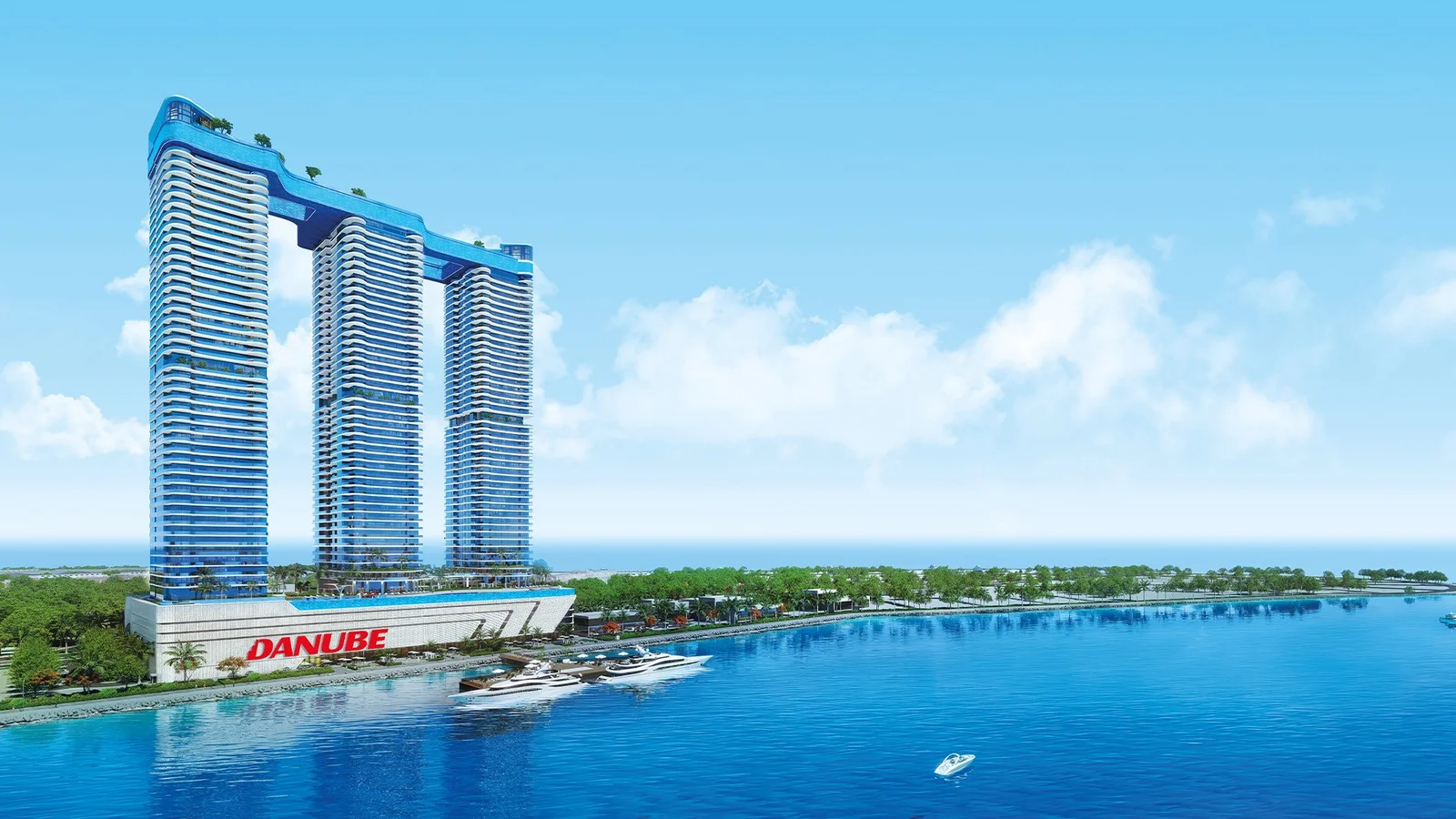
An apartment on reclaimed land can be finished, registered and habitable while the island it sits on is not. That is not a delay or a failure; it is how these developments are built, with residential delivered in parallel with everything else rather than after it.
The consequence is that an early owner holds a completed title on a construction site, and a tenant pays for the site rather than the title.
Why is the sequence unusual here?
Nothing pre-exists it, which is the short answer. There is no old road to widen, no established retail street, no neighbouring district whose amenity spills over. Every component has to be created.
A development on the mainland fringe inherits a partial environment: some roads exist, some shops are reachable, some services already run. A reclaimed island inherits nothing, so beach, access, retail, hospitality and public realm are all projects with their own contractors and their own timetables, running alongside the residential towers rather than in front of them. That is efficient for the developer and it produces a specific and predictable experience for the first residents, which is a completed apartment surrounded by things that are not finished yet.
What does a tenant actually price?
What they can see and use, not what is planned. This is obvious when stated and it is systematically ignored in early-phase underwriting.
| What the brochure shows | What year-one tenants experience |
|---|---|
| A finished beach | Fenced works or partial access |
| Retail and dining | A short drive to somewhere else |
| Hotel operators on site | Hoardings and cranes |
| A completed road connection | The current route, whatever it is |
| A mature community | The first few occupied floors |
Every row on the left will probably arrive. None of it is available to the person deciding what to pay this year, and a tenant weighing your apartment against an established alternative is weighing the right-hand column. That is why the first leasing cycle on an island like this is not a soft market or bad luck; it is the correct price for the product as it currently exists.
Buying an early handover on a new island?
Send us the project and the completion date. We will map it against the published phase schedule and tell you what the first leasing cycle realistically looks like.
Which phase carries the most weight?
The connection to the mainland carries more weight than amenity does. A beach and a retail strip change how pleasant a place is to live; a road or transit connection changes whether living there works at all.
That distinction matters because amenity is what gets marketed and access is what gets assumed. A tenant who works in a business district is running the connection twice a day, and a route that is awkward, indirect or congested at peak turns a desirable address into an impractical one regardless of what is on the island. Islands with excellent amenity and difficult access end up serving weekenders, second-home owners and short stays, which is a legitimate market and a much thinner one for a landlord seeking long tenancies. So the access phase is the one to locate on the schedule before anything else.
How do you read the schedule honestly?
You read it by checking it against the ground. Published phasing is the best available planning input and it is a statement of intention, so the useful discipline is to verify it physically.
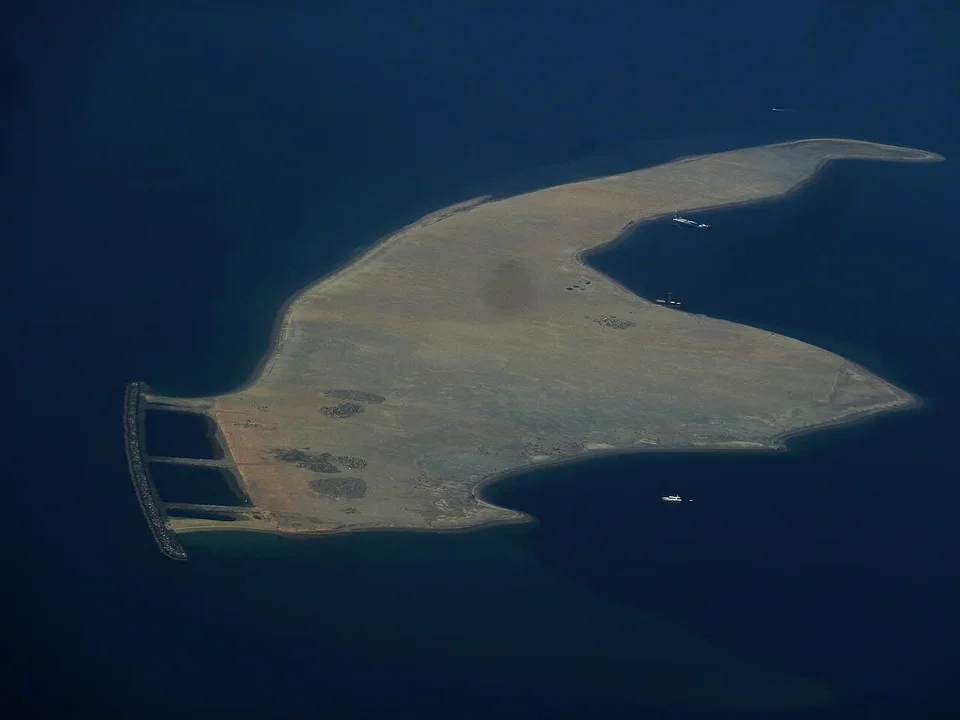
A phase due to open next year should be visibly under construction now, and one that is not is telling you something the schedule is not. That check takes an afternoon, or a photograph from somebody who can take one, and it is worth more than any amount of reading. The general framework for how project timetables slip, and what a registration record actually shows, is on the off-plan risks and delays page. Applying it here is mostly a matter of remembering that the risk attaches to the island’s infrastructure as well as to your own building, and buyers check the second and rarely the first.
What should the first-cycle model look like?
Discounted deliberately, with a longer void allowed for. This is the practical instruction and it removes most of the disappointment from an early purchase.
An owner who models the mature rent from year one has built a forecast that cannot be achieved and will experience the actual result as underperformance, which frequently leads to bad decisions like cutting the price on a sale during the worst possible phase. An owner who budgets a discounted first cycle, allows a longer letting period in it, and treats the recovery as the return they are actually buying, meets the same facts as a planned sequence. The two owners have identical assets and completely different experiences, and the only difference is which number they wrote down at the start. The city-wide rent evidence to calibrate against is on the Dubai rental yield guide.
What does the sequence do to a resale?
It makes the timing of a sale unusually consequential, because the thing being sold changes character as the phases land.
A seller exiting mid-sequence is selling an unfinished place and competing against both the developer’s remaining stock and the buyer’s uncertainty about whether the schedule holds. A seller exiting after the infrastructure is complete is selling a finished address, with the discount gone and the story settled. Those are two different markets separated by time rather than by geography, and an owner who has to sell in the first one gives away exactly the spread they bought the property to capture. Everything about an early purchase here therefore depends on not being forced to exit early, which is a statement about the buyer’s circumstances rather than about the island. The practical test before committing is short: could you hold this through a phase that slips by two years, funding it from somewhere other than its rent, without needing to sell. If the answer is yes the spread is available to you, and if it is no the same purchase carries a risk the price never compensated you for.
Is there a precedent worth reading?
Dubai’s earlier island developments, which went through exactly this. The ones now regarded as established addresses were once completed towers surrounded by construction, letting at a discount to a mature market that did not yet exist.
That is genuinely useful as a precedent and it is not a guarantee, and the distinction is where honest analysis lives. What the precedent establishes is that the sequence is normal and that it resolves, which is worth knowing for an owner in the middle of it. What it cannot establish is the timetable for this island, or that the eventual position will be as strong, since those depend on decisions and demand that have not happened yet. The mature versions of the same structure are on the Palm Jumeirah page, the Bluewaters page and the Dubai Harbour page, and reading how each of those settled is the closest thing to a map available.
Frequently Asked Questions
Because the title completes before the place does. A finished apartment on an island whose beach, road link, retail and hotels are still being built is a completed home inside a construction site, and a tenant prices what they experience rather than what is planned. The unit is worth what the surroundings are worth on the day the lease is signed.
That is the expectation and it is the reason to buy early, so it deserves to be stated as an expectation rather than a certainty. Each completed phase removes a reason the rent was discounted, and if the phases arrive the rent should follow. What an owner is buying is the difference between the two states, and what they are risking is the schedule.
The access one, in most cases. Beach and retail improve the experience of living somewhere; a road or transit connection determines whether living there is practical at all for a tenant who works elsewhere. An island with excellent amenity and an awkward connection is a weekend proposition, and weekend propositions do not fill long tenancies.
From the master developer's published phasing, from the project registrations for individual plots, and from what is visible on the ground. The last of those is the most honest: a phase due to open next year and not yet visibly under construction is telling you something the brochure is not. All three are available before you commit.
A weaker one than the eventual position, budgeted deliberately. An owner who models the mature rent from year one has built a forecast that cannot be met and will read the shortfall as a failure. An owner who budgets a discounted first cycle, and possibly a longer void in it, meets the same reality as a planned event.
It applies wherever residential completes before the surrounding infrastructure, which reclaimed land makes especially likely because everything has to be built at once with nothing pre-existing. Dubai's earlier island projects went through the same sequence, and the ones now regarded as established were once exactly this, which is the useful precedent rather than a reassurance.
Someone buying the difference between the two states with enough patience and margin to wait for it. Early entry is priced below the mature position for a reason, and capturing that spread requires holding through the phase in which the discount is real. A buyer who needs the mature rent immediately should buy into the mature phase and pay for it.
What is the search demand telling you about Dubai Islands?
The name draws roughly 40,500 searches a month in the UAE, one of the largest figures in the whole study, and none of it is buying demand. Our measured transactional volume for the district is zero on every phrase, while our own Search Console shows nine impressions.
The search results explain the gap better than the numbers do. A read of the top ten returns the master developer’s own site, an encyclopaedia entry, the Dubai tourism board, a community information site and two agencies. That is a mixed result dominated by reference and tourism, with a thin commercial slice underneath it.
So the 40,500 is real and it is mostly people finding out what Dubai Islands is: a renamed and relaunched development whose name people encounter before they encounter its property. Reading that figure as addressable buying demand would overstate the audience by orders of magnitude, and it is exactly the error this corpus rebuild exists to remove.
What follows for a buyer and for a seller?
Different things, and being clear about which is which is the whole value of separating reach from intent.
For a buyer, a district searched heavily and bought rarely is a district where public pricing information is thinner than the profile suggests. Most of what ranks is descriptive rather than transactional, which means comparable evidence has to come from the Dubai Land Department record and from agents active in the specific development rather than from what is easy to find. The volume of content about a place is not evidence about its market.
For a seller of property, the number to size expectations from is the transactional one, which here is nothing measurable. A resale in this district is reached through agents, through the developer’s own channels and through buyers already looking at the northern waterfront, not through a search audience that is overwhelmingly reading rather than buying.
For both, the practical checks are the ordinary ones and they matter more where evidence is scarce. Establish the specific building and its delivery position rather than working from the district name. Obtain the service charge per square foot in writing from the owners association, along with the reserve fund position, since waterfront stock carries a heavier maintenance burden on its envelope than inland stock does. Confirm what is approved on adjacent plots, because in a development still being delivered an outlook can be opened or closed permanently by the next phase. And price the unit against transactions in its own building rather than against anything quoted at district level, because a district this thinly transacted produces averages assembled from asking prices rather than from completed sales.
Who rents on a waterfront still being delivered?
Two groups, and they arrive at different points in a development’s life, which is worth planning around rather than discovering.
Early residents in a delivering waterfront are tolerant by selection. They accept construction nearby, incomplete retail and a thin services layer because the price or the position justifies it to them, and they are correspondingly price-sensitive since those inconveniences are what they are being compensated for. Rents in this phase reflect that trade.
Later residents arrive once the surroundings are finished and the amenity layer works, and they pay for a completed environment rather than a promise. The same apartment can let to a different tenant at a different rent depending purely on what has been built around it, without anything changing inside the unit.
For an owner buying during delivery, the practical consequence is that the first years and the later years of a hold are different businesses, and a model that applies stabilised rents from the outset will overstate the early income while understating the later. Modelling them separately is more work and produces a number that survives contact with reality.
That distinction is worth writing into the model explicitly rather than holding as an intention, because a spreadsheet built at reservation with one rent line for ten years will look reassuring and will be wrong in both directions at once.
Get a Gulf property shortlist
Tell us your budget and target market. Independent research first; enquiries are matched with licensed local partners. We reply within one business day.